
Hey Fam,
Picture it.
The room is brimming with anticipation.
Flowers arranged with intention.
Family members are welcoming the guests…
And thanking then for coming.
Soon, soft chatter settles into silence.
The music swells.
A dynamic figure in white prepares to glide down the aisle.
And the whole room awaits the moment the two main characters meet at the altar.

After all, they’ve already chosen each other.
They’ve already posted the engagement photos.
They spent money sending the invitations.
They’ve booked the honeymoon.
And in their minds, the decision is made.
They meet, they smile…
And then the officiant pauses.
And says the line.
“If anyone has any reason these two should not be wed, speak now or forever hold your peace.”
And just like that —
the room holds its breath.
That moment?
It’s not just tradition.
It’s clearance.
Because marriage isn’t more than emotional pomp and circumstance.
It’s legal.
And before the state recognizes that union, it gives the public one final opportunity to object — to raise a conflict, to say:
“This should not move forward.”

And in that moment, stands the possibility of everything they planned being undone.
Believe it or not, Trademark law works the same way.
Before a trademark registers, it is published for opposition.
This means the public gets a window to review the application — and, if necessary, object.
That objection is called an opposition proceeding, and it’s handled by the Trademark Trial and Appeal Board (TTAB).
Right now, one of those moments is playing out in real time.
Here’s how:
A company recently filed to register “Swift Home.”
As the mark was well on its way to registration, the USPTO, as the Trademark “officiant,” provided the public 30 days to object to Swift Home’s registration.
And Taylor Swift took that chance by the horns.
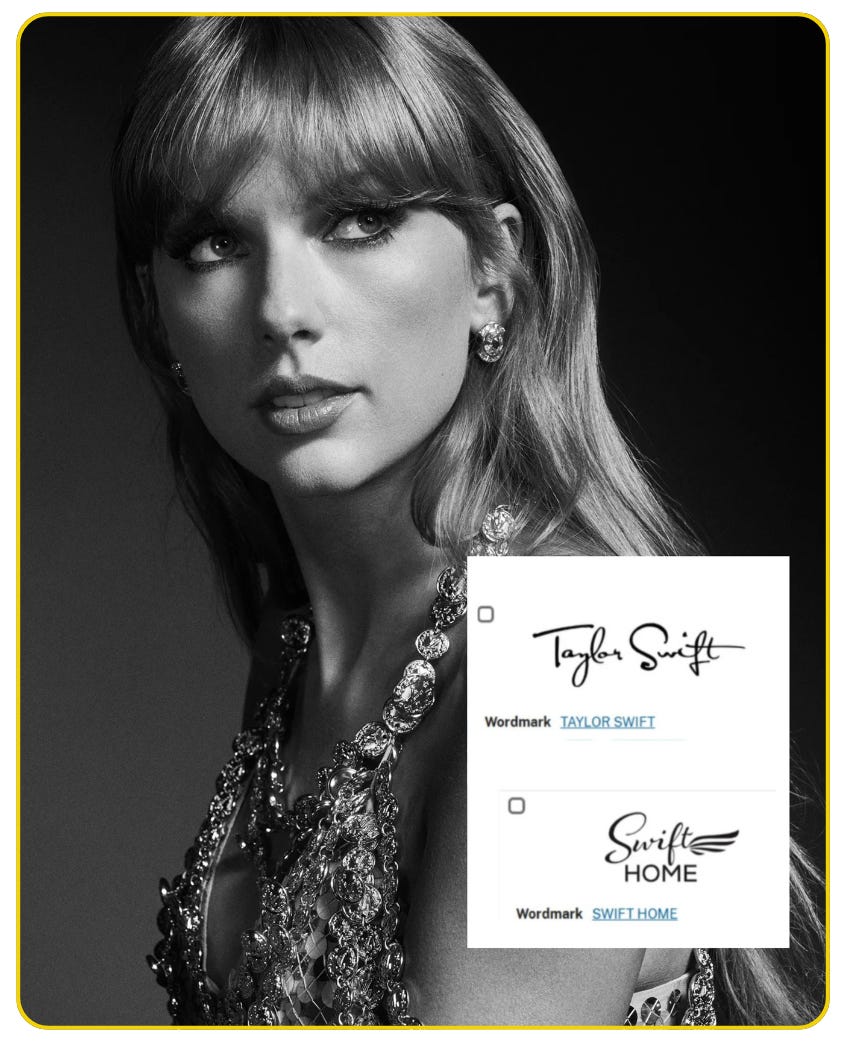
During the 30 day objection period, Taylor Swift Holdings filed an opposition to stop the registration of Swift Home.
Now, the case is pending before the TTAB.
All because someone with prior rights to stepped forward and said:
“This shouldn’t go through.”
So how does a name make it this far — only to be stopped at the last moment?
In this Founder’s Letter, we’re breaking down what happens at this stage — how trademark clearance, publication, and opposition actually work, and what founders need to understand before committing to a name.
Ready?
Let’s get into it.

Loving This Post?
Show us some love by adding a “❤️,” giving a share, or commenting below; this will make our hearts sing.

But first, some church announcements...
The Firm for the Culture - CULTURE vs. CASE LAW Series
We’ve got a new series of workshops, all for you!
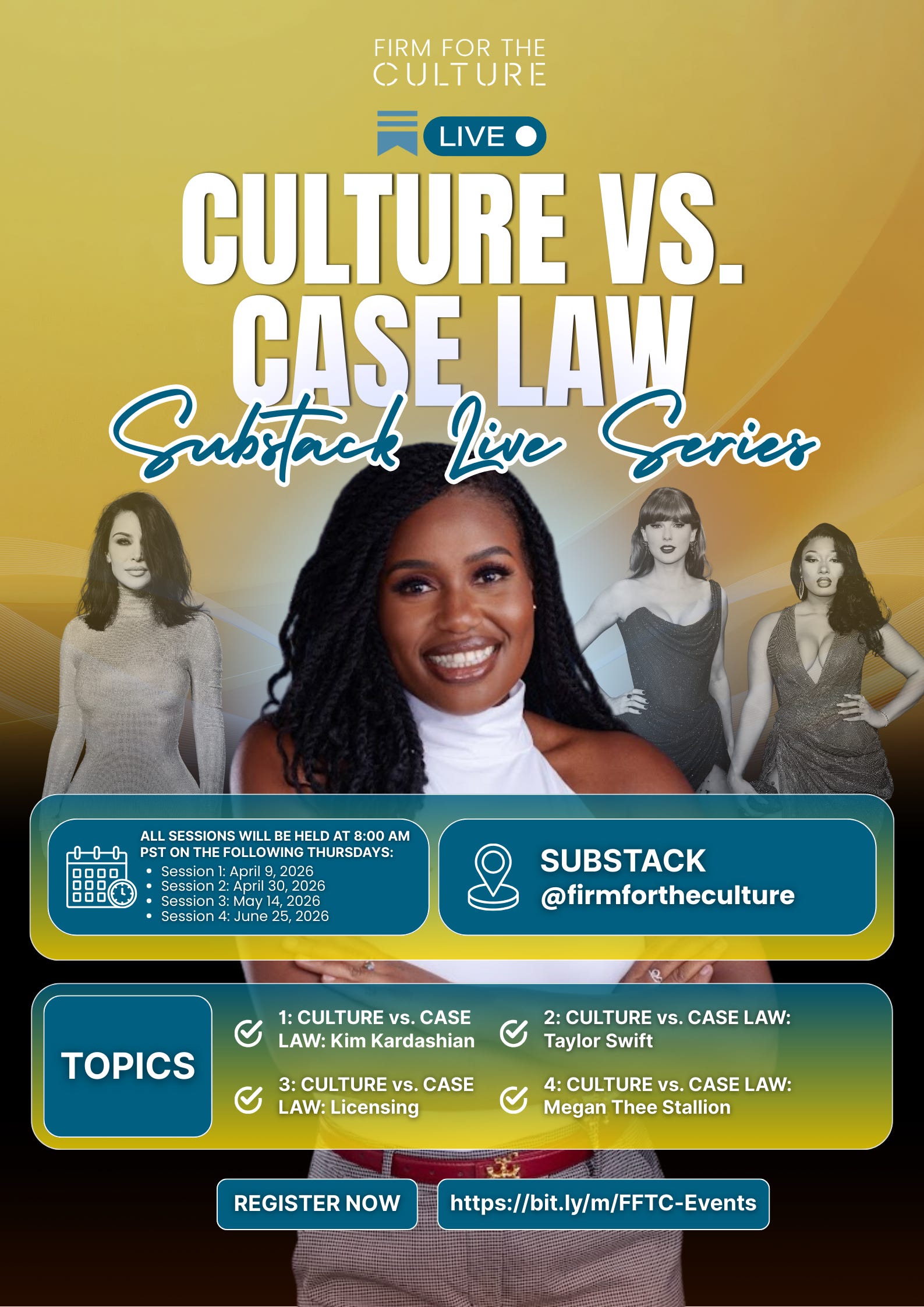
Culture moves fast. The law moves slow. And the gap between them is where creators lose ownership, revenue, and control.
This series uses real cases—celebrity trademark battles, IP disputes, licensing deals—to teach you how to navigate the system and protect what you build. Each session breaks down how power, ownership, and legal protection actually work, then extracts the lessons founders need: How do you trademark cultural phrases? What happens when you can’t own your own work? How do you enforce your rights when someone copies your brand?
The stakes are real. The strategies are transferable. The lessons apply whether you’re building a media company, a product line, or a personal brand.
Here’s a preview for your viewing pleasure:
Workshop 1: Kim Kardashian - The North West Trademark Strategy
📅 April 9, 2026 at 8:00 a.m. PDT
Kim Kardashian filed 9 trademark applications for her daughter’s name—8 are dead, only toys survived. Learn when to file broadly vs. narrowly, how to read USPTO refusals, and whether aggressive filing makes strategic sense.
Register for Kim Kardashian workshop
Workshop 2: Taylor Swift - Re-Recording Her Way to Ownership
📅 April 30, 2026 at 8:00 a.m. PDT
Taylor Swift couldn’t buy back her masters, so she re-recorded her albums, crashed their value, and forced a sale. Learn how she created leverage when she had none—and what that strategy looks like for founders who lost ownership of their work.
Register for Taylor Swift workshop
Workshop 3: Licensing AMA - Trademarks, Copyrights, and Patents
📅 May 14, 2026 at 8:00 a.m. PDT
Licensing turns IP into recurring revenue—or locks you out of your own work. Bring your questions about royalty structures, deal terms, and how to protect yourself when licensing trademarks, copyrights, or patents.
Workshop 4: Megan Thee Stallion - The 6-Year Fight for Hot Girl Summer
📅 June 25, 2026 at 8:00 a.m. PDT
Megan created “Hot Girl Summer” in 2019—it went viral immediately, then took 6 years to trademark. Learn what happens when you try to own culture after it’s already everywhere, and how to file before virality costs you ownership.
Register for Megan Thee Stallion workshop
For founders who are building brands. Creators who are shaping culture. Entrepreneurs who refuse to be extracted from.
Registration is FREE; in case you’re unable to make it, sign up and you’ll get the free notes.
After event recordings are $20.00 each.
Hope to see you there!
🔗 Sign up here: https://bit.ly/m/FFTC-Events
Now, back to our regularly scheduled program…. :)
Taylor Swift vs. Swift Home
A small business filed to register the name “Swift Home.” At first glance, nothing about it raised alarms. It looked like what it was—another brand, another application moving through the system, another founder taking steps to build something of their own.
To become their own boss, some may say:
But here’s the thing about trademark law… it doesn’t move in a straight line.
Before a mark ever reaches registration, it passes through a public stage where it is published in the Official Gazette—a government record that quietly signals to the world that a name is about to be claimed.
That moment matters because publication creates a window: a chance for anyone with prior rights to step forward and say, “Not so fast.”

That’s exactly what happened here. Taylor Swift’s legal team didn’t file a lawsuit or make headlines. They filed an opposition—a formal challenge grounded in the rights she already holds across her family of SWIFT trademarks.
Here’s what Swift essentially said in the opposition:

And once that opposition is filed, the application is no longer routine—it becomes a dispute.
The burden shifts, and the applicant now has to defend the name by answering the core question in trademark law: could consumers be confused?
Not intent.
Not popularity.
Likelihood of confusion.
The opposition was filed on February 11, 2026, and Swift Home now has until April 12, 2026 to respond. Miss that deadline, and the application can default—ending the process before registration is ever within reach.
This is the stage most founders don’t see coming. Because by the time your name reaches the public, it’s no longer just yours to decide—it’s open to challenge.
So let’s talk about how to navigate this moment—before you find yourself standing at the proverbial altar, waiting to see who speaks.

Many founders believe that once they file a trademark application, they own the name.
They don’t.
Filing is simply the start of a process that moves far slower—and far more deliberately—than most people expect. In fact, after submission, an application can sit in the USPTO queue for six to ten months before it is even assigned to an examining attorney.
During that time, nothing is being “approved”—it’s waiting its turn to be reviewed.
Once an examining attorney does review the application and finds no immediate issues, the mark moves to the next stage: publication.
And this is where things shift.
When your mark is published in the Official Gazette, it is no longer just between you and the USPTO.
It is now visible to the public—specifically to anyone who may already have rights in a similar name.
Publication is not a formality. It is a deliberate checkpoint built into trademark law to protect earlier rights and prevent conflicting brands from entering the marketplace.

It creates a window.
A defined period where a third party can step forward and formally object to your registration.
If no one objects, your application continues forward toward registration.
But if someone does, the process changes entirely.
You are no longer simply moving through an administrative review. You are now in a legal proceeding before the Trademark Trial and Appeal Board, where the focus shifts to a central question: can your mark coexist with what already exists without creating confusion in the marketplace?
That is the standard—likelihood of confusion—and it governs everything that follows.
This stage is not unpredictable, and it is not personal. It is structured, procedural, and rooted in the idea that trademark rights are not created in a vacuum. They are shaped by priority, use, and the broader landscape of existing brands.
Which is why this moment matters.
Because by the time your application is published, the question is no longer just what you want to build—it’s whether the law will allow it to stand.
Founder Gem:
Before you file, assume someone will speak.
Because silence at the “altar” is not luck—it’s the result of clearance, strategy, and preparation done long before your name is ever made public.

Before you get mad at Taylor, you’ve got to understand something:
She has to enforce her rights.

Because trademark rights don’t stay strong on their own.
They are maintained through consistent, visible enforcement. If a brand owner allows similar marks to register without objection, over time, their rights can weaken. The law begins to treat the mark as less distinctive, less protected, and more diluted.
So when a brand like Taylor Swift’s files an opposition, it isn’t about being loud or overreaching.
It’s about preservation.

It’s about maintaining the strength of a portfolio that spans entertainment, merchandise, and consumer goods—where the word “SWIFT” is not just a name, but a core brand asset.
That’s why large brands monitor new trademark filings closely. They review applications as they are published, assess potential conflicts, and, when necessary, act. Not emotionally. Not publicly. But strategically.
Because if they don’t, they risk losing control over the very thing they’ve spent years building.
And that’s the part I want to impress upon you today, fam.
Opposition isn’t ego.
It’s maintenance.
It’s the ongoing work required to keep a brand protected, enforceable, and valuable in the marketplace.
Silence, on the other hand, can be expensive.
Because every unchallenged, confusingly similar mark becomes one more data point that can be used to argue that your brand is no longer as distinct as it once was.
Founder Gem:
Enforcement is not aggression.
It’s stewardship.

Fighting an opposition is not just about being right.
It requires time, money, legal precision, evidence, and a real tolerance for risk.
Because once you’re in an opposition proceeding, the process can escalate quickly—discovery, briefing, negotiation—and if it continues without resolution, it can easily reach six figures in legal fees.
And that can break a small business before it even gets off the ground.
That’s money not going to research and development.
That’s money that’s not going to marketing.
That’s money that’s not going to your employees.
That’s money not coming to you.
And that’s….a hard decision to make:
As of now, it remains to be seen what Swift Home is going to do.
We’ll have to watch it play out.
The parties may settle.
They may negotiate.
Or Swift Home may decide to abandon the application altogether.
But if they don’t—and the case moves forward—this becomes a different kind of decision.
Not just “Do we like this name?”
But:
Is this name worth the fight?
Because sometimes the most strategic move is not to escalate—it’s to pivot:
To step back, reassess, and redirect your resources toward something stronger and more defensible.
That might look like rebranding.
Refining the mark.
Filing differently.
Or negotiating a resolution.
Walking away from one mark can preserve the resources, clarity, and positioning needed to build something better.
That’s not losing.
That’s strategy.
That’s discipline.
That’s the long game.
Founder Gem:
Not every battle deserves litigation.
Some deserve strategy.

Ownership is not about who is louder.
It is about who filed.
Who monitored.
Who enforced.
Who prepared for the objection window.

The marriage metaphor works because, like many marriages, trademark registration is not about romance.
It’s about validation.
And before the government grants you exclusive rights, it asks:
Is there any reason these two shall not be wed?
If someone speaks — and they have prior rights — you must respond with law, not emotion.

If your trademark application were published tomorrow…
Would the room stay silent?
Or would someone stand up?
And if they did —
Would you know what to do next?
Let’s talk in the comments.

Want help figuring out whether your name—or brand—is ready for trademark protection?
We’ve got you.
Book a Strategy Session with Firm for the Culture and let’s make sure your name isn’t just recognized—it’s protected.
Need Help Protecting Your Creativity?
If you are unsure—or if you know you need to take action—reach out to us.
We have helped countless founders and creatives safeguard their intellectual property, and we would love to do the same for you.

If you need further guidance, reach out to me and my team at Firm for the Culture.
We’re here to help you navigate the copyright, trademark, and thought leadership journey.
Can’t wait to help you protect your dynamic impact.
And #ThatsAWrap
The Doors of the Church Firm Are Open
Thanks for reading
See you next time.