

Hey Fam,
You ever see a story so big it makes you stop mid-scroll? That was me when I saw this:
$10 billion. Settled. Quietly. Just days before trial.
That’s how this chapter of Byron Allen vs. McDonald’s came to a close.
No jury.
No witnesses. No fiery courtroom exchanges.
Just a sealed agreement that will never see the light of day.
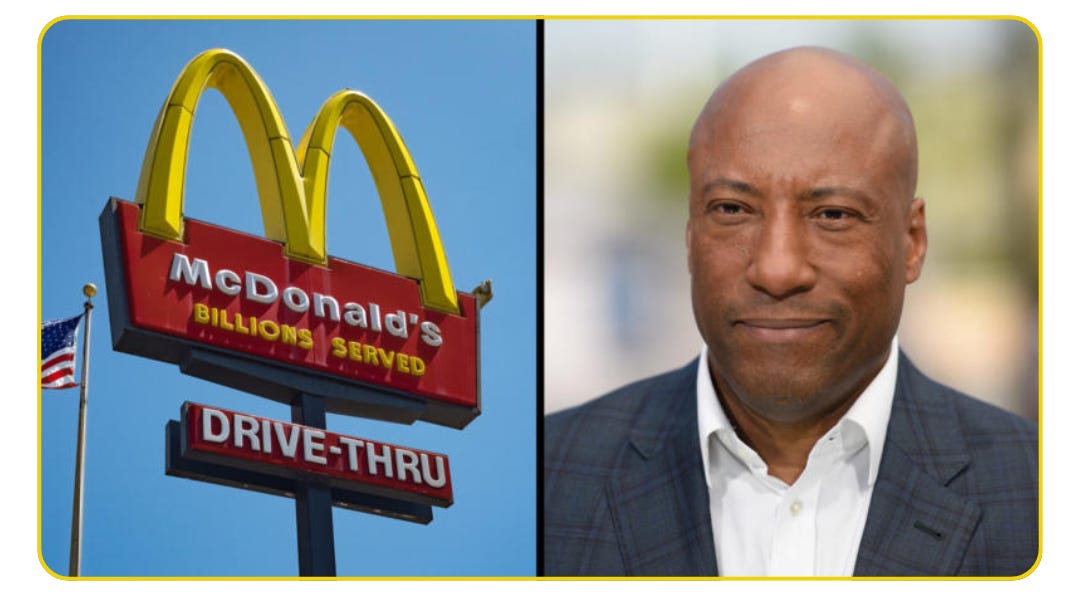
But if you zoom out, this wasn’t just one man taking on one corporate giant. It was about something much bigger:
Who gets access.
Who gets valued.
Who gets seen and heard—and who’s kept out of sight.
Let’s rewind to 2021.
Byron Allen, the media mogul behind Entertainment Studios, sued McDonald’s, claiming the company’s advertising practices were racially discriminatory. According to the lawsuit, Black-owned media—his included—were kept in a “separate but unequal” budget tier.
The metrics were the same: same audience reach. Same ratings. But the dollars? Significantly less.
If that sounds familiar, it’s because this is how inequity often shows up in business—not as outright bans, but as “policies” and “tiers” that keep the playing field uneven while still looking neutral on paper.
And here’s the thing about patterns like this: they don’t dissolve on their own. They require someone willing to challenge them—loudly, legally, and persistently.
Byron Allen has made a career of that fight: Comcast. Charter. DirecTV. And now McDonald’s.

The specifics of the settlement are locked away, but one truth remains: this case sparked a conversation, pulled back the curtain, and reminded corporations that “supplier diversity” isn’t a PR slogan—it’s a measurable, enforceable economic commitment.
In this Founder’s Letter, we’re going to talk about how moments like Byron Allen’s legal battle with McDonald’s reveal more than corporate politics—they reveal a playbook.
We’ll break down three strategic takeaways you can apply right now to protect your work, build leverage, and negotiate from a place of power—not permission.
Because when you know your value, you stop asking to be included. You start setting the terms.
Ready?
Let’s dive right in.
Loving This Post?
Show us some love by adding a “❤️” or commenting below; this will make our hearts sing.
But First, Church Announcements:
We’ve got a new free guide just for you!

If you’re a social entrepreneur building something meaningful, don’t just make it memorable—make it legally yours.
📘 Download our Free 10 Ways to Protect Your Artistic Vision here
This must-read resource is designed for thought leaders, coaches, and consultants who want to lead with their ideas—without fear of theft or dilution.
If you’re building a values-driven, culturally rich brand, this guide walks you through exactly what needs protecting: your business name, logo, course titles, podcast, recorded content, books, and signature events.
You’ll learn the key differences between trademarks and copyrights, how to use both strategically, and why protecting your creative assets isn’t just smart—it’s essential.
Whether you’re just getting started or scaling your impact, this guide will help you own your genius and build boldly.
Your work deserves more than a logo. It deserves a legal legacy.
Now, back to our regularly scheduled program…. :)

Discrimination isn’t always loud or obvious. Sometimes it’s buried in line items, budget allocations, or vendor “qualification” policies that systematically sideline certain businesses. Waiting for the system to recognize the inequity on its own is wishful thinking.
Patterns are broken when someone applies sustained pressure—through data, through public advocacy, and yes, through legal action.
In one of my most recent cases that ended in a successful settlement, we didn’t stop at simply pointing out that my client’s claims were strong under the law.
We attached a fully drafted court complaint — an actual legal filing we were prepared to move forward with in court.
That changed the dynamic instantly.
It signaled that we weren’t just raising concerns; we were prepared to escalate with substantive consequences unless the matter was resolved fairly.
The result?
A favorable settlement that may not have materialized without that applied pressure.
This is what “pressure” looks like in practice. It’s not about hostility; it’s about clarity, consistency, and a willingness to act. If you notice a pattern costing you opportunities or market share, track it. Gather receipts. Speak up. And if the stakes are high enough, don’t be afraid to escalate.
Because unjust patterns rarely dissolve on their own — they crack under pressure.

One of the most powerful elements of Allen’s case is how it reframed diversity in the supply chain.
Too often, “supplier diversity” gets treated as a feel‑good corporate checkbox—something that’s nice to have but not essential. In reality, if you’re a diverse founder with proven reach and results, your presence in a brand’s supply chain is an asset.
Your audience is an asset.
Your unique market position is an asset.
Discrimination isn’t always loud or obvious. Sometimes it’s buried in line items, budget allocations, or vendor “qualification” policies that systematically sideline certain businesses. Waiting for the system to recognize the inequity on its own is wishful thinking.
At Firm for the Culture, diversity isn’t a tagline—it’s strategy. Our team’s lived experiences and cross‑disciplinary backgrounds help us spot arguments others miss, challenge baked‑in assumptions, and present narratives that resonate with decision‑makers.
It’s one reason we’ve maintained about a 97% win rate in our matters; some of our strongest outcomes came from leaning into culturally informed insights rather than the status quo. We bring that same lens to the negotiating table—using our diversity as a value‑creating asset when structuring deals and advocating for clients.
Approach negotiations with that mindset. If a company’s diversity numbers help them secure contracts, tax incentives, ESG credibility, or public goodwill, your participation has measurable value. Demand that it be compensated accordingly. Concretely, that can look like:
Minimum‑spend commitments tied to supplier‑diversity goals
Premium rates for audience access, cultural fluency, or market penetration you uniquely provide
Co‑marketing budgets and data‑sharing to quantify impact and ROI
Enforcement terms (reporting, cure periods, and fees) if diversity‑spend promises aren’t met
If you notice a pattern costing you opportunities or market share, track it. Gather receipts. Speak up. And if the stakes are high enough, don’t be afraid to escalate. Diversity is not a favor done for you—it’s an asset you bring, and it belongs on the balance sheet of any deal you touch.

When most people think about legal action, they think of it as a defensive move—something you do only when you’ve been wronged. But in Allen’s case, the lawsuit itself was part of the strategy: a way to create a seat at the table and reshape the terms of engagement.
That’s the bigger picture: the law isn’t just about defense, it’s about leverage. Properly applied, it can help you renegotiate dynamics that otherwise leave you sidelined.
In your own business, this might mean:
Trademarking your brand so you—not a competitor—control its commercial use.
Structuring contracts so that your IP isn’t quietly exploited or repurposed without credit or compensation.
Using disclosure and transparency provisions in agreements to demand visibility into budgets, metrics, or performance—so you’re not operating in the dark.

At Firm for the Culture, we’ve seen first-hand how legal positioning shifts power. Some of our most favorable settlements and client victories weren’t simply about “winning” in court—they were about making it clear that we were ready to escalate if necessary.
In one case, for example, we not only argued that our client had a strong legal position, we also attached a fully prepared arbitration complaint.
That single move reframed the negotiation: it made settlement the practical choice for the other side, not just the fair one.
The goal isn’t just to win cases—it’s to change dynamics.
Legal leverage shifts the conversation from “Can we include you?” to “Here’s the value you bring—and here’s the price.”
When you understand that the law can be a proactive tool, it stops being just a shield. It becomes a lever—something you can pull to move the conversation, the contract, or the culture closer to fairness.

The Byron Allen vs. McDonald’s case ended without a trial, but the signal it sent was clear: exclusionary business practices are being watched—and challenged.
For founders and creators of color, the takeaway is this: you don’t have to accept the “tier” someone else assigns you. You can build leverage. You can protect your work. And you can demand value that reflects your impact.
Quiet settlements might not give us public fireworks. But they can still shift power—and that’s a win worth remembering.

Drop your thoughts in the comments—let’s talk about it.
Need Help Protecting Your Creativity?
If you are unsure—or if you know you need to take action—reach out to us.
We have helped countless founders and creatives safeguard their intellectual property, and we would love to do the same for you.
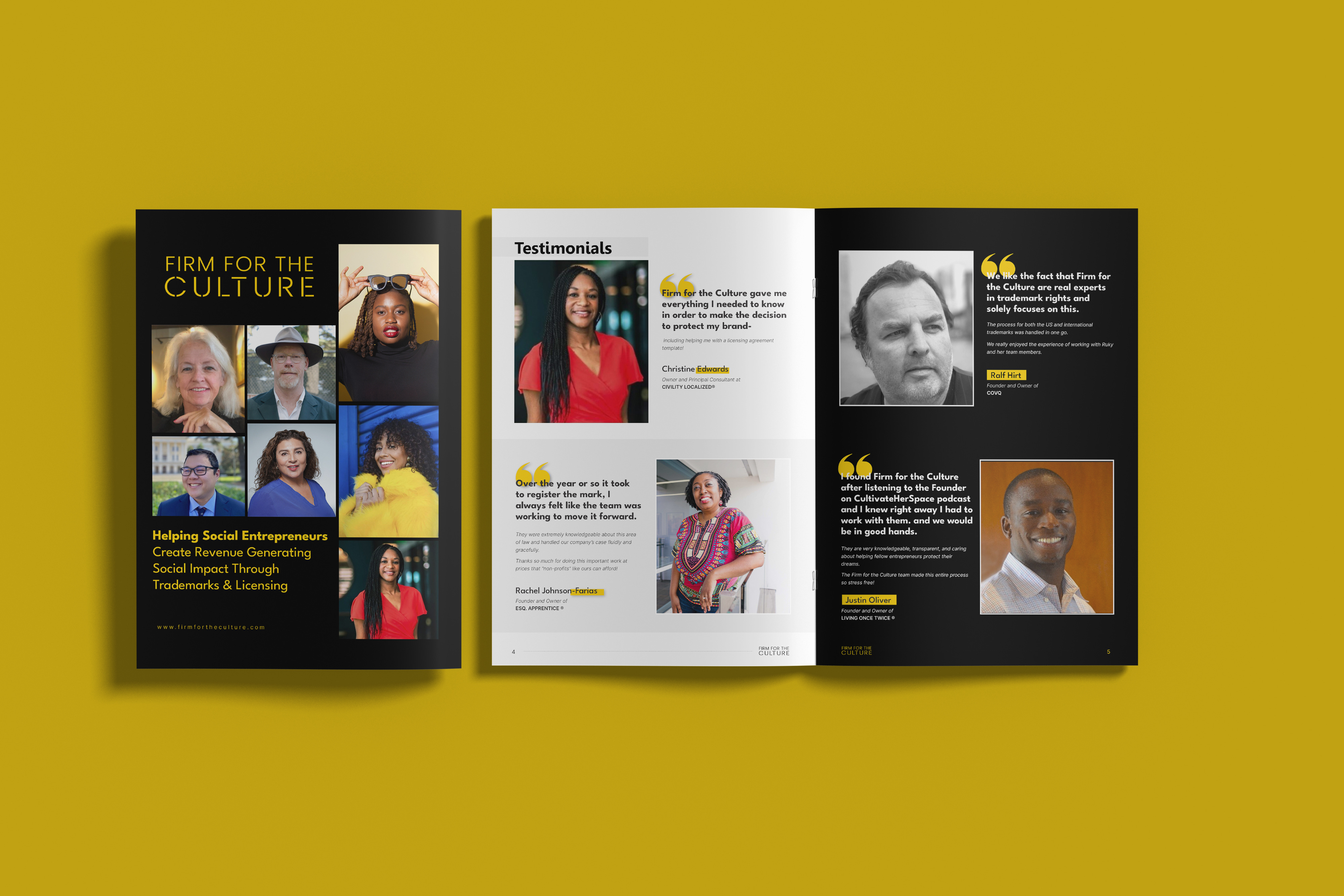
If you need further guidance, reach out to me and my team at Firm for the Culture.
We’re here to help you navigate the copyright, trademark, and thought leadership journey.
Can’t wait to help you protect your dynamic impact.
And #ThatsAWrap
The Doors of the Church Firm Are Open
Thanks for reading
See you next time.
Amazing Article Ruky!
To think that Byron Allen, now 64 yrs old, would be the spearhead of justice in such a situation is difficult to wrap your head around initially. Yet, so few people know how serious Byron Allen is when it comes to how African American Culture is perceived.
Believe it or not, there was a time when many Black Americans thought Byron Allen was just another Tom, Sambo, or Uncle Tom/ House Nigga. However, he stood his ground and didn’t pay one bit of attention to the ignorance that spewed from the mouths of some of the ignorant individuals within the African American Community at that time. Byron Allen had somehow received his own Talk Show, being called "The Byron Allen Show” in 1989. Unfortunately, many of the African American Community didn’t know he had been working in the Entertainment Industry for the past 10 years prior to getting his big break to host his own talk show.
Byron distinguished himself through multiple efforts to assist Black Writers, Directors, and Filmography Professionals within the Entertainment Industry, which went unseen by most. Through his upstanding actions in the Entertainment Industry & African American Community most African Americans stopped accusing him of being a Tom, Sambo, or Uncle Tom house Nigga, and began to support his projects, ventures, and activities.
The suit against McDonald’s, when initially filed in 2021, had merit, but as with any Law Suit the end was nowhere in sight, so it was difficult to follow.
I’m so happy that Firm for the Culture aka: Ruky decided to post this article, because there’s a 99.99998% chance that this ruling & settlement doesn’t make national news in the least.
Thank you very much Ruky. May God Almighty Continue to Bless You.
Inspirational, Ruky.
Two things came to mind:
1. Dr. King's quote: the arc of history bends towards justice
2. It would only work where the legal system can be relied upon (ie isn't captive to other forces).