

Hey Fam,
In the era of AI, let’s talk about something that the courts are making abundantly clear:
Where you get your data matters.
When you’re ready to plug your master prompt into ChatGPT, Claude, Anthropic, or any other generative AI system — make sure to ask this question:
Where is that data coming from?
Because even if the output is “transformative” or substantially different — even if it’s clean, compelling, and seemingly unrelated to the original — you can still be on the hook for an illegally obtained input.
Which means…. surprise surprise, you can be sued for the input, even if the output is wildly different.

But…how?
Well, that’s the heart of what a recent federal court ruled in Bartz v. Anthropic PBC, a case that’s now joining the ranks of the growing federal cases speaking to the intersection of copyright and AI.
Judge William Alsup of the Northern District of California essentially said this: You can train AI on massive datasets, if your use is transformative (in this case, if the output is significantly different from the input), purposeful, and lawfully acquired.
But you cannot hoard wrongly obtained copyrighted materials — especially pirated ones — and call it innovation just because you ran it through Chat GPT and came out with something different.
Ain’t nobody got time for that….
Complex, I know….right?
But just how does that actually affect us — as business owners, as creatives, as diverse and ambitious founders working to build meaningful impact while navigating tech-driven markets?
That’s what this Founders’ Letter is all about.
In this letter, we’re going to dive deep into the three main rulings of the recent Anthropic case, and we’re also going to glean three different insights and takeaways you can implement as a business owner.
Ready?
Let’s dive right in.
Loving This Post?
Show us some love by adding a “❤️” or commenting below; this will make our hearts sing.
But First, Church Announcements:
We’ve got a new free guide just for you!

If you’re a social entrepreneur building something meaningful, don’t just make it memorable—make it legally yours.
📘 Download our Free 10 Ways to Protect Your Artistic Vision here
This must-read resource is designed for thought leaders, coaches, and consultants who want to lead with their ideas—without fear of theft or dilution.
If you’re building a values-driven, culturally rich brand, this guide walks you through exactly what needs protecting: your business name, logo, course titles, podcast, recorded content, books, and signature events.
You’ll learn the key differences between trademarks and copyrights, how to use both strategically, and why protecting your creative assets isn’t just smart—it’s essential.
Whether you’re just getting started or scaling your impact, this guide will help you own your genius and build boldly.
Your work deserves more than a logo. It deserves a legal legacy.
Now, back to our regularly scheduled program…. :)
So…What’s the “Tea,” or what Actually Happened?
Anthropic, a company spun out of OpenAI, built its large language model (“LLM”) called Claude on a mix of scanned, purchased, and pirated books—over 7 million of them, to be exact.
Among those books were copyrighted works by several authors including three of the plaintiffs in this case.
But here’s the wrinkle, Claude didn’t just train on these works. Anthropic, Claude’s leader, also stored them indefinitely, creating a searchable internal library for future, undefined uses.
The authors sued.
And they got some big wins while also gaining some big “L’s.”
So let’s unpack this case and glean insights you can apply to your business today.
There were three decisions, each based on the Fair Use Doctrine.
Judge Alsup separated Anthropic’s actions into three categories—and treated each one differently under the fair use doctrine.
What is the Fair Use Doctrine?
The Fair Use Doctrine is a key part of U.S. copyright law that allows limited use of copyrighted material without permission — but only under specific circumstances.
Specifically, it’s a four-factor balancing test that courts use to determine whether using someone else’s work qualifies as “fair.”
These “fair” uses typically include criticism, commentary, news reporting, teaching, scholarship, or research.
It’s why SNL can parody political speeches.
It’s why book reviewers can quote passages in detail.
It’s even why journalists can republish screenshots from social media.
In essence: Fair use doesn’t just excuse copying — it removes it from the scope of infringement entirely.
But how such information is obtained will still play a key role in the fair use analysis, as we discuss in more detail below.

Insight #1: The Act of Feeding an LLM Can Be Fair Use — Under the Right Conditions
Ruling # 1: Training Claude on Millions of Books CAN BE Fair Use
In other words, and under certain circumstances, YOU DO NOT HAVE TO PAY AUTHORS TO TRAIN YOUR LLM ON MILLIONS OF BOOKS AT A TIME.

Why? The Court ruled that Anthropic’s training process — taking in millions of books to train Claude — was seen as highly transformative.
In this context, the work was “highly transformative” because the output that Clause produced was so different from the input that no copyright infringement could be reasonably claimed, much in the same way copyright infringement can’t be claimed for a student who reads, reviews, and studies 100s of books in preparation for their PhD dissertation.
So yes — the act of feeding a large language model (LLM) copyrighted books can be considered fair use.
But not so fast, Chat GPT and Anthropic….
The fair use defense still hinges on how that content is used, where the content comes from — and whether the outputs actually transform the input in a meaningful way.
Takeaway: Training on content to transform it is permissible. But where or how you obtain that content still matters.

Insight #2: Scanning Lawfully Purchased Books to Obtain Internal Efficiency Is Legit— But Transparency Still Matters
Ruling #2: You can scan and digitize millions of physical books without causing copyright infringement if they are acquired legally.
Anthropic bought print books, scanned them, then destroyed the originals.
Why?
Efficiency.
Searchability.

Because of this, Anthropic argued it did not commit copyright infringement by simply scanning books they lawfully purchased in order to make internal research smoother and more centralized.
And you know what?
The court agreed.
Because Anthropic didn’t:
Create extra copies,
Redistribute the material,
Or undercut the market for those books…
…this use passed the fair use test.
Takeaway: You can change the format of legitimately obtained copyrighted materials without committing copyright infringement, but you want to make sure you have proof of legitimate attainment.
In other words?
Documentation matters.
The only reason Anthropic won this part of the case was because they showed that a significant portion of their books had been lawfully acquired and was used strictly behind closed doors.

Insight #3: Retaining Content You Don’t Own Isn’t Innovation — It’s Infringement
Ruling # 3: You CANNOT download pirated copies of books and then claim “fair use” simply because you also trained your LLM on them.
In other words, your “transformative output” is not going to save you from a copyright infringement claim when you stole the source material.
This is where the court drew a hard line — and where Anthropic lost.
The court explicitly raised the concern that Anthropic had the resources to purchase the books it pirated, it just didn’t…
And the decision not to purchase these works legitimately simply meant that they engaged copyright infringement….just like people buying bootleg DVDs on 125th and Lexington in Harlem…
Takeaway: You can’t cloak yourself in the language of innovation and “fair use” while building a digital bookshelf full of stolen books.
Why This Matters for Founders (and Especially Content Creators):
Let’s be real: as diverse founders leading creative, consulting, or impact-driven businesses, many of us are used to our intellectual property being borrowed, referenced, or outright taken without permission.
This ruling gives us language—and legal precedent—to push back.
Because now, it’s not just about whether someone used your content verbatim.
It’s about whether they copied and kept it without your consent.
This is massive for:
Authors publishing powerful narratives rooted in culture and lived experience.
Coaches and consultants sharing frameworks built over years.
Thought leaders creating IP that defines movements.
Now, we don’t need to wait for a chatbot to spit out our words to take action.
We can move as soon as proof of unlawful attainment is proven.

What stood out most to me wasn’t the flashy “AI vs. copyright” headlines. It was the court’s deep dive into how we think about fair use.
Judge Alsup reminded us: fair use isn’t just a get-out-of-jail-free card.
It’s a fact-specific, nuanced doctrine rooted in intent, market impact, and transformation, and it’s not an doctrine to navigate without an attorney.
Furthermore, AI development and respect for authorship should not be considered mutually exclusive goals.
Indeed, we can build transformative tools and respect the humans whose ideas fuel them.
So if you’re a:
Creator: Your work has value. Not just when it’s quoted, but when it’s stored, studied, or sold without your permission.
Founder: Know what your tools are trained on. Cutting corners now might cost you later.
Fellow Strategist or Lawyer: Push for clarity. Demand transparency. Use rulings like this to advocate for stronger, smarter IP protections.
Because in a world increasingly automated, respecting the labor of human creation might still be the most important innovation of all.

Drop your thoughts in the comments—let’s talk about it.
Need Help Protecting Your Creativity?
If you are unsure—or if you know you need to take action—reach out to us.
We have helped countless founders and creatives safeguard their intellectual property, and we would love to do the same for you.
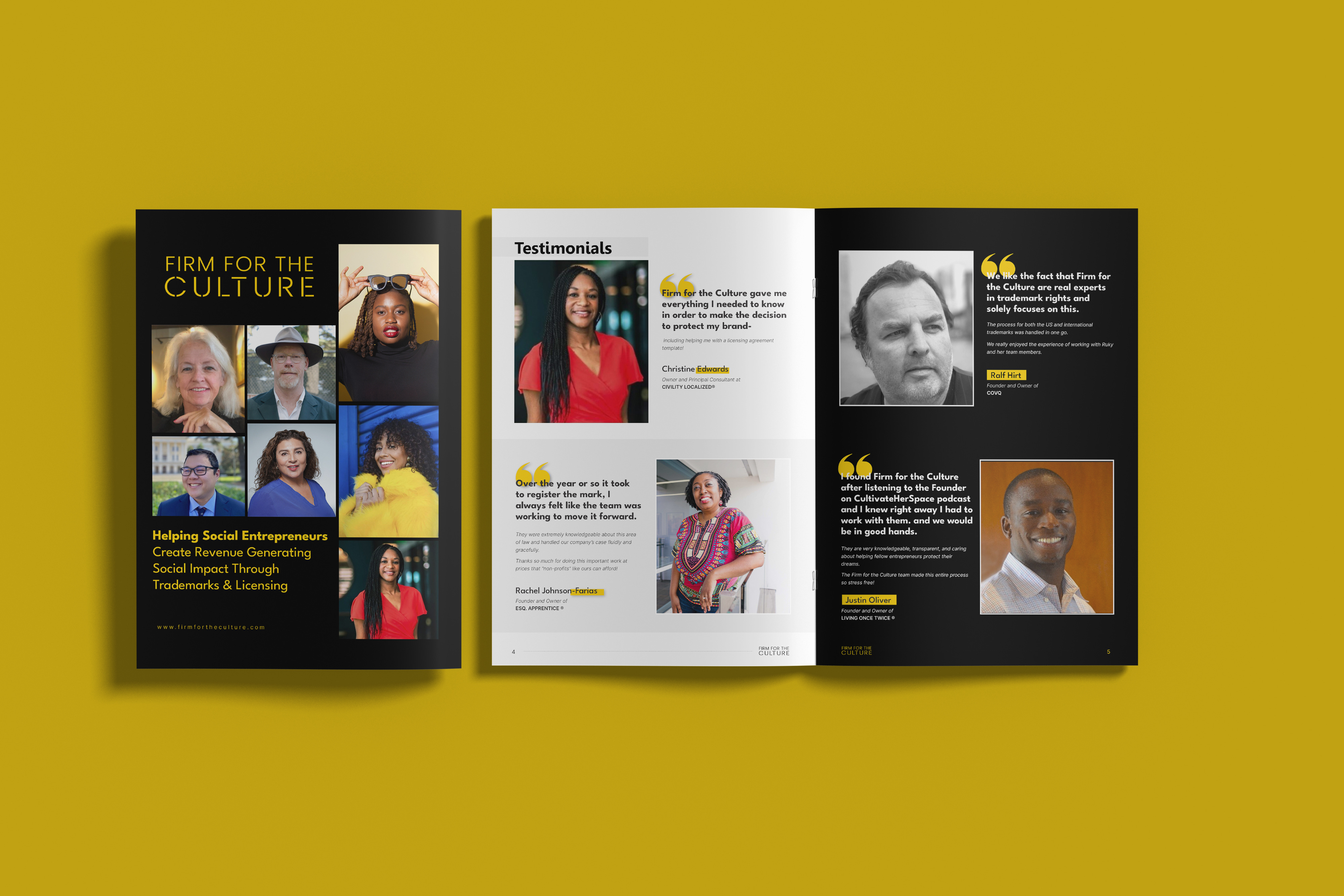
If you need further guidance, reach out to me and my team at Firm for the Culture.
We’re here to help you navigate the copyright, trademark, and thought leadership journey.
Can’t wait to help you protect your dynamic impact.
And #ThatsAWrap
The Doors of the Church Firm Are Open
Thanks for reading
See you next time.
What a brilliant piece, Ruky. It should be read far and wide.
It made me think of how musicians and songwriters have collective bodies that monitor and distribute royalties to them, from exposure on radio, TV, live venues & streaming. (Think: bodies like ASCAP, BMI, SoundExchange).
So - you guessed it - I asked ChatGPT if any such a body exists. It said:
In short:
✅ Yes, there has been serious and growing discussion about creating royalty-collecting bodies for AI training data.
❌ But no such body exists yet, and no formal framework is in place.
🔜 However, pressure is mounting from authors, publishers, artists, and international governments to build a system that mimics collective licensing in other media.
I hope the stakeholders can push through the obstacles to create something like a 'blanket licensing structure' that 'evens up' the balance of power between copyright holders and AI companies. Just like the music industry.
Link
Very insightful. Thank you for translating the legalese into something a commoner can understand.