
Hey Fam,
There is a moment in almost every contract dispute that does not get talked about enough.
You have read the agreement.
Something went wrong.
An invoice is unpaid. The project expanded beyond the original scope. Someone is using your intellectual property in a way you did not authorize. Or the other side believes you are the one who failed to perform.
Now you have to talk about it.
And suddenly, the clause you were pointing at five minutes ago feels like the easy part.
Because the contract can tell you what was promised.
It cannot make the phone call, send the email, or decide what you need from the person on the other side.
That part requires judgment.
I have had plenty of these conversations, and one thing I have learned is that I do not want to begin with the biggest weapon available just because I am frustrated.
First, I want to understand the problem.
Then I want to understand the result that would actually help.
I also want to know whether there is still a business relationship worth preserving when the issue is resolved.
Contracts matter.
Connections do too.
So today, we are getting into the part that happens after the agreement goes sideways: how to prepare for the conversation, how to make your ask clear, and how to recognize when talking is no longer enough.
Ready?
Let’s get into it.

Loving This Post?
Show us some love by adding a “❤️” or commenting below; this will make our hearts sing. Also, please share, we want this to get to as many folx as possible.
But first, Church Announcements!!
Speaking of this exact problem...
Our next Contract Breach Academy session is coming up.
December 3 | 8:00–9:30 a.m. Pacific | FREE LIVE AMA
Hard Conversations After Contract Breaches
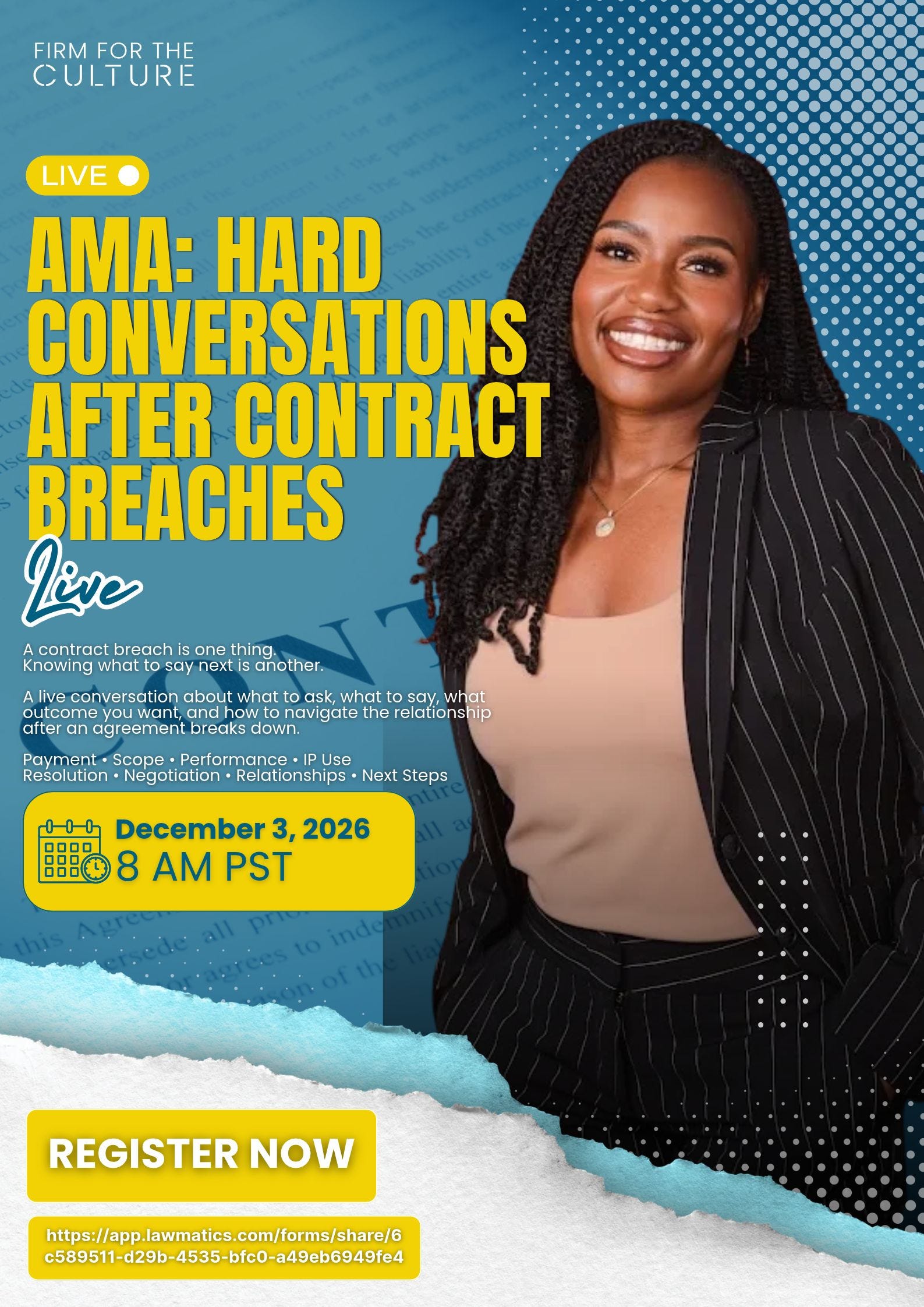
A contract was breached. Now you have to figure out how to address it with the person on the other side.
During this live AMA, we’ll talk about preparing for those conversations, identifying the result you actually need, making a clear request, and deciding how the business relationship should shape your approach.
I’ll also draw from my own experiences navigating difficult contract situations and answer your questions live.
Bring the situation you have been trying to work through.
And then we’re closing out the year with:
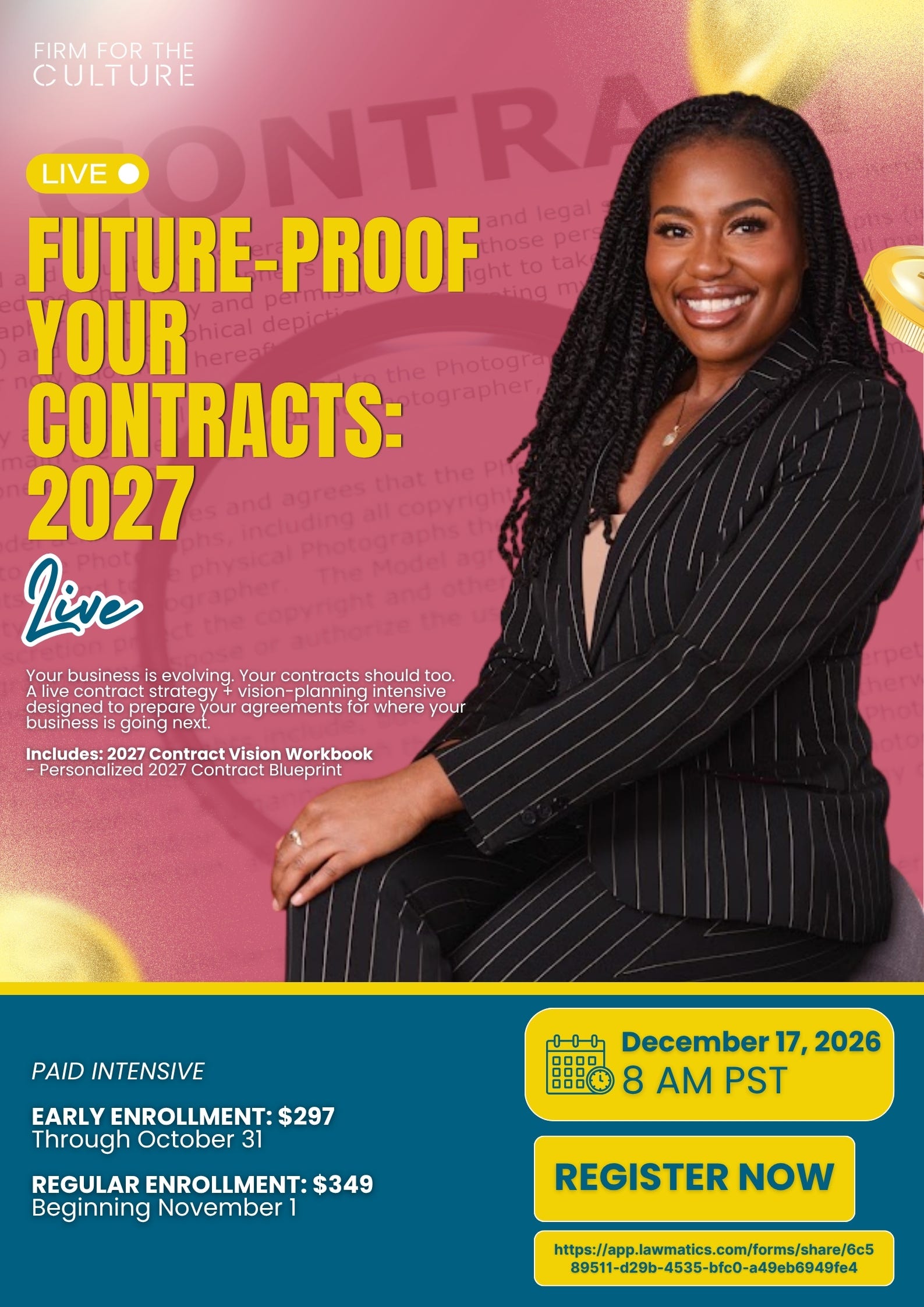
December 17 | 8:00–10:00 a.m. Pacific | PAID INTENSIVE
Future-Proof Your Contracts: 2027
This is our live contract strategy + vision-planning intensive.
You’ll work through a 2027 Contract Vision Workbook and leave with your own 2027 Contract Blueprint so your agreements can actually match the business you’re building next year.
1 CLICK — REGISTER FOR CONTRACT BREACH ACADEMY
Now, let’s get back to the program.

“I know they breached.”
Okay.
Tell me more.

When somebody comes to me with a legal problem, I need more than the conclusion.
I need to understand what the agreement required, what each side was responsible for, and where reality departed from what was promised.
When we talked about nonpayment during Contract Breach Academy, one of the questions I kept coming back to was:
Why didn’t they pay you?

Maybe you performed exactly as required.
Maybe something the other side was supposed to provide never came through.
There could be a disagreement about what counts as complete, a project that expanded along the way, or a client who simply stopped responding.
Those details matter.
You cannot have a productive discussion when frustration is doing all the talking.
And listen, sometimes you look at a situation and think:
Come on, Ruky.
Look at what they did.
I may agree with you.
But if you want the other side to respond, pay, stop, correct something, or seriously consider your position, clarity helps.

The agreement tells us what was promised.
Your records help us understand what took place.
Emails, invoices, approvals, deliverables, and other communications can give the story context.
That puts you in a much stronger position than:
“You know what you did.”
Founder Gem: The agreement tells you what was promised. Your record helps show what actually happened. Before you decide what to say, make sure you understand the problem you are actually trying to solve.

People can enter a dispute knowing exactly how angry they are and still have no idea what they want the other person to do.
Those are two very different things.

Some of my first questions when I am helping someone work through a legal problem are:
What are you most concerned about?
And:
What are your goals?
The answer shapes the strategy.
A founder trying to collect an outstanding payment is in a different position from someone trying to stop unauthorized use of intellectual property.
Maybe the work needs to be corrected.
Maybe the engagement needs to end.
Maybe there is still enough value in the relationship to repair it under different terms.

I once had a speaking engagement where the scope started expanding.
I had agreed to give the talk, but additional rehearsals and conversations were being added to my time.
I did not open with some dramatic:
“YOU ARE IN BREACH.”
I asked whether they anticipated compensating me for the additional work.
That got us directly to the issue.
The problem was not that I needed them to feel bad.
The work had changed. The compensation had not.
That was what needed to be addressed.
You do not need a perfect script before every difficult discussion.
You do need to understand what you are asking for.

Maybe that is payment, additional compensation, corrected work, a revised deadline, an end to unauthorized use, or a clean exit from the engagement.
Be clear with yourself first.
Founder Gem: What do I want to preserve? What do I want to change? What do I want to exit? Those questions can tell you a lot about how to approach the person on the other side.

There is a negotiation I come back to often because it changed how I think about these conversations.
I was reviewing terms connected to a speaking engagement, and I had concerns.
I could have opened by listing every provision I disliked.
Instead, I started with the purpose.

I wanted to understand what the organization was trying to accomplish with the presentation and what it actually needed from me.
Once that became clear, it was much easier to explain why some of the contract language was broader than necessary.
Then we could negotiate around the actual business goal and put our understanding into the agreement.
That approach will not solve every dispute.
Trust may already be gone. The facts may be clear. The other party may have no interest in resolving anything informally.
But I do not want founders assuming that every hard conversation needs to begin with an accusation.
A useful question can give you information first.
You might ask:
“Help me understand what happened.”
Or:
“What was your understanding of this part of the agreement?”
The point is not to surrender your position.
It is to understand the disconnect before deciding how to respond.
Then make the request clear.
“This is what the agreement required.”
“This is what occurred.”
“This is what I need in order to resolve it.”
Now we are talking.

Founder Gem: A strategic question can get you information that an accusation never will.
Do Not Forget the Relationship Sitting Underneath the Agreement.
This is the part people sometimes expect lawyers to ignore.
I do not.
A dispute exists inside a business relationship.
That context matters.
Is this somebody you want to continue working with?
Was this a one-time mistake from a longtime collaborator who is willing to fix it?
Or has the other party repeatedly ignored the agreement and refused to engage?
Those situations should not automatically receive the same response.
This does not mean friendship overrides the contract.
It does not mean accepting nonpayment because you like the client.
It does not mean allowing someone to cross the same boundary repeatedly because addressing it feels awkward.

It simply means that the relationship is one of the facts shaping the strategy.
Your legal rights still matter.
So does the business context around them.
That is why I do not treat escalation like a personality trait.
Aggressive is not automatically strategic.
Nice is not automatically strategic either.
The better question is:
What approach moves the business closer to the result it actually needs?

And If the Conversation Does Not Work?
Then you decide what comes next.
The choices are rarely limited to:
Let it go.
Or sue everybody.
Depending on the situation, there may be another direct discussion, a process already written into the agreement, involvement from counsel, a formal demand, collections, arbitration, or ultimately litigation.
The right option depends on the agreement, the evidence, the economics, and the business objective.
That last part matters.
A legal result and a business win are not automatically the same thing.
You can spend a lot of money proving you were right and still wonder whether the process gave you what you actually needed.
So before escalation, step back and ask whether the next tool matches the problem you are trying to solve.

So Before You Send That Message...
Read the agreement again.
Make sure the facts are clear.
Know the result that would actually help the business.
Consider whether the relationship should continue, change, or end.
Then decide how directly you need to address the issue.
The goal is not to make conflict comfortable.
It is to keep frustration from making the decision for you.
Because when somebody breaches an agreement, the contract matters.
The evidence matters.
The business objective matters.
And the way you handle the conversation can shape what happens next.

So let me leave you with the question I ask in some form all the time:
What are you actually trying to accomplish?
Start there.
Then decide what needs to be said.
Tell me what you think in the comments.

Join Us for Contract Breach Academy
December 3 | 8:00–9:30 a.m. Pacific | FREE LIVE AMA
Hard Conversations After Contract Breaches
If you have a real situation you have been trying to think through, bring your questions.
We’ll talk about what to say, what to ask, how to identify the outcome you actually want, and how to navigate difficult conversations after an agreement breaks down.
I’ll also be pulling from my own experiences and answering attendee questions live.
Need Help Protecting What You’ve Built?
At Firm for the Culture, we help founders protect, maintain, enforce, and strategically grow their intellectual property portfolios.
Because getting the registration is a major milestone.
Keeping the asset protected as your business grows is the long game.

Can’t wait to help you protect your dynamic impact.
And #ThatsAWrap.
The Doors of the Church Firm Are Open.
Come on in and share the love.
Thanks for reading.
See you next time.
#ForTheCulture
👩🏾⚖️⚖️