

Hey Fam,
Every so often, a story drops into the cultural conversation that looks like entertainment on the surface, but quietly operates as a legal masterclass.
This week’s lesson came wrapped in a headline that shocked the culture at the end of 2025:
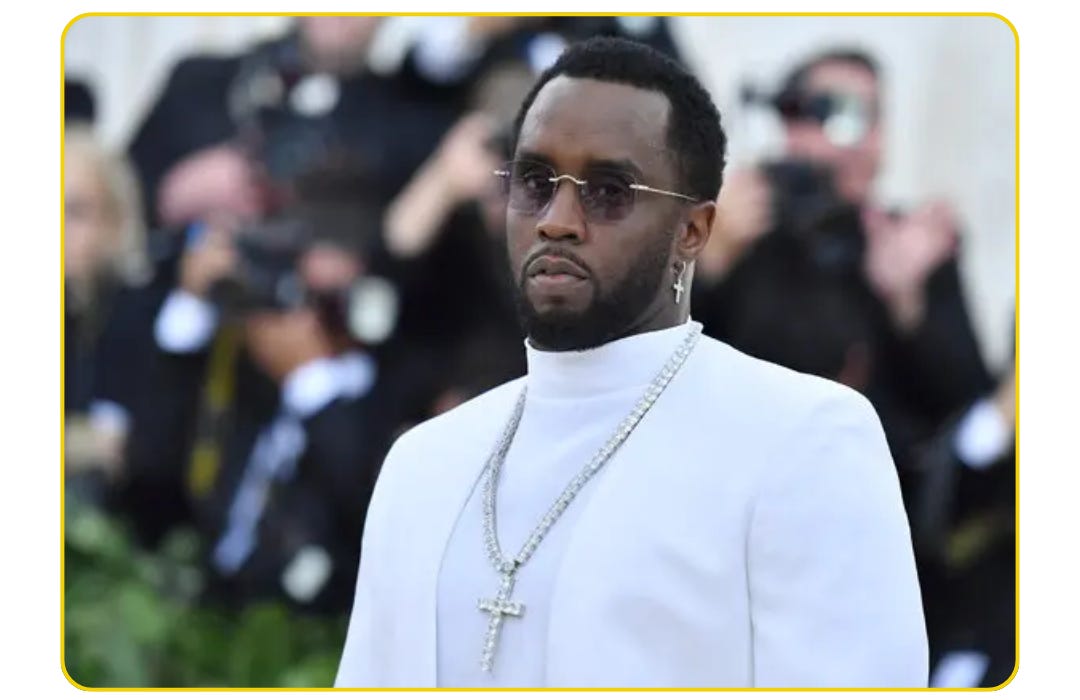
“Sean ‘Diddy’ Combs Demands Netflix Drop 50 Cent Series, Citing New Footage.”
In Case You Missed It
Footage that Diddy himself arranged — a videographer documenting his final days before an anticipated arrest — somehow ended up in the hands of his longtime rival, 50 Cent, and is now included in a four-part Netflix documentary.
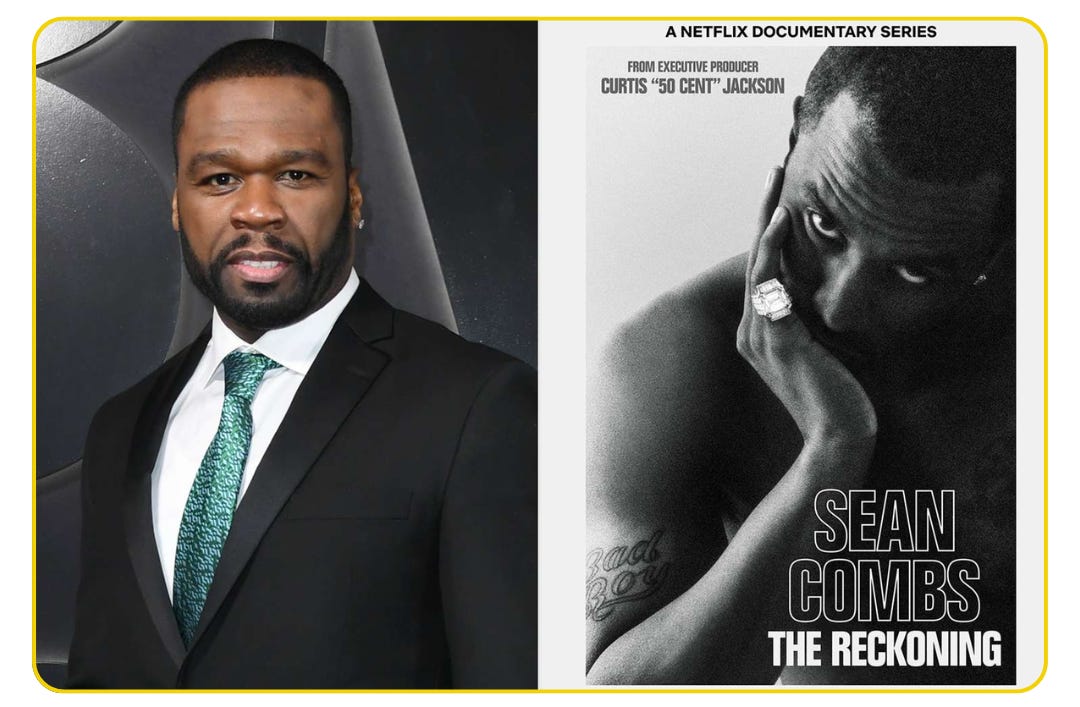
Diddy’s team is arguing copyright violations.
The filmmakers say they have the rights.
Netflix is standing firm.
And the internet is collectively asking:
Wait… how did they get Diddy’s footage?
In this Founder’s Letter, we break down what this headline reveals about copyright ownership and why contracts decide who controls the footage.
Ready?
Let’s get into it.
Loving This Post?
Show us some love by adding a “❤️,” giving a share, or commenting below; this will make our hearts s


But first, some church announcements...
We have some really big moments planned for this year, and we’re excited to invite you into them.
These upcoming events are designed to meet you where you are — whether you’re building, protecting, scaling, or repositioning your intellectual property.
The Firm for the Culture - Power Moves Series
Over the next few weeks, we’ll be rolling out our Power Moves Series to help you start the year off right.
You’ll hear about some of the top moguls in our industry—including Kevin Hart, Ryan Coogler, and Issa Rae—as we unpack their stories, break down the contractual decisions that shaped their careers, and highlight the IP power moves that helped them build longevity and leverage.
More importantly, we’ll translate those lessons so you can apply them directly to your own business.
Sign up for our first event below!
EVENT #1 — THE POWER MOVES SERIES: KEVIN HART | January 22, 2026
EVENT #2 — THE POWER MOVES SERIES: RYAN COOGLER | February 12, 2026
Now, back to our regularly scheduled program…. :)

As we’ve shared before, when there is no contract — or when a contract is vague, silent, or incomplete — the law does not shrug and say, “oh well.”
Instead, the court fills in the gaps with fallback or default rules.
Copyright has default rules.
Ownership has default rules.
Control of footage has default rules.
So…let’s get into some of those rules, shall we?

And one of the most misunderstood defaults is this:
The subject of a video is almost never the owner of the copyright.
Unless it’s a selfie, appearing in footage does not make you the owner.
The owner is the person who presses the button or the shutter.
And, fun fact, if the “presser” of the shutter is not a human person, then no one owns the copyright.

One of my favorite copyright cases makes this “human copyright” point crystal clear.
In 2018, a federal court ruled that Naruto—an Indonesian macaque who famously took selfies using a nature photographer’s camera—could not file a copyright infringement lawsuit. And just as importantly, neither could the photographer who owned the camera.
Why? Because copyright law requires a human author.
The Ninth Circuit put it plainly:
“Nonetheless, we conclude that this monkey—and all animals, since they are not human—lacks statutory standing under the Copyright Act. We therefore affirm the judgment of the district court.”
The takeaway isn’t novelty. It’s doctrine. Copyright does not attach to proximity, ownership of equipment, or being the subject of the work. It attaches to human authorship. If no human pressed the shutter, made the creative choices, or exercised control over the expression, there is no copyright to enforce.
It’s a strange case. It’s also a perfect one. Because it reminds us that copyright law isn’t about vibes, presence, or entitlement—it’s about authorship, fixation, and who the law recognizes as the creator.
But why does the subject of the film not own the copyright by default, you ask?
Because pressing that button isn’t passive.
It’s creative.
Think about it.
When “clicking” the button, the videographer controls:
framing
angles
lighting
timing
what’s included
what’s excluded
how the story is captured
even subtle choices like volume shifts or perspective
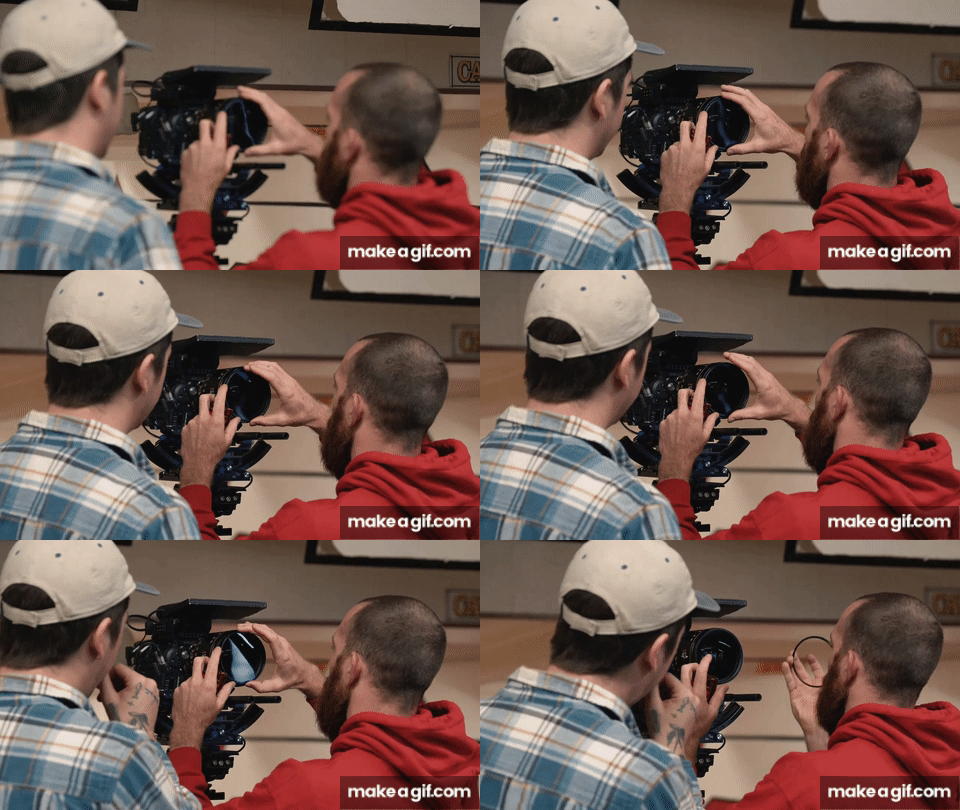
This “modicum of creativity” is all the law needs to assign copyright ownership to the person behind the camera — not the person in front of it.
So unless a contract says otherwise, the videographer owns the footage.
According to Netflix’s director, that is precisely the legal foundation they’re relying on when they say they obtained the footage “legally” and have the “necessary rights.”
This is why contracts matter.
And we have an upcoming free workshop on Feb 26, click here to sign up: Do NOT Sign That Contract (Feb 26, 2026)

There is a scenario where the person “clicking” the button does not own the copyright:
If they are an employee, and the footage is created within the scope of their employment.
In that case, the copyright automatically belongs to the employer.
But here’s the wrinkle in Diddy’s situation.
It’s not clear or proven that he is the “employer.”
(Especially if you don’t pay people for the work they do…but that’s a conversation for another day….).
There is no indication—none—that this videographer was Diddy’s employee.
There is no W-2.
No traditional employment structure.
No evidence that this was a work-for-hire, unless a separate contract exists (and if it did, Diddy’s team would have led with it).

This is why Diddy’s lawyers are relying on broad claims like “illicitly acquired” or “violating contractual agreements”—because the default copyright rules are not in his favor.
Without a contract defining ownership, the law will default to the creator of the footage.
And that appears to be what happened here.

Fair question — and an important one.
Copyright governs who owns the footage.
Privacy and publicity rights govern how a person’s name, image, or likeness can be used.
Could Diddy argue privacy violations? Possibly.
Could he raise right-of-publicity claims? Maybe.

But those arguments depend on:
jurisdiction
whether the footage is newsworthy
whether First Amendment protections apply
how the footage is used
whether any confidentiality or privilege was breached
And as the NYT story noted, some footage may include attorney client privileged conversations and confidential legal strategy discussions, which opens an entirely different legal door—one worth examining closely.

We’re going to look more deeply into the privacy and publicity angles in a follow-up piece.
Because trust me: there’s a lot there.

Here’s the part that matters for you.
If you don’t contract around ownership, the law will decide for you.
And unfortunately for diverse creatives, the law is not:
sentimental
intuitive
culturally aware
impressed by your brand
moved by “but it was my idea”
The law follows authorship.
And authorship, in many cases, follows the person pressing the button.
If you hire:
a videographer
a photographer
a podcast editor
a designer
a developer
You need contracts that clearly define:
who owns the raw files
who owns the final deliverables
whether rights are assigned or licensed
what confidentiality applies
what “work for hire” actually means
who controls distribution
what happens if the relationship ends badly

Because if you don’t define it, the default rules will.
Every.
Single.
Time.

We’ll be diving deeper into privacy and publicity rights in another Founders’ Letter — especially how they operate when public figures are involved.
As this situation continues to unfold, one truth remains constant:
The law protects the prepared.

More soon.

Who actually owns the work when no contract says otherwise? Drop your thoughts below! Let’s talk about it.

Want help figuring out whether your name—or brand—is ready for trademark protection?
We’ve got you.
Book a Strategy Session with Firm for the Culture and let’s make sure your name isn’t just recognized—it’s protected.
Need Help Protecting Your Creativity?
If you are unsure—or if you know you need to take action—reach out to us.
We have helped countless founders and creatives safeguard their intellectual property, and we would love to do the same for you.
If you need further guidance, reach out to me and my team at Firm for the Culture.
We’re here to help you navigate the copyright, trademark, and thought leadership journey.

Can’t wait to help you protect your dynamic impact.
And #ThatsAWrap
The Doors of the Church Firm Are Open
Thanks for reading
See you next time.
Phenomenal breakdown of copyright ownership defaults. The videographer owns the footage angle catches so many folks off guard, dunno why more people dont realize this upfront. Wildly important reminder that contracts protect you when default rules don't favor what you assumed, especially in creative industries.
Love your analysis.