
Hey Fam,
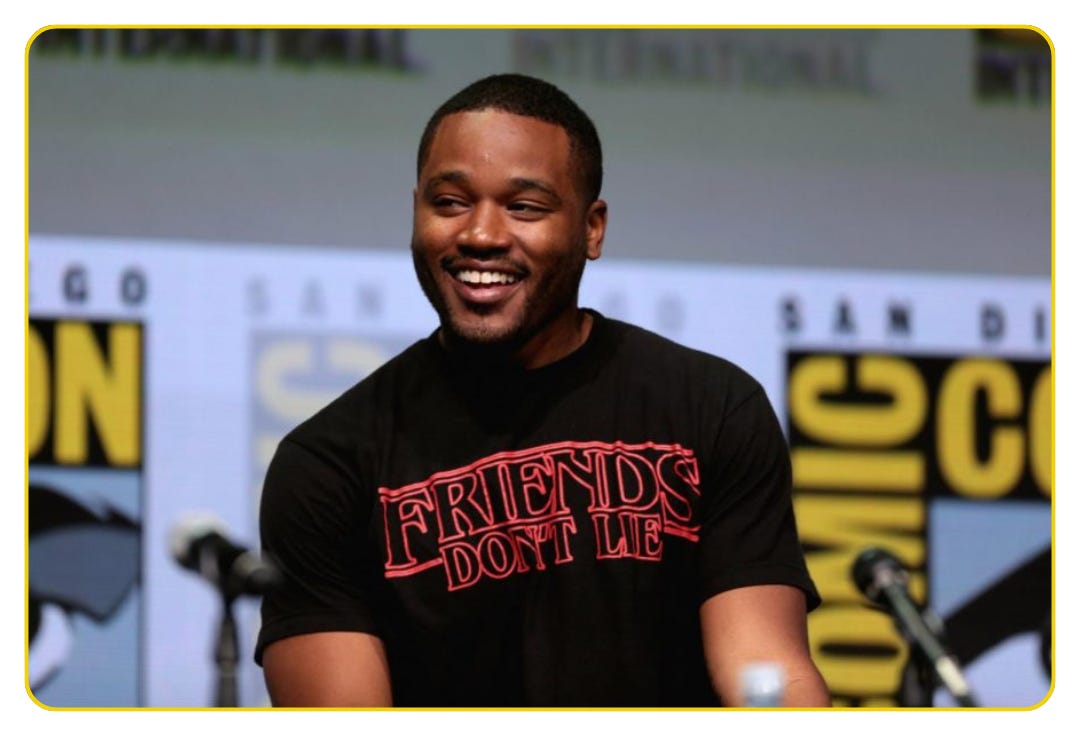
Before Ryan Coogler was the director of Black Panther, before Creed, before Fruitvale Station won both the Grand Jury Prize and the Audience Award at Sundance, before Sinners became the biggest opening for an original film in years and earned him an Oscar for Best Original Screenplay — before any of it — he was a humble college student on a football scholarship trying to write screenplays in Microsoft Word.
And fam, that format was wrong.
And it wasn’t a good look.
As in the legal field, format is not a preference in screenwriting.
It is the standard.
It is the difference between a script that gets read and one that gets thrown away.
And Ryan could not meet the standard because he could not afford the software that would let him.
His girlfriend at the time— Zinzi Evans, now his wife and creative partner — scraped together $300 and bought him Final Draft, a professional screenwriting software platform.
Nobody covered that moment. Nobody called it historic. It was a Tuesday. It was $300. It was a young woman who believed in something that did not exist yet.
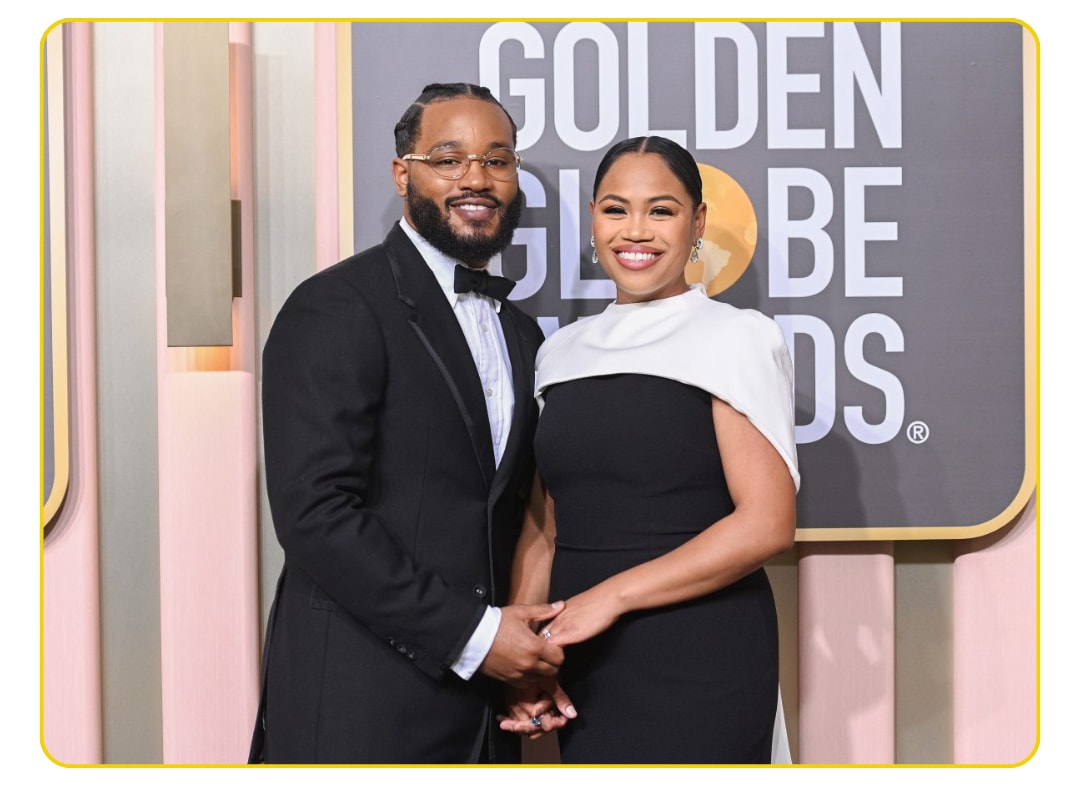
That investment became Fruitvale Station.
Then Creed.
Then Black Panther — over two billion dollars at the worldwide box office.
Then Sinners, where Coogler negotiated something Hollywood had never given a Black filmmaker: full ownership of the film reverting back to him after a few years.
Unheard of. Built on twenty years of creative infrastructure that started with a $300 investment in obscurity.
Zinzi wasn’t only investing in a filmmaker.
She was investing in a future that didn’t exist yet.
And that is the most powerful investment there is.
What I Think About When I Hear This Story
As a full-time entrepreneur and attorney, I sit with founders at every stage of building.
Early stage, when the dream is bigger than the revenue.
Mid-stage, when the momentum is real but the structure hasn’t caught up.
And late stage - this stage breaks my heart a little — it’s often when something extraordinary has been built and the legal infrastructure simply is not there to protect it.
So when I hear this story about Zinzi and the $300, I think about every founder, creative, and inventor who has told me the timing isn’t right yet.
The business isn’t big enough yet. They’ll file when there’s more money. They’ll register when the brand takes off. They’ll structure the ownership when the deal is on the table.
And I understand it. I do.
Trust me, I have said versions of the same thing to myself.
But Zinzi did not wait for Fruitvale Station to exist before she bought Final Draft.
She bought it so that Fruitvale Station could exist.
It was an investment rooted in faith and determination.
That is the order that matters.
What Does Your Life Look Like?
I want you to stop for a moment.
Not to think about your legal checklist. Not to stress about what you have not done yet.
But just to dream for a second — the way Zinzi must have dreamed when she, as a college student in her own right, handed over that $300 to her football player boyfriend.
What does your business look like five years from now if you make the infrastructure investment today?

Not five years from now when you finally feel ready. Not five years from now when the revenue justifies it. Five years from now if you start now — with the trademark application, the copyright registration, the ownership agreement, the legal foundation that says: I believe in what I am building enough to protect it before anyone tells me it’s worth protecting.
What does it look like when the deal comes and you already own your name?
When the collaboration arrives and you already have the documentation that protects your work?
When the licensing conversation happens and you already understand what you are licensing and what you are not?

And ten years from now — what does it look like if the infrastructure was already in place every time an opportunity arrived?
Not scrambling to catch up.
Not patching holes. Walking into rooms the way Coogler walked into that Warner Bros. negotiation — with enough leverage to own his own film because he had spent twenty years building the creative infrastructure that made that ask possible.
I think about this for the people I work with. And I think about it for myself:
Because the truth is, if I’m being honest, the investment in the obscurity — before the validation, before the deal, before the moment makes it obvious — that is sometimes the hardest investment to make.
But, more often than not, it is the only one that actually compounds.
In this Founder’s Letter, we are going to talk about what the $300 actually was, what it looks like to invest before the validation arrives, and what becomes possible — for your business and for your life — when you do.
Ready?
Let’s get into it.

Loving This Post?
Show us some love by adding a “❤️” or commenting below; this will make our hearts sing. Also, please share, we want this to get to as many folx as possible.

But first, Church Announcements.
The Firm for the Culture - THE SPEAKER PROTECTION Series
We’ve got a series of workshops, all for you!
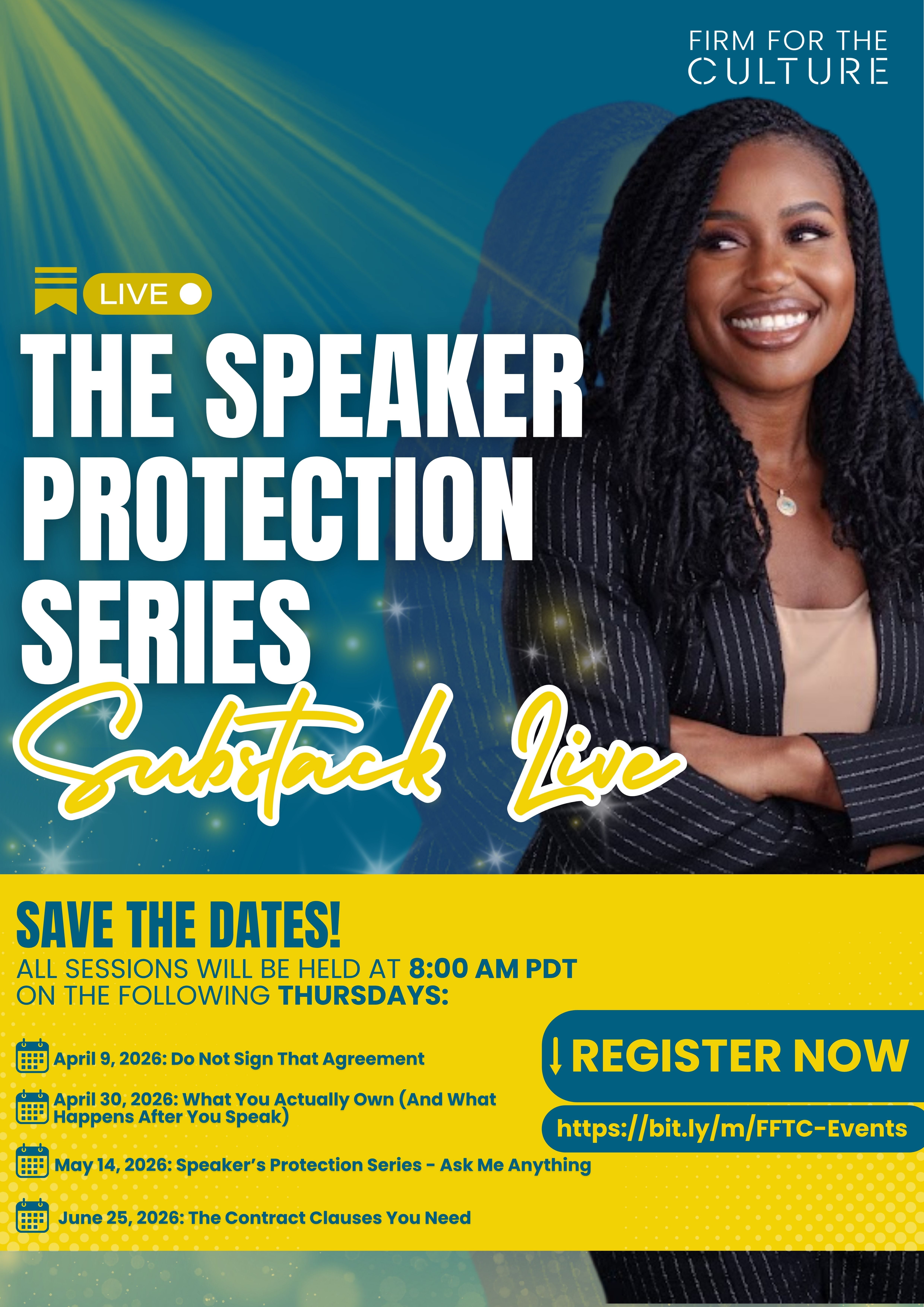
Speaking builds visibility. But it also creates intellectual property.
This series breaks down what actually happens to your ideas, your content, and your rights once you step on stage. From contracts to ownership to licensing, we’ll explore how speaking opportunities can either build long-term value—or quietly take it away.
We’ll cover: how speaking engagements intersect with intellectual property, what speakers often overlook when accepting opportunities, and how to approach speaking as both a visibility and ownership strategy.
What you’ll walk away with: A clearer understanding of how to protect, position, and leverage your content as a speaker—before, during, and after every engagement.
Here’s a preview for your viewing pleasure:
Workshop 3: The Speaker Protection Series: Ask Me Anything + IP Basics
(Copyright, Trademark, Patent)
📅 May 14, 2026 at 8:00 a.m. PDT
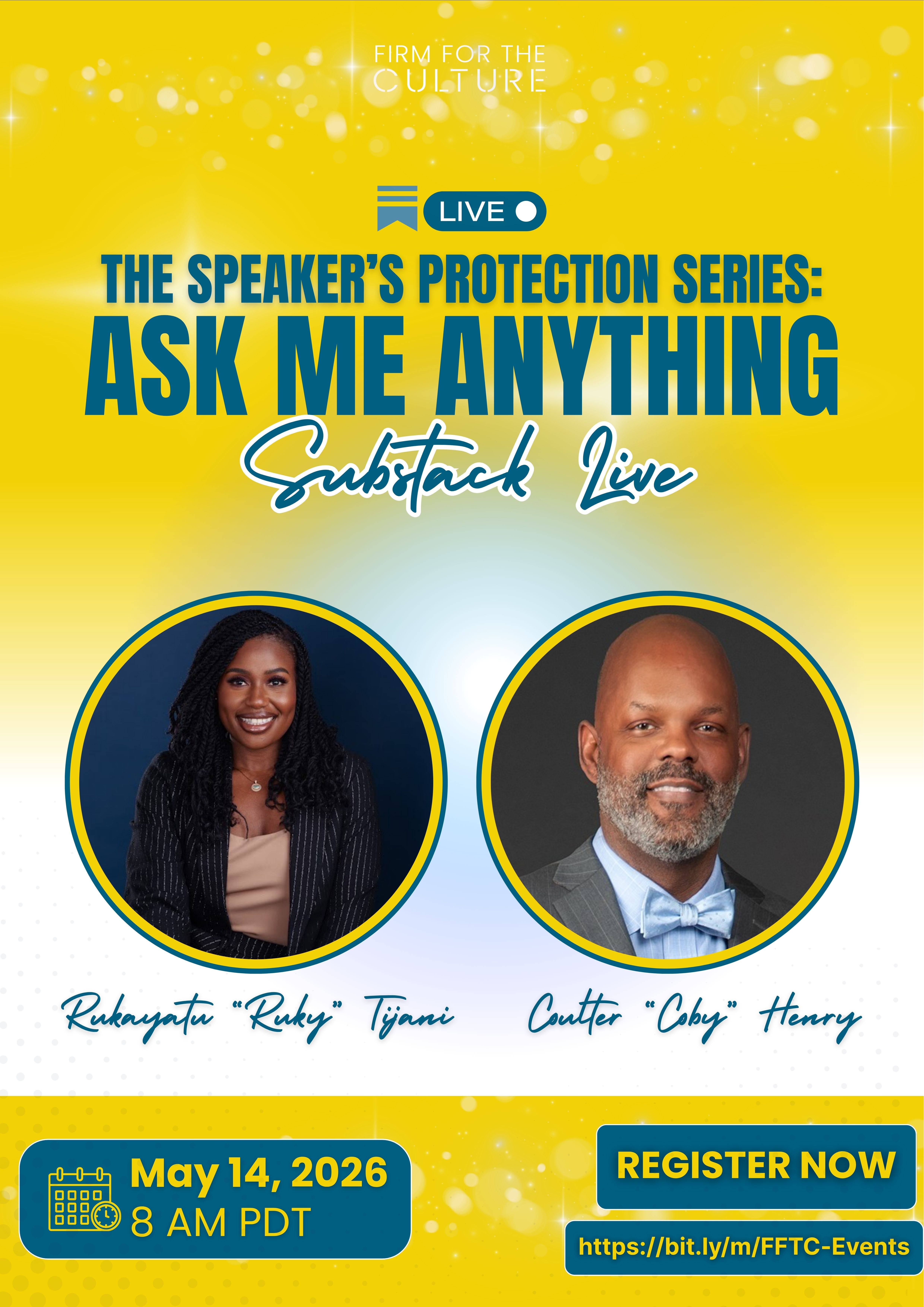
Before strategy, there has to be clarity.
This session brings everything back to the fundamentals—breaking down copyright, trademark, and patent in a way that’s clear, practical, and directly applicable to speakers and creators.
It’s also an open space to ask real questions based on real situations.
We’ll cover: what each type of protection actually covers, common misconceptions, and how these apply to your content, brand, and speaking engagements.
What you’ll walk away with: A solid foundation in IP and clearer answers to the questions you’ve been trying to figure out.
Workshop 4: The Speaker Protection Series: The Contract Clauses You Need
📅 June 25, 2026 at 8:00 a.m. PDT
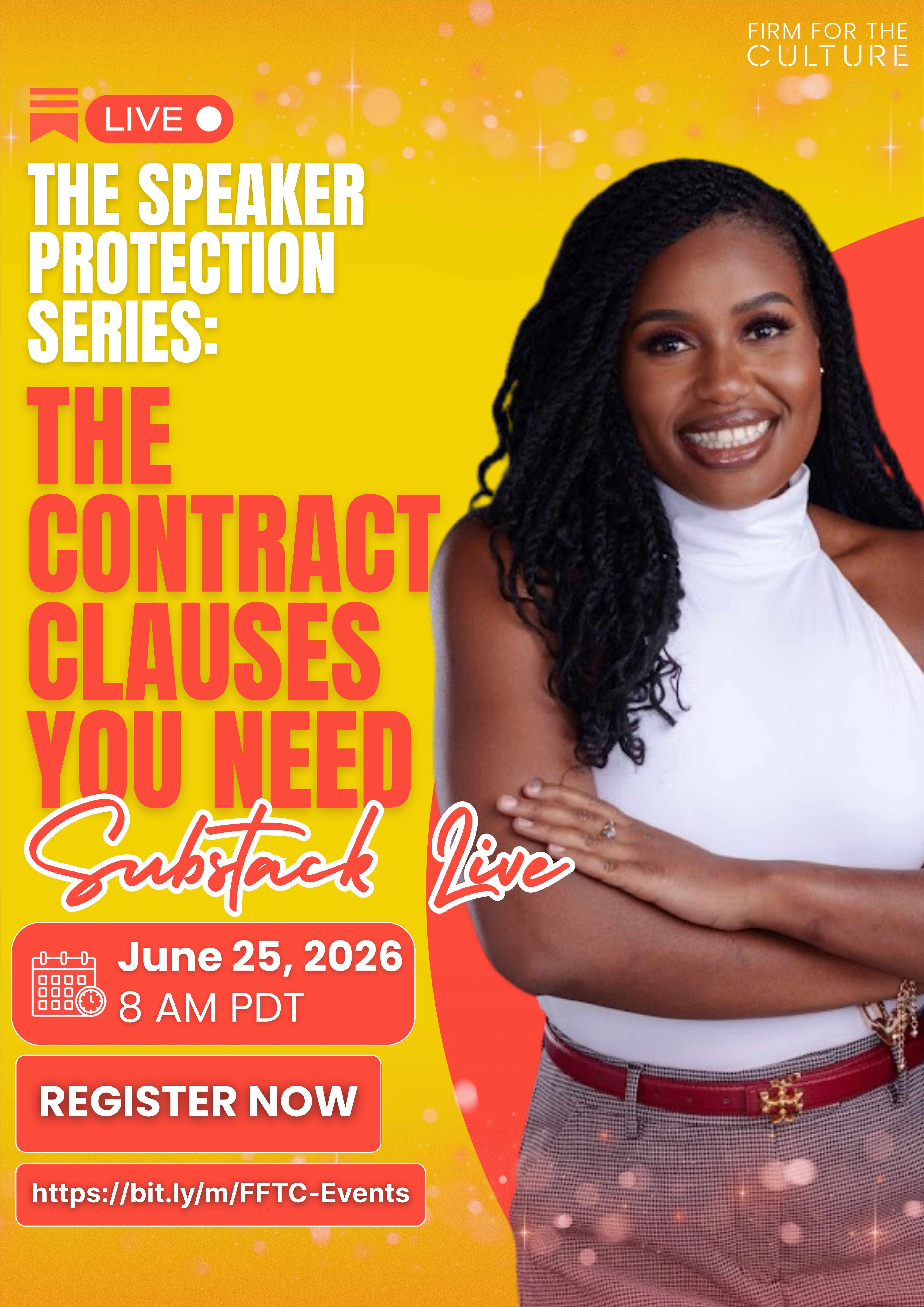
Growth usually comes with paperwork. Protection comes with awareness.
This workshop focuses on the specific contract clauses that directly impact your control, ownership, and long-term leverage as a speaker.
We’ll cover: key clauses around ownership, licensing, usage, distribution, and how to structure agreements that actually protect your work—not just your participation.
What you’ll walk away with: A clear understanding of the clauses you need in place and how to approach contracts with intention and strategy.
Register for The Speaker Protection Series: The Contract Clauses You Need workshop
For founders who are building brands. Creators who are shaping culture. Entrepreneurs who refuse to be extracted from.
Registration is FREE; in case you’re unable to make it, sign up and you’ll get the free notes.
After event recordings are $20.00 each.
Hope to see you there!
May 14, 2026 - Ask Me Anything + IP Basics (Copyright, Trademark, Patent) workshop
June 25, 2026 - The Contract Clauses You Need workshop

The $300 for Final Draft was not a glamorous decision.
Zinzi and Ryan were struggling college students. She scraped the money together. He had a football scholarship and a dream that had not proven itself to anyone yet, including perhaps himself. Nobody was watching. Nobody was writing articles about it. It was a small, private, practical act of belief in a future that existed only in the imagination.
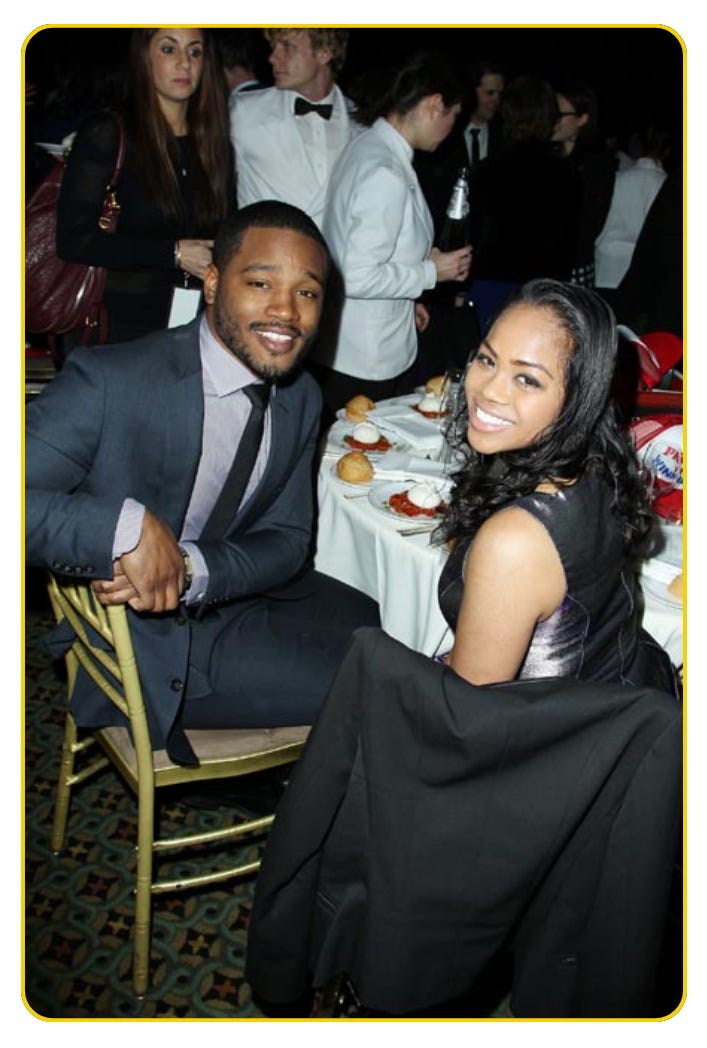
That properly-formatted script got into the Sundance Screenwriters Lab. Sundance provided grants and creative support. Forest Whitaker came on as a producer. Fruitvale Station was filmed in just over two weeks in Oakland for under a million dollars. It won the Grand Jury Prize. It won the Audience Award. It became the foundation for everything that followed.
And eventually — twenty years after that $300 — Ryan Coogler sat across from Warner Bros. and negotiated something the industry had never seen.
Full ownership of Sinners reverting back to him. His film.
His story.
His legacy.
His.
The $300 was the first link in a chain that ended in ownership.
This is how infrastructure works. It does not announce itself. It does not generate headlines when you file it or register it or put the agreement in writing. It sits quietly underneath the business you are building, waiting for the moment it becomes the most important thing you ever did.

The trademark application you file today is your “$300.” The copyright registration that protects your content. The ownership agreement that documents who built what. The IP structure you put in place before the deal exists — that is the investment that nobody photographs, the one that makes the harvest possible.
Founder Gem: The investment that changes everything rarely looks like it when you make it. Build the infrastructure before the validation arrives — because the validation will come for what you protected, not for what you hoped someone else would leave alone.

Zinzi believed before the industry did.
The Sundance Lab believed before the studios did. Forest Whitaker believed before the box office validated anything. The professors and collaborators at USC believed before the world had seen a single frame of Coogler’s work.
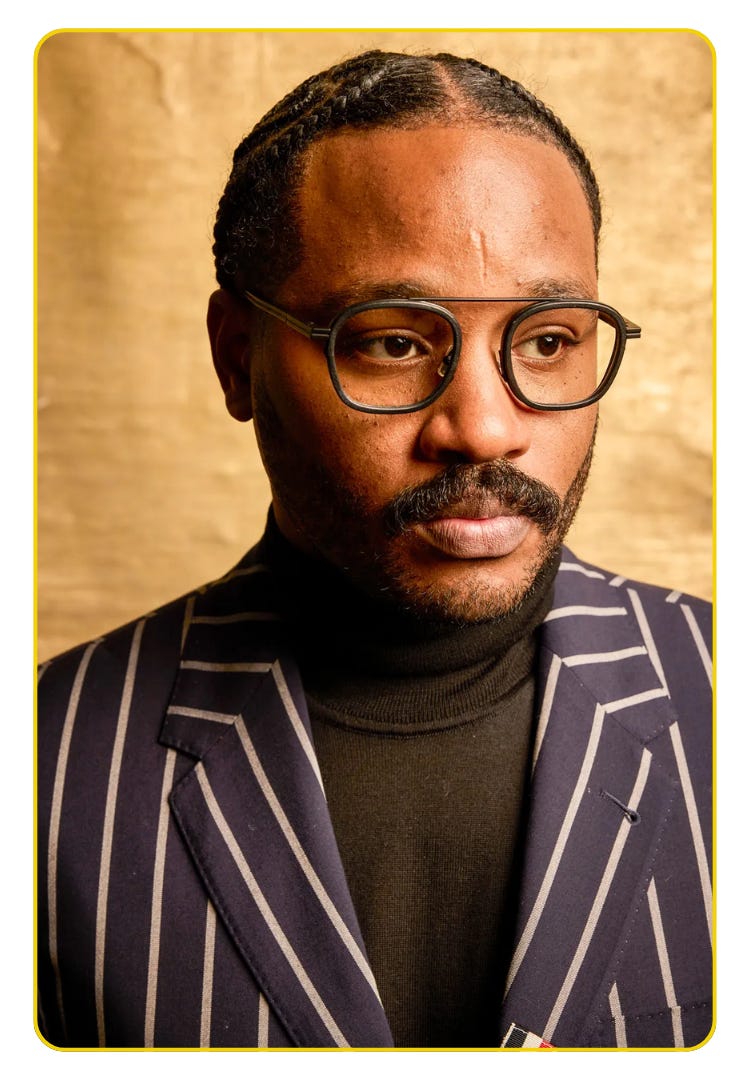
But none of that external belief would have mattered if Ryan had not first believed in his own work enough to financially invest in the work, format it properly, submit it, protect the story rights to Oscar Grant’s life, build the creative infrastructure around it.
Fruitvale Station exists because a law school friend introduced Coogler to the Grant family, who gave the intellectual property rights to tell the story. Not the money. Not the studio. The intellectual property rights. The legal standing to tell this story — that was the first thing that had to be secured. And it was secured not because Coogler was famous, but because he was prepared. He showed that he would properly protect and steward the Grant family story.
All because he showed up with the tools and the intention to handle the work properly.
This is the founder truth that sits with me every day.

You cannot wait for the industry to tell you your brand is worth protecting. You cannot wait for the deal to decide to structure your ownership. You cannot wait for the recognition to file the trademark that should have been filed two years ago.
The belief has to come first. Your belief. In what you built. In what it is worth. In what it deserves to become.
The $300 has to come before the Oscar. Every single time.
Founder Gem: You are the first person who has to believe your work is worth protecting. File before the validation. Register before the revenue. Structure before the deal. The investment is an act of belief — and belief has to precede the evidence.

The Sinners deal did not happen because Ryan Coogler got lucky.
It happened because he spent twenty years building a track record, a creative infrastructure, a body of work, and a team of collaborators — starting from a properly-formatted script that existed because his girlfriend believed in him enough to spend $300 on the tool that made it possible.
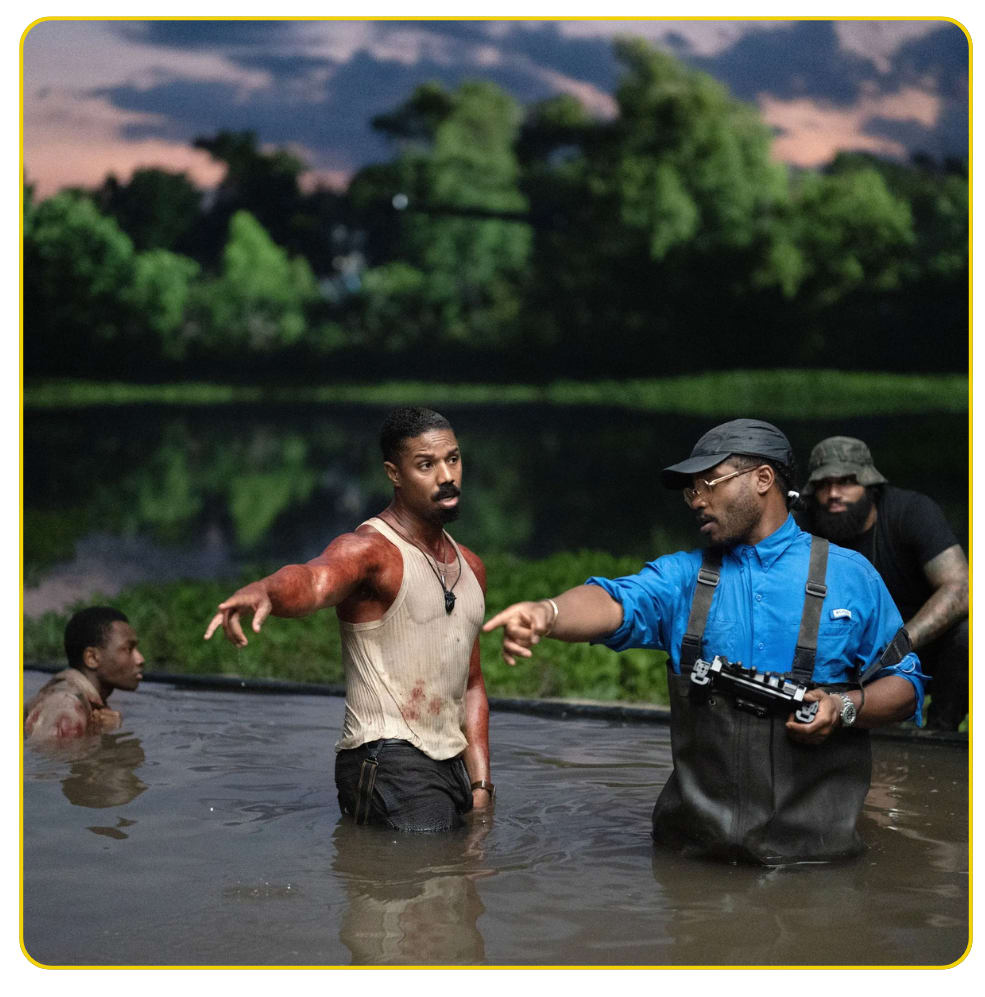
The $300 was the seed. Owning Sinners outright is the harvest.
And here is what I want you to hold: every founder in this community has a version of that arc available to them.
Not the same arc. Not the same industry. Not the same numbers. But the same principle — the seed planted in obscurity, in the unglamorous work that nobody photographs, in the legal infrastructure that sits quietly underneath the business until the moment it becomes everything.
The harvest you want five years from now is already determined by the investment you make today. The ownership you want to walk into a negotiation with — the leverage, the clarity, the legal foundation that says I built this and I can prove it — that starts now. In the quiet. Before the deal. Before the moment makes it obvious.
Zinzi scraped together $300 for a future she could not see yet. She just believed it was coming.
What future are you investing in today?
Founder Gem: The harvest is always the ownership. But ownership requires infrastructure, and infrastructure requires belief — in the work, in the future, and in yourself — long before the industry offers any proof you are right.

I think about Ryan and Zinzi Coogler often — not necessarily as inspiration, though they are that, but as architecture. As a blueprint for what it looks like when someone plants the seed before the season makes sense.
Every client I sit with is at some version of that crossroads. The business they have built and the business they could own — fully, structurally, legally — if they made the investment today. Not tomorrow. Not when the revenue justifies it. Not when the timing feels right.

Today. In the obscurity. Before the world has validated anything.
The $300 Zinzi spent did not feel like a turning point. It just felt like $300. That is how infrastructure always feels — small and quiet and slightly inconvenient right up until it changes everything.
The question is not whether your work is worth protecting.
It is. I am certain of it.
The question is whether you believe that enough to make the investment before anyone else tells you so.

What is the investment you have been putting off — the filing, the registration, the legal foundation — that your future self is going to wish you had made today?
Drop a comment—I read every one.

Want to know where your business actually stands on that gap?
Let’s talk — and make sure your name isn’t just recognized. It’s protected.
Book a Strategy Session with Firm for the Culture and let’s make sure your name isn’t just recognized—it’s protected.
Need Help Protecting Your Creativity?
If you are unsure—or if you know you need to take action—reach out to us.
We have helped countless founders and creatives safeguard their intellectual property, and we would love to do the same for you.

If you need further guidance, reach out to me and my team at Firm for the Culture.
We’re here to help you navigate the copyright, trademark, and thought leadership journey.
Can’t wait to help you protect your dynamic impact.
And #ThatsAWrap
The Doors of the Church Firm Are Open.
Come on it and share the love.
Thanks for reading
See you next time.
❤️