

Hey Fam,
I love positive stories in times like this.
In 2007, Venus Williams won a match during the first time that women received the same prize money as men at the tournament.
Venus not only won the championship, but she also became a symbol of equity and persistence.
Not bad for another Wimbledon trophy, huh?
Getting justice and equality added in for that razzle dazzle….
Fast forward almost two decades later, and that victory has been captured in a new form: a Barbie doll.
Dressed in her exact 2007 Wimbledon outfit, complete with the crisp whites and iconic visor, Mattel’s Inspiring Women collection unveiled Venus as both champion and changemaker.
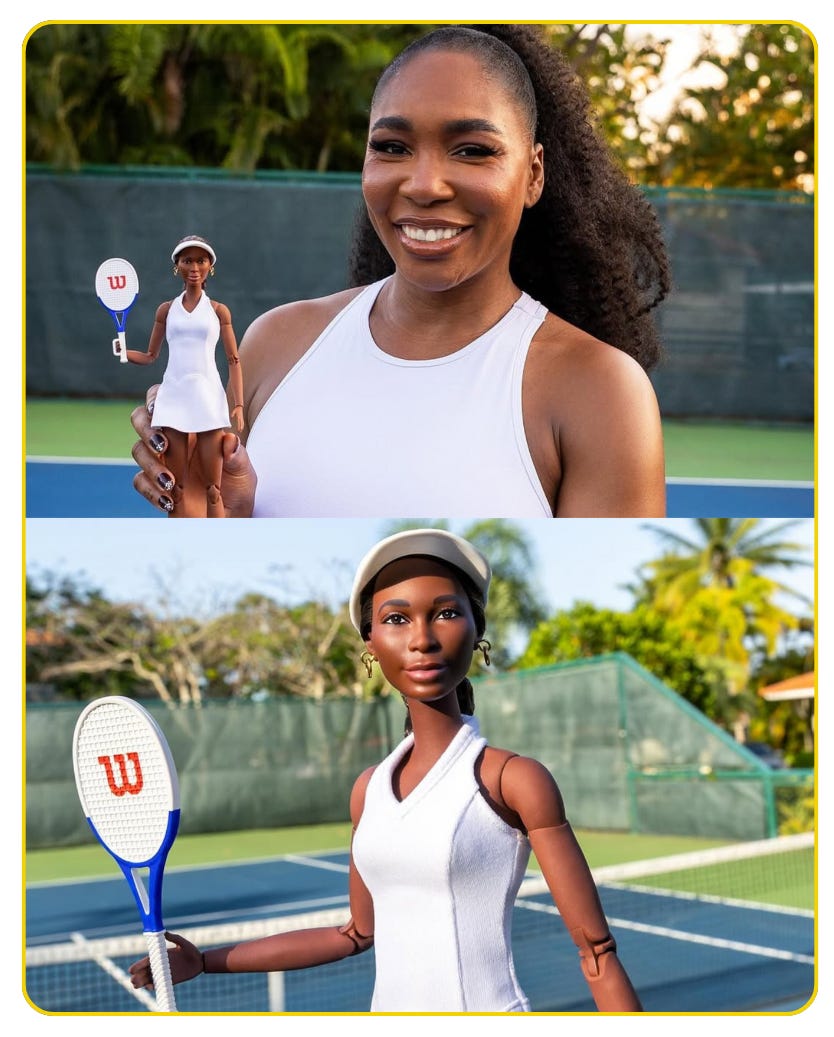
But while the headlines celebrate the doll, the real story runs deeper.
This collaboration is also about how icons protect, package, and project their legacy in a way that’s as strategic as it is symbolic.
Think of it this way: Barbie has been selling dreams since 1959. Venus has been rewriting history since the late ’90s. When the two join forces, every element matters—what’s on the box, what the doll wears, what story is told about her.
The end result looks effortless, as it should.
But behind the scenes, there’s an entire playbook of strategy. And that playbook can be summed up in three big moves.
In this Founder’s Letter, we’re diving into those three big moves.
We’re digging into the very story that combines legacy, culture, and the often-invisible work of protecting both.
Because when your wins shape history—as Venus Williams’s did in 2007—the way you preserve them matters just as much as the victory itself.
Ready?
Let’s dive right in.
Loving This Post?
Show us some love by adding a “❤️” or commenting below; this will make our hearts sing.
But First, Church Announcements:
Last week’s Substack Live was such a joy—thank you to everyone who tuned in, asked thoughtful questions, and let me geek out about trademarks and culture with you. If you missed it, don’t worry.
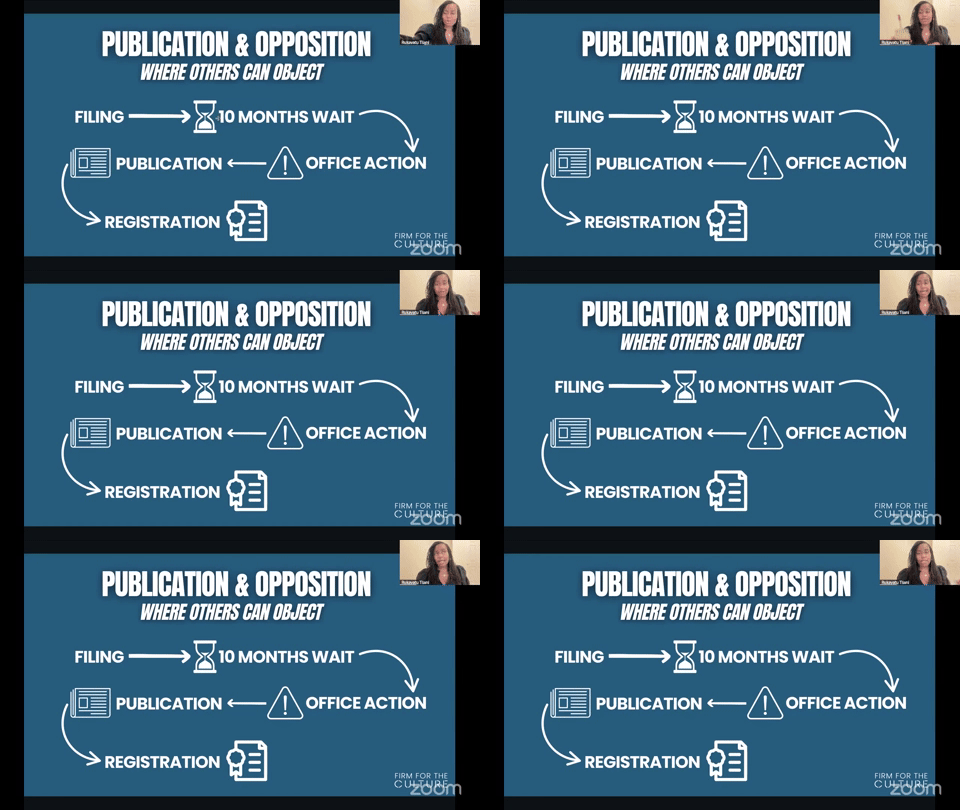
While we’re editing the video, I’ve got a little something for you:
Click here to download your one-pager notes from the event!

It’s a quick guide that distills some of the key lessons we covered—perfect for those who couldn’t join live or want a refresher.
Now, back to our regularly scheduled program…. :)

Venus Williams isn’t simply a world-class athlete—she’s a walking, living, global brand. Her name carries the weight of victories, social change, and decades of excellence.
When you see “Venus Williams,” it’s not just identification—it’s a promise of quality and authenticity.
And what are the characteristics of a distinctive trademark?
Quality and authenticity.
It was a match made in heaven.

That’s why the packaging couldn’t be generic. It wasn’t enough to label the product as a “tennis champion doll.” It had to boldly carry her name, with all the credibility she’s spent her life building.
And more importantly, Venus had to make sure her name and trademark were used in a way that stayed true to her values.
Because when you’ve worked for decades to build a reputation, the smallest misuse—even on something as playful as a doll—can chip away at the trust your audience has in you.
Protecting the name protects the story.

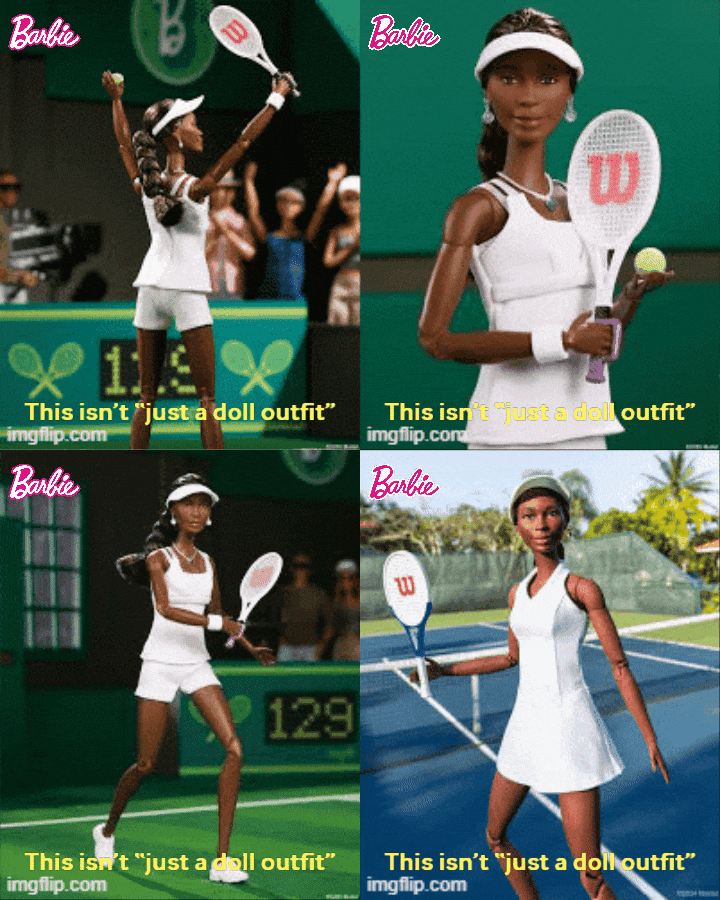
On the surface, it might just look like a miniature replica of her 2007 Wimbledon outfit. But every stitch of fabric, every fold in the dress, and every carefully molded accessory is intentional.
This isn’t “just a doll outfit”—it’s an artistic re-creation of one of the most powerful moments in sports history.
Venus didn’t leave that artistry to chance. She worked with Mattel’s designers to make sure her doll captured her spirit and not just her silhouette.
This is where Name, Image, and Likeness comes in.
If Venus was going to give Mattel the license to capture her very identity in a doll, she needed to get it right.
And that’s important—because once something is created, whether it’s clothing, a sculpt, or even packaging, it takes on a life of its own.
Who owns it? Who profits from it? Who gets to decide how it’s used again in the future?
By being part of the design process, Venus ensured the details weren’t just accurate, but also respected.
The doll’s artistry doesn’t just sell a product—it tells a story that could be retold for generations.

At the end of the day, there is only one Venus Williams.
Her face, her smile, her stance—they aren’t open-source assets. They’re hers.
And deciding how they’re used in commerce isn’t about vanity—it’s about power.
When Venus agreed to have her likeness turned into a Barbie, she wasn’t just saying “yes” to a doll. She was saying “yes” to a story that would be distributed around the globe.
She had to consider: how will kids see me when they unbox this doll?
How will parents interpret this version of me? How will the world connect this plastic replica back to who I really am?
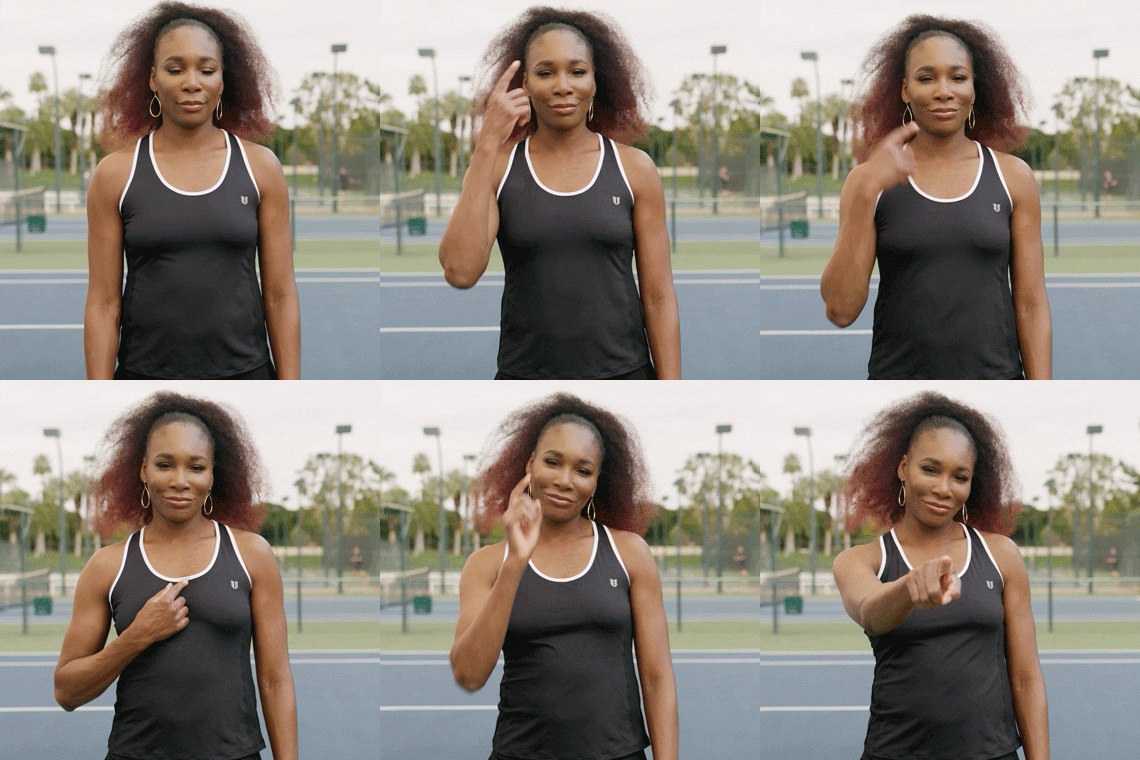
That’s why controlling your image matters.
By setting boundaries, securing approval rights, and making sure the narrative matched her reality, Venus ensured that her Barbie would amplify her legacy rather than flatten it into a commercial gimmick.
Because when you’re Venus Williams, your likeness is more than skin deep—it’s history in the making.

The Venus Williams Barbie may look like a small piece of plastic, but it represents a much larger truth: icons don’t just “lend their name” to products.
They strategically protect, shape, and direct how their legacies are shared with the world.
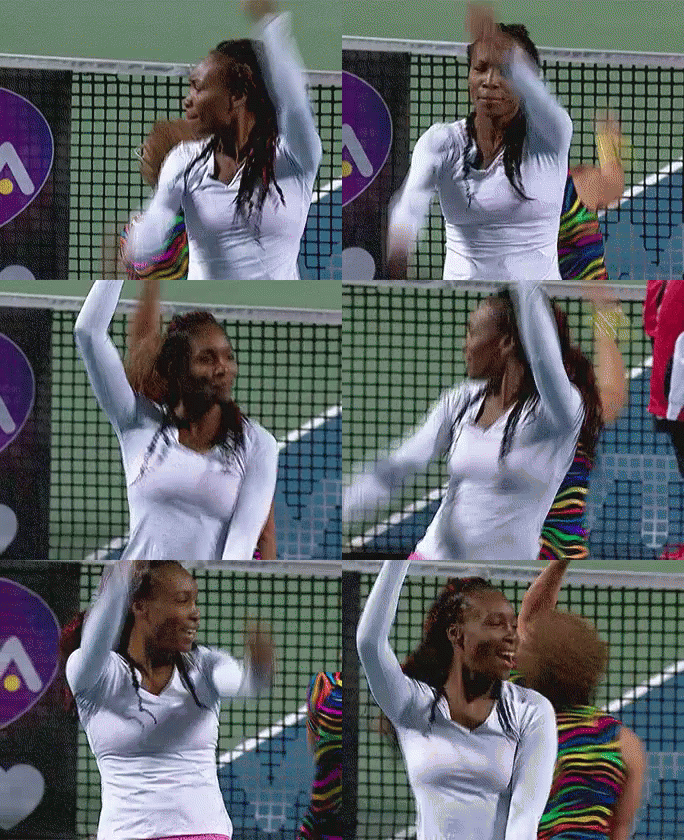
Venus turned her triumph into something lasting—proof that history can be both celebrated and safeguarded.

Drop your thoughts in the comments—I want to hear your take.
Need Help Protecting Your Creativity?
If you are unsure—or if you know you need to take action—reach out to us.
We have helped countless founders and creatives safeguard their intellectual property, and we would love to do the same for you.
If you need further guidance, reach out to me and my team at Firm for the Culture.
We’re here to help you navigate the copyright, trademark, and thought leadership journey.
Can’t wait to help you protect your dynamic impact.
And #ThatsAWrap
The Doors of the Church Firm Are Open
Thanks for reading
See you next time.
My favourite quote:
"And deciding how...her face, smile and stance are used in commerce isn’t about vanity—it’s about power".
Reading this reminded me of how easy it is to focus on the moment of victory and forget the structure behind it.
Venus’s story shows that legacy isn’t just about winning—it’s about building systems to protect and preserve the win so it lasts. That’s what turns a single match (or post, for us writers) into something people remember years later.
I’ve been thinking a lot about that in my notes lately—how consistency is its own form of protection.