
Hey Fam,
Picture Coco Gauff walking onto center court.
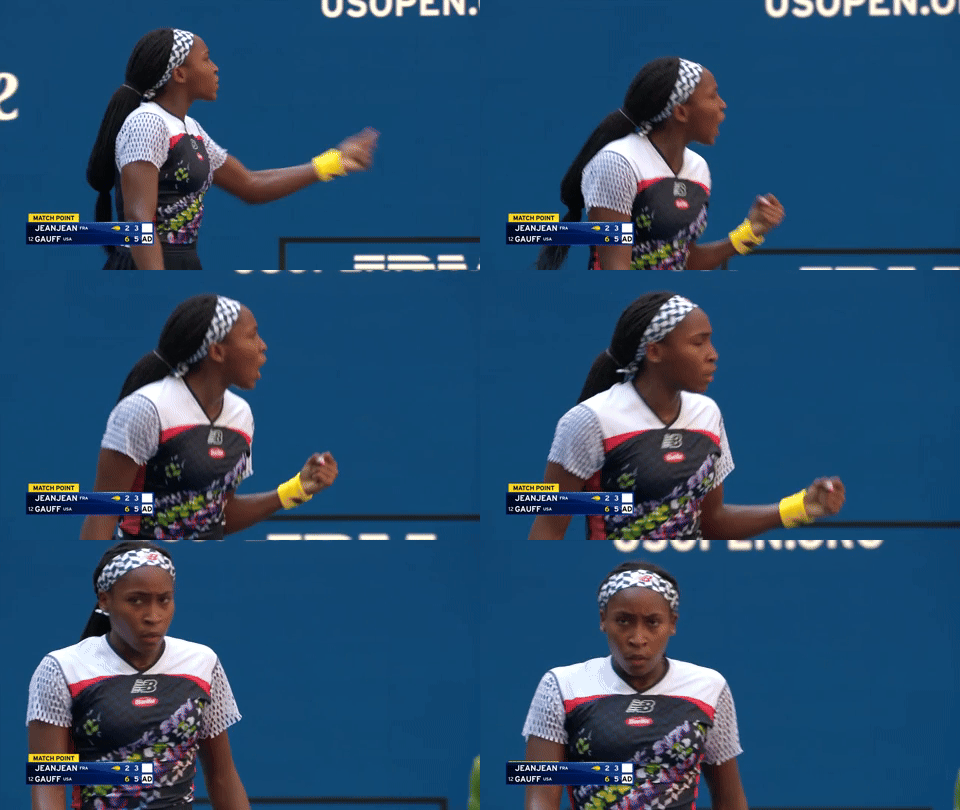
Her name is on the screen. Her face is being broadcast around the world. Cameras follow every serve, every reaction, every celebration.
Sponsors surround the court, photographers line the sidelines, and millions of people are watching.
Now imagine that person is you.
And that your “center stage” is actually your keynote podium.
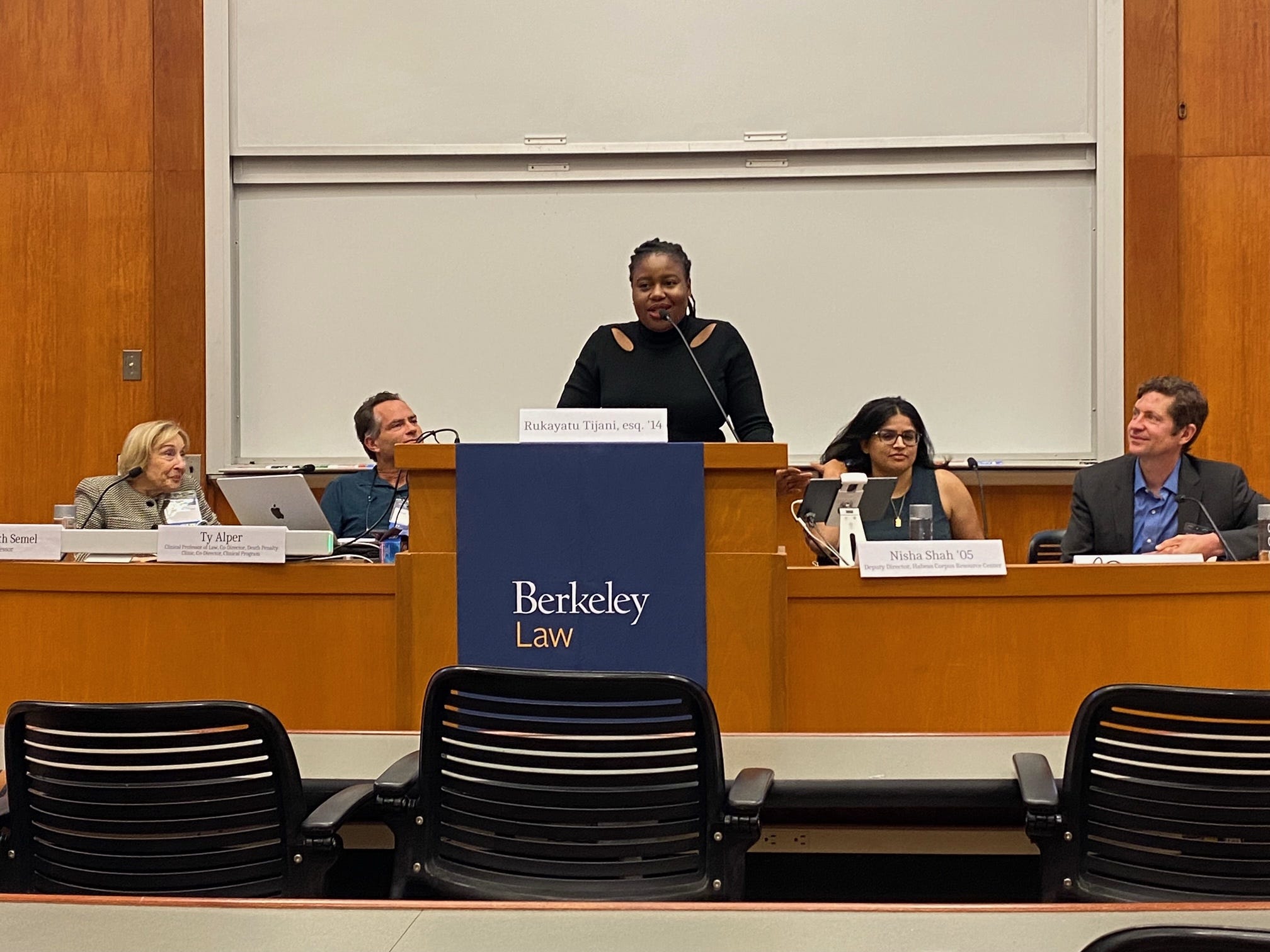
Your headshot is on the event page. Your name is printed in the program. There’s a photographer in the aisle and a videographer in the back.
Someone from the social media team may already be clipping your remarks before you’ve even finished speaking.
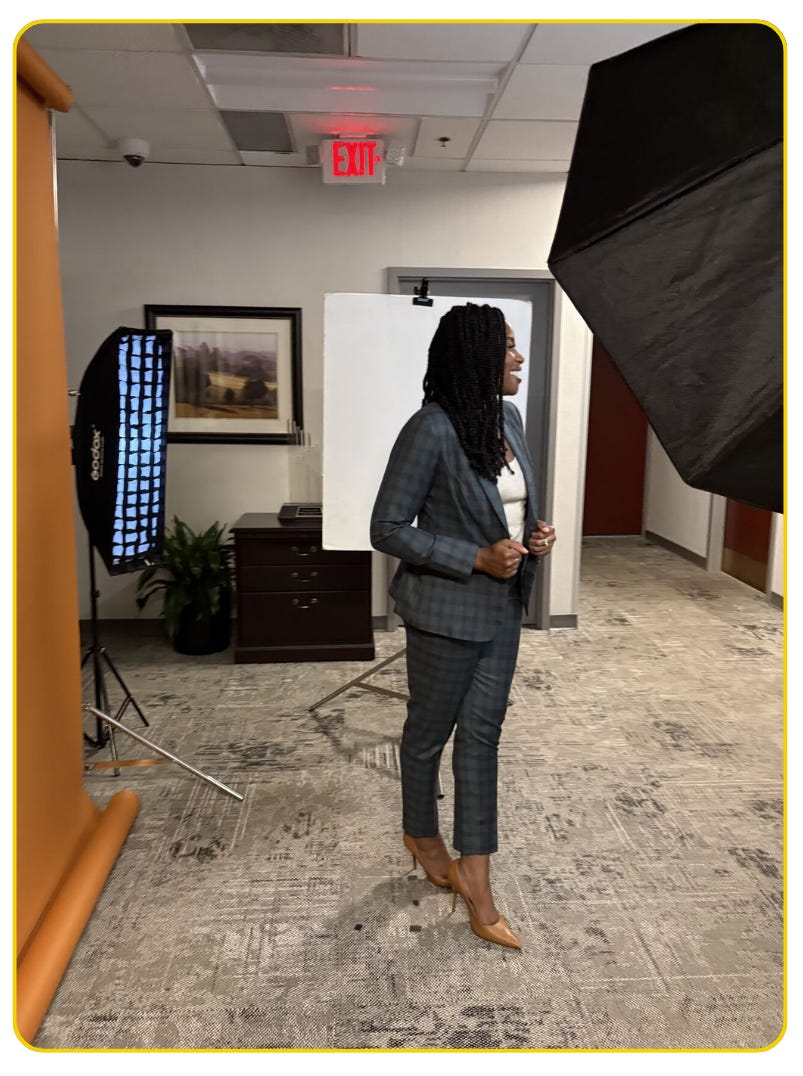
Different arena. Very similar commercial question:
Who gets to profit from your name, image, and likeness after you leave?
We hear the phrase NIL—name, image, and likeness—and immediately think about athletes. We think about Coco Gauff in a New Balance campaign or a college athlete signing their first endorsement deal.
But NIL does not begin and end at the stadium.
Believe it or not, you have NIL rights too.
And your name, image, and likeness during a speaking engagement can be captured, distributed, and commercially exploited just as easily as Coco Gauff’s during a tennis match.
In fact, speakers have an additional layer to think about. You aren’t walking onto that stage with your identity alone. You may also be bringing a copyrighted presentation, a trademarked framework, a proprietary methodology, your slides, your stories, your voice, and years of expertise.
Last year, when I wrote about what I would do if I were Coco Gauff’s lawyer, I focused on protecting her name, using it intentionally in commerce, and licensing it on her terms.
This year, I want to widen the lens.
Because you don’t need a Grand Slam trophy to have an identity worth protecting.
So in this Founder’s Letter, we’re breaking down what speakers and thought leaders can learn from NIL—and how to make sure that when you leave the stage, you haven't accidentally left your rights behind.
Ready?
Let’s get into it.
Loving This Post?
Show us some love by adding a “❤️” or commenting below; this will make our hearts sing. Also, please share, we want this to get to as many folx as possible.
But first, Church Announcements!!
The Women of Impact Workshop Series finale is coming up:
This has been a RIDE!


From exploring the intellectual property portfolio of Queen Latifah to reviewing the ups and downs of Missy “Misdemeanor” Elliott, to discussing what it actually means to negotiate while a person of color.
This has been one of the most impactful series that I’ve had the privilege of hosting.
Thank you to every single person who signed up, every person who showed up, and every person who shared either a clip, a photo, anything that would’ve taken this further.
A huge THANK YOU to Damali Peterman for sharing her wisdom and knowledge around negotiations.
I know that this is my life’s calling, and I’m just so blessed and privileged and favored to have this.
And now, we’re going to land the plane, and we’re ending with a bang:
September 24 — Women of Impact: I’m in Love with the Coco (Coco Gauff)
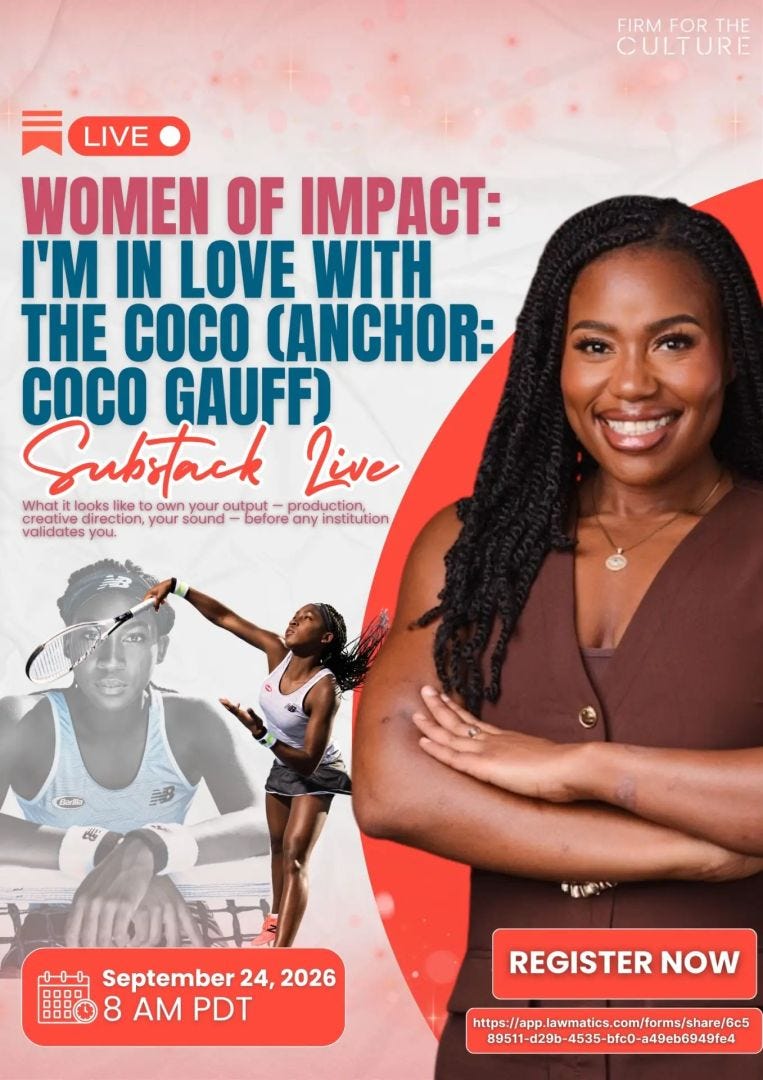
Endorsements, image rights, NIL agreements, and personal-brand protection—we’ll talk about what founders and thought leaders should be protecting as their visibility grows.
8:00 a.m. Pacific Time / 11:00 a.m. Eastern Time.
Sign up even if you’re not able to attend—you’ll still get the workshop notes by email.
1 CLICK — WOMEN OF IMPACT SERIES
Now, let’s get back to the program.
Showing Up Is Not the Same as Signing Away
When you agree to speak at an event, you are agreeing to speak at an event.
That sentence sounds obvious until you read some speaker agreements.
Buried inside the contract may be language authorizing the organizer to photograph you, record your presentation, use your name and likeness, edit the footage, distribute clips, promote future events, or continue using your image long after the engagement ends.
And those are not all the same permission.
An organizer may reasonably need your headshot and bio to advertise the event. They may want photographs from the event for a recap.
They may want to post a short clip afterward. Fine. But permission to promote this engagement is very different from an unrestricted right to commercially exploit your identity indefinitely or “in perpetuity.”
Think about how carefully an athlete's endorsement agreement defines the relationship.
A company doesn't simply say, “Coco agreed to work with us, so now we can use Coco Gauff’s image and likeness however we'd like.”
The agreement defines the rights, and speakers should expect the same precision.
If an organizer wants permission to use your name, photograph, voice, video, or likeness, the agreement should tell you what they can use, why they can use it, where they can use it, and for how long.
That becomes particularly important once your image starts generating value beyond the event itself.
Maybe your photograph appears in next year's marketing campaign.
Maybe your keynote becomes part of a paid digital library. Maybe clips of you are used in advertisements.
Maybe a sponsor wants footage. Maybe the organization wants to continue associating your name with the event after your contractual relationship has ended.
Those are commercial decisions involving an asset that belongs to you. You don't have to prohibit every use. You need to understand what you're authorizing.
Founder Gem: Showing up is not the same as signing away. Know what you’re giving to another, even after you walk off the stage.
NIL Is Licensing
An NIL deal is fundamentally a licensing conversation.
Someone wants permission to use something associated with you for a particular commercial purpose.
Last year, I wrote that licensing intentionally means deciding who can use your name, how it appears, and what message it carries. That principle applies just as readily to a keynote as it does to an athletic endorsement.
Before the cameras turn on, ask what the organizer actually needs.
Do they need your headshot for six weeks of event promotion, or are they asking for perpetual rights to your likeness?
Can they post a thirty-second clip, or the entire keynote?
Can they monetize the recording?
Can they edit your remarks?
Can they use your voice separately from the video?
Can sponsors use the footage?
Can the organizer sublicense your content to somebody else?
Can your image appear in paid advertising?
What happens to the recording when the agreement ends?
And increasingly, what does the agreement say about artificial intelligence?
A perpetual, worldwide, sublicensable license is very different from permission to promote one conference on Instagram.
Those distinctions should be reflected in the price, the negotiation, and your willingness to agree.
Because, as the old adage says…
Not all money is good money.
A speaking fee can look wonderful until you realize what the organizer expects to own—or continue using—in exchange for it.
Sometimes the better deal isn't the largest check. It's the agreement that compensates you fairly without unnecessarily giving away the future value of your identity.
Founder Gem: Don't negotiate only what you're being paid.
Negotiate what they're getting and what you’re giving.
These two are not the same.
Protect the Person—and the IP
Your identity may not be the most valuable intellectual property you bring into the room.
Your name, image, likeness, and voice matter.
But what are you talking about once you get on stage?
Maybe you have a framework you've spent fifteen years developing.
Maybe you've created a methodology that clients hire you specifically to teach.
Maybe your keynote contains original stories, graphics, research, exercises, or slides.
Maybe the name of your framework is federally trademarked.
Maybe the presentation itself is copyrighted.
Now we have multiple layers of rights traveling onto the stage with the same person, and they need to remain distinct.
An organizer having permission to use your photograph does not necessarily mean the organizer owns your presentation.
Permission to record you does not necessarily mean permission to turn your framework into its own training program.
Permission to promote your appearance does not necessarily mean permission to create derivative products from the intellectual property embedded in your keynote.
This is why I have been talking so much about speaker agreements.
The contract needs to distinguish between you and what you own.

Your NIL is one asset. Your presentation is another. Your framework may be another. Your trademarks may be another. And the recording itself can introduce yet another set of rights.
Once you understand those layers, the goal isn't to lock everything down so tightly that nobody can promote you.
The goal is clarity.
Let the organizer market the event. Let them celebrate the amazing presentation you gave. Let the clip travel if that's good for your business. But decide what travels, how far it travels, and what stays yours.

Founder Gem: Protect the person. Protect the presentation.
Protect the pipeline. And in turn, you protect your future.

NIL Was Never Just About Sports.
The sports world gave us convenient language for something creators, speakers, entertainers, founders, and public figures have been navigating for years: your identity has commercial value.
Coco Gauff doesn’t become worthy of protecting because she won Roland Garros.
Her success simply makes the economic value of her identity easier for everyone to see. The same thing happens to thought leaders.
Your first keynote may feel like exposure.
Then the TEDx talk takes off. The clips start circulating.
The invitations get bigger. Your framework becomes recognizable.
Organizations begin putting your photograph on their marketing materials because your presence helps sell the room.
At some point, your identity itself becomes part of the commercial transaction.
And when that happens, you should understand exactly what you’re licensing.
That does not mean becoming precious about every photograph or suspicious of every event organizer. It means treating your name, image, likeness, voice, content, and intellectual property with the same intentionality you bring to every other business asset.
Because Coco may be on center court while you're on center stage. But the ownership question is remarkably similar:
Who gets to use what you've built—and on whose terms?
Last year, I wrote that your name isn't simply how people refer to you; it's part of how the world remembers you. I still believe that.
But I'd add something today:
Your identity can generate revenue for someone else long after you've left the room.
Make sure the contract reflects whether you intended for it to.

Pull up your last agreement if you have one (if you don’t, reply to this email to craft one NEOW).
What rights did you give them?
Your name? Your headshot?
Your voice? The recording?
Your presentation? And—for how long?
Let me know in the comments.
And Speaking of NIL...
This week, we're taking this conversation deeper with our NIL Workshop.
We'll be talking about what name, image, and likeness rights actually are, how they show up in commercial agreements, what to look for before signing a deal, and how to think beyond the immediate check toward ownership, licensing, and long-term leverage.
And no—you don't need to be an athlete to benefit from this conversation. If you're a speaker, creator, founder, thought leader, or anyone whose identity has become part of how you make money, this conversation is for you.
Let’s Make Sure Your Brand Is Protected
Want to know where your business actually stands?
Book a Strategy Session with Firm for the Culture and let’s make sure your name isn’t just recognized—it’s protected.
Need Help Protecting What You’ve Built?
At Firm for the Culture, we help founders protect, maintain, enforce, and strategically grow their intellectual property portfolios.
Because getting the registration is a major milestone.
Keeping the asset protected as your business grows is the long game.

Can’t wait to help you protect your dynamic impact.
And #ThatsAWrap.
The Doors of the Church Firm Are Open.
Come on in and share the love.
Thanks for reading.
See you next time.
#ForTheCulture
👩🏾⚖️⚖️