

Hey Fam,
Kendrick Lamar is one of my favorite artists of all time.
I still remember exactly where I was in life when To Pimp a Butterfly dropped.
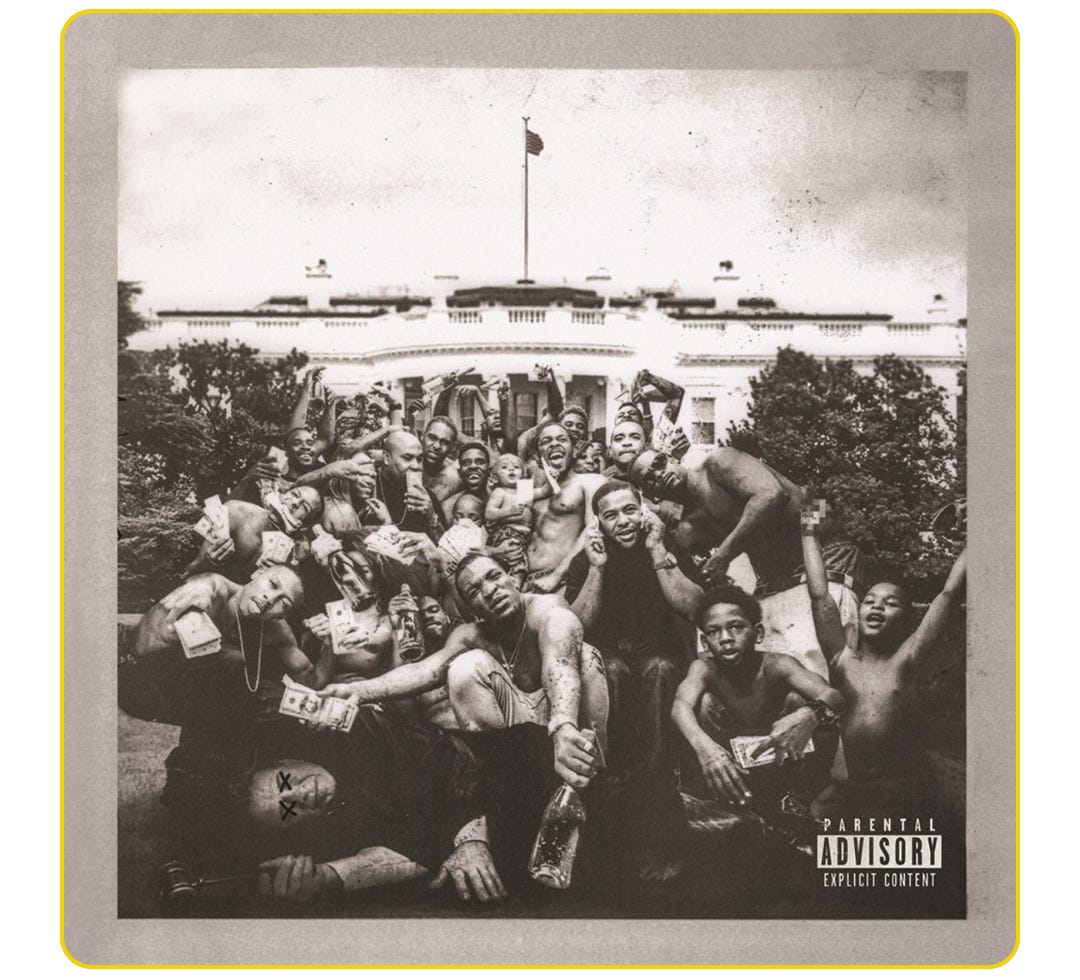
I was clerking in the federal courts for an Obama-Appointed Judge.
Buttoned-up, fluorescent-lit hallways made up my day to day—all at a time when the country felt like it was ripping open.
It was the period around the first Trump election.
Everything felt unstable. Loud. Hostile. Uncertain.
I was the only Black district court law clerk in that courthouse.
And I was reminded of this fact every waking moment.
Every day required a kind of translation—of myself, of my tone, of my presence.
And then Kendrick’s voice entered my life in a way that felt like oxygen.
Not just music, but language.
But precision. Intention.
A reminder that words mattered.
That I mattered.
That we were “gonna be alright.”
And that how we said something could be just as important as what we said.
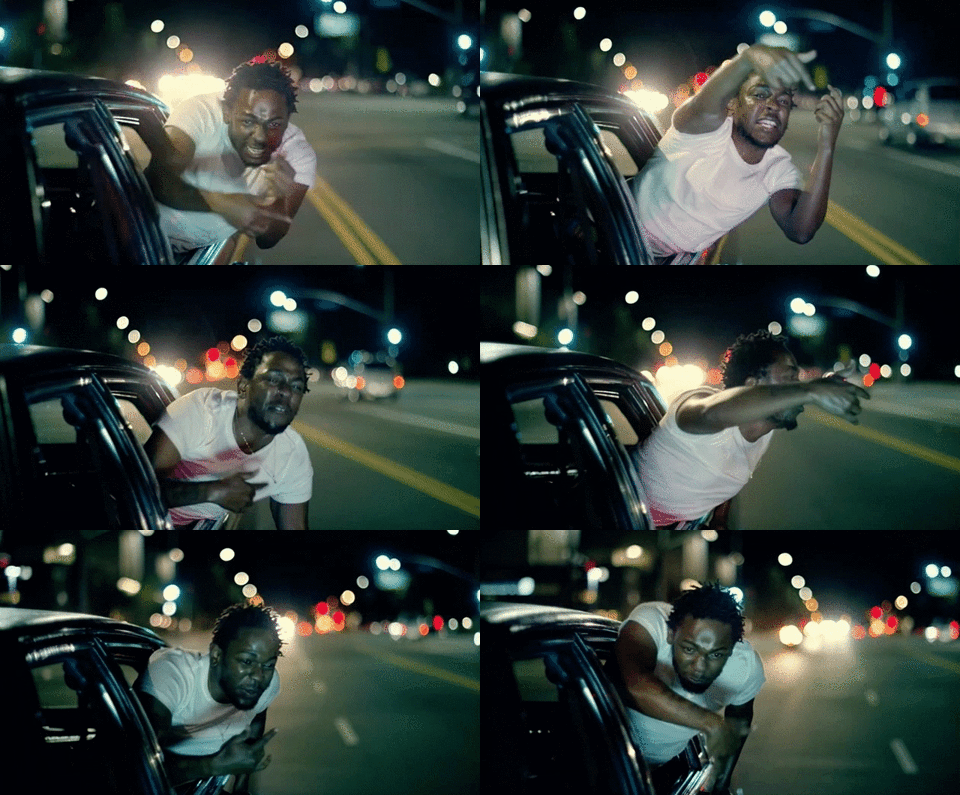
So when Kendrick recently spoke about receiving clearance to reinterpret a Luther Vandross record—and casually mentioned, “They said, ‘No cursing though. Can’t curse on it.’ That was the only thing”—my nostalgia kicked in, and my lawyer brain lit up.
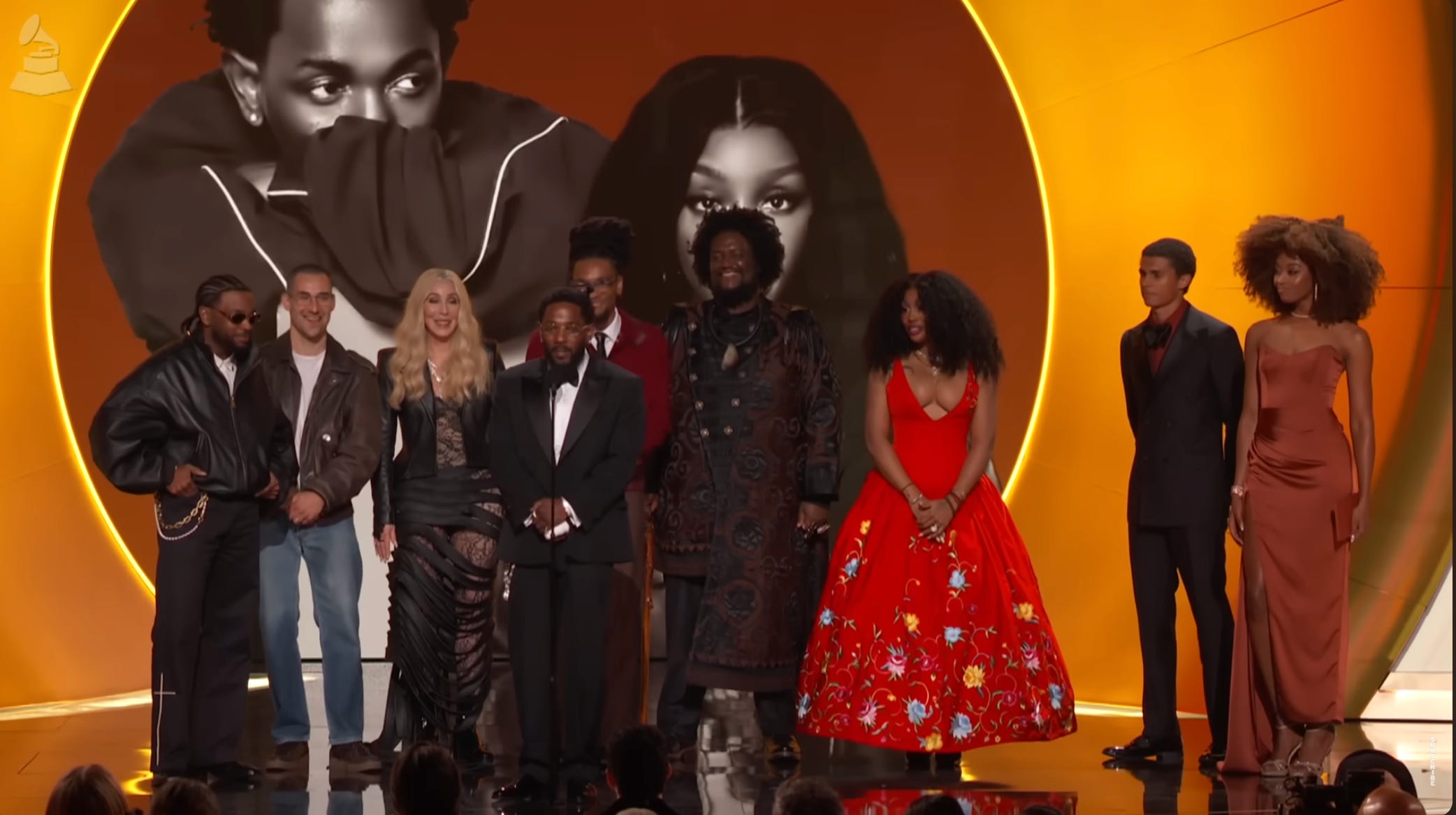
Because that one sentence wasn’t casual at all.
It was copyright in action.
It was legacy speaking from beyond the grave.
It was a masterclass in what licensors can do—and why ownership matters long after the artist is gone.

Luther Vandross wasn’t on that stage.
But his voice still governed the room.
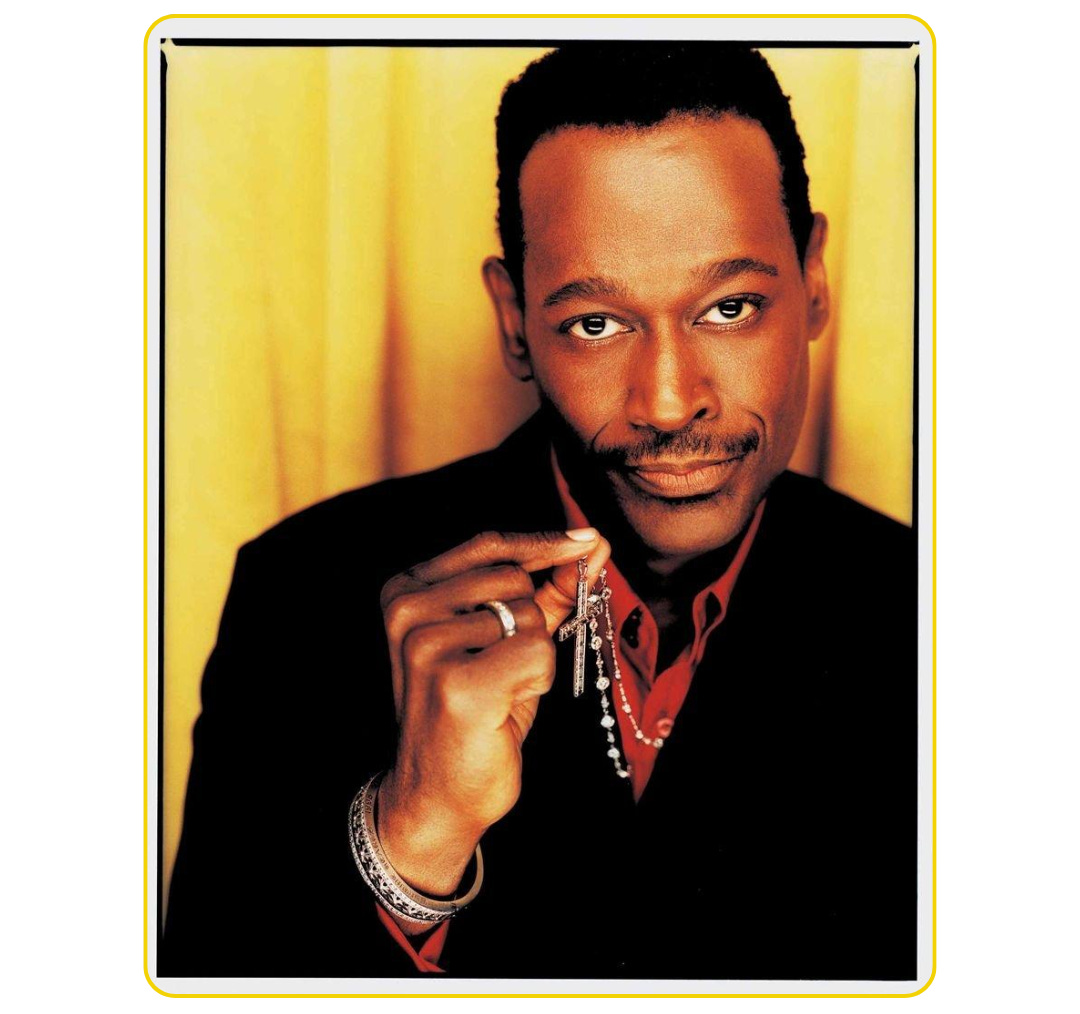
That’s the quiet power of copyright ownership: it doesn’t end when the artist goes to the ancestors.
It doesn’t disappear when the spotlight shifts.
If structured correctly, it becomes a living set of boundaries—capable of guiding how the work shows up in the world decades later.
And that’s what we saw here.
So let’s talk about what the licensor—the estate—was actually able to do.
In this Founder’s Letter, we’ll unpack how copyright ownership allows licensors to shape meaning, impose boundaries, and protect legacy — using a recent example involving Kendrick Lamar and the estate of Luther Vandross.
Ready?
Let’s get into it.

Loving This Post?
Show us some love by adding a “❤️,” giving a share, or commenting below; this will make our hearts sing.

But first, some church announcements...
The Firm for the Culture - Power Moves Series
We’ve been rolling out our Power Moves Series and it’s been such a dynamic experience.
And we have another few coming, just for you:
THE POWER MOVES SERIES: RYAN COOGLER | February 12, 2026
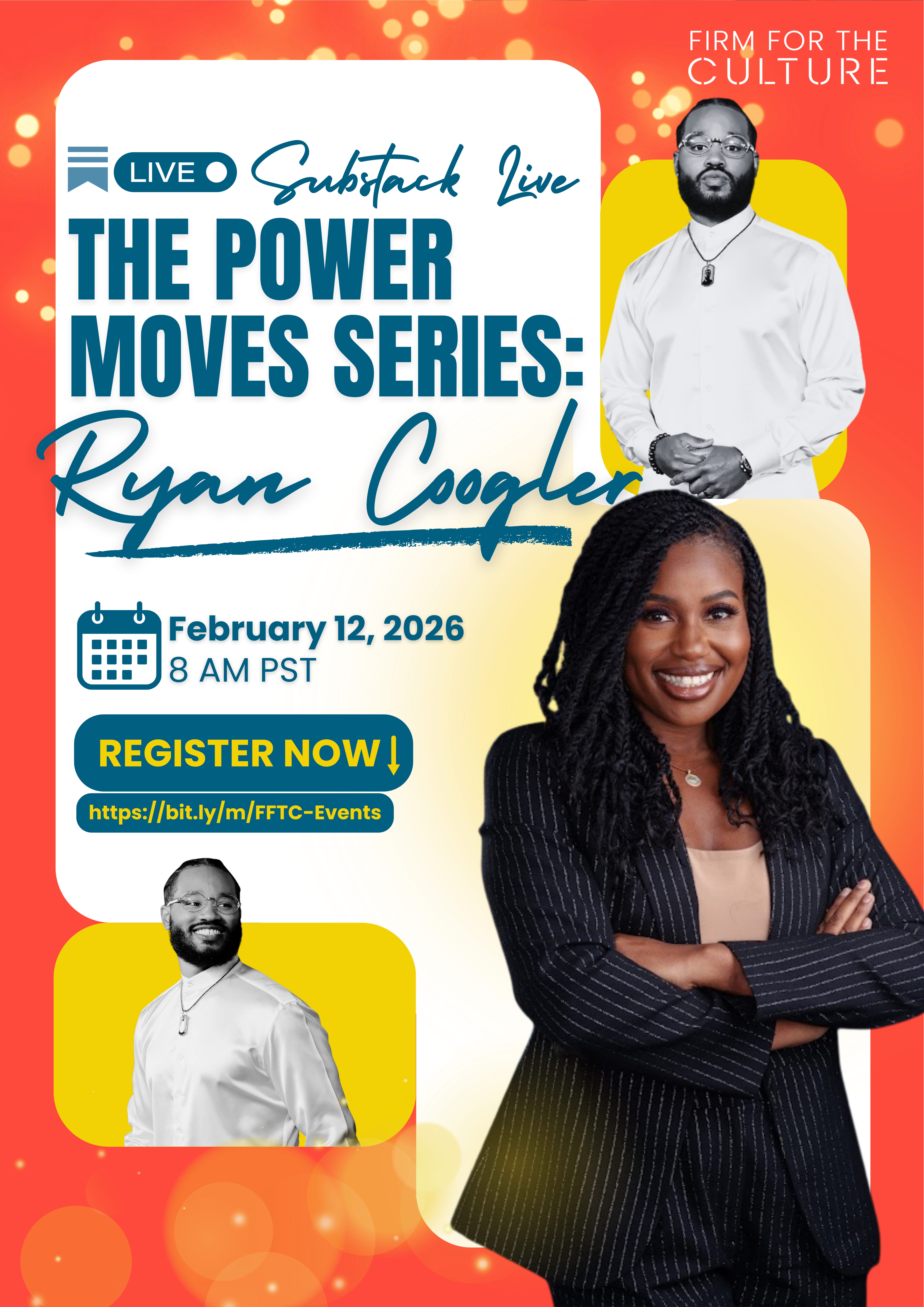
Scaling is exciting. It’s also where a lot of creatives lose control. Ryan Coogler offers a powerful example of what it looks like to protect your voice while operating inside big systems with real money at stake.
In this Power Moves Series session, we break down how ownership, contracts, and IP strategy show up when your work reaches a larger stage.
🔗 Sign up here: https://bit.ly/m/FFTC-Events
Registration is FREE; and if you want the notes, download them here and get them the moment they come out.
DO NOT SIGN THAT CONTRACT | February 26, 2026
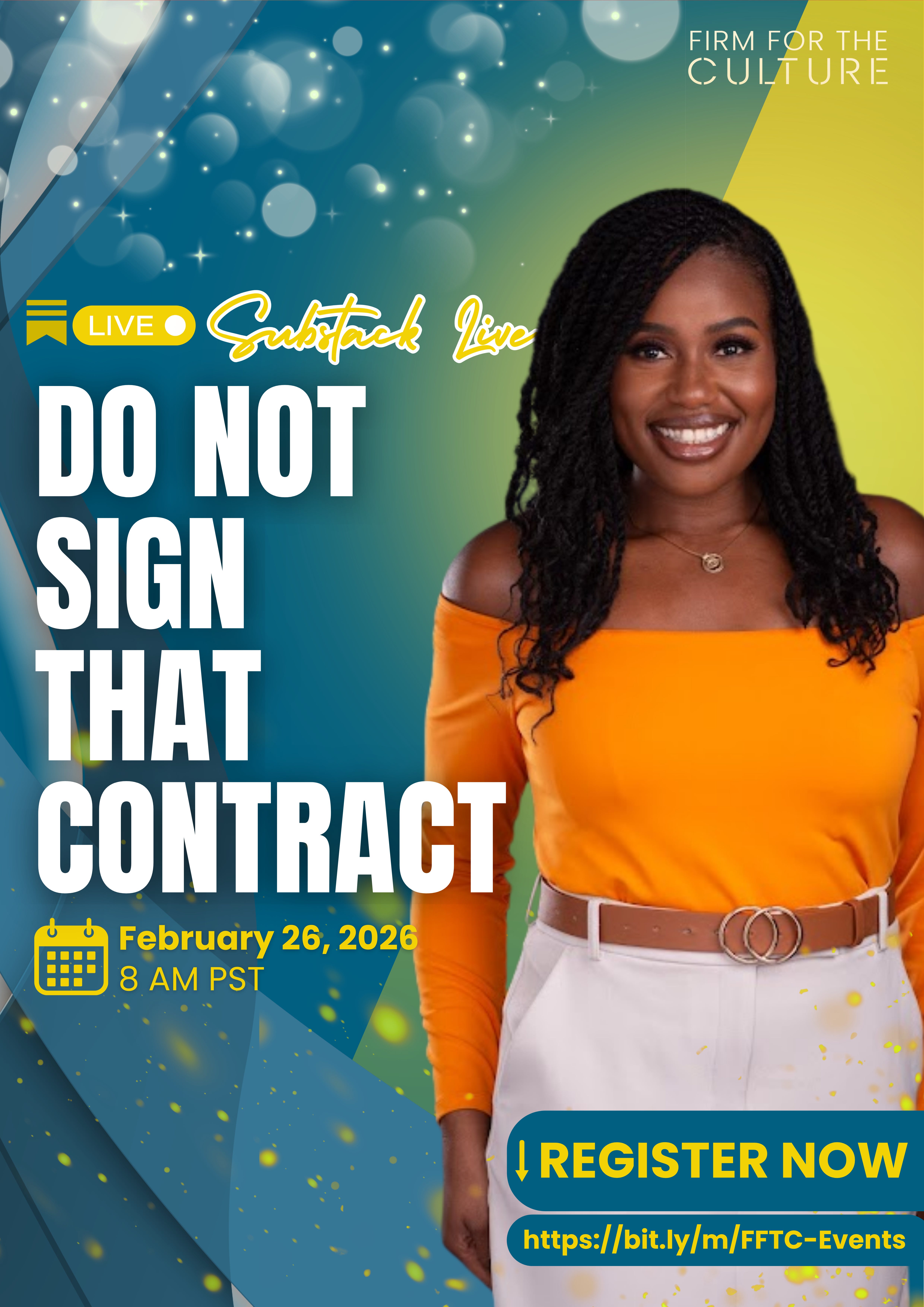
This session keeps getting requested — and for good reason.
Too many creatives sign contracts they don’t fully understand because they don’t want to miss an opportunity.
In this live session, we’ll walk through what to slow down for, what to question, and what not to sign without clarity.
No fear tactics. Just practical guidance.
If you’ve ever thought, “I hope this is okay,” before signing, this one is for you.
🔗 Sign up here: https://bit.ly/m/FFTC-Events
THE POWER MOVES SERIES: ISSA RAE | March 12, 2026
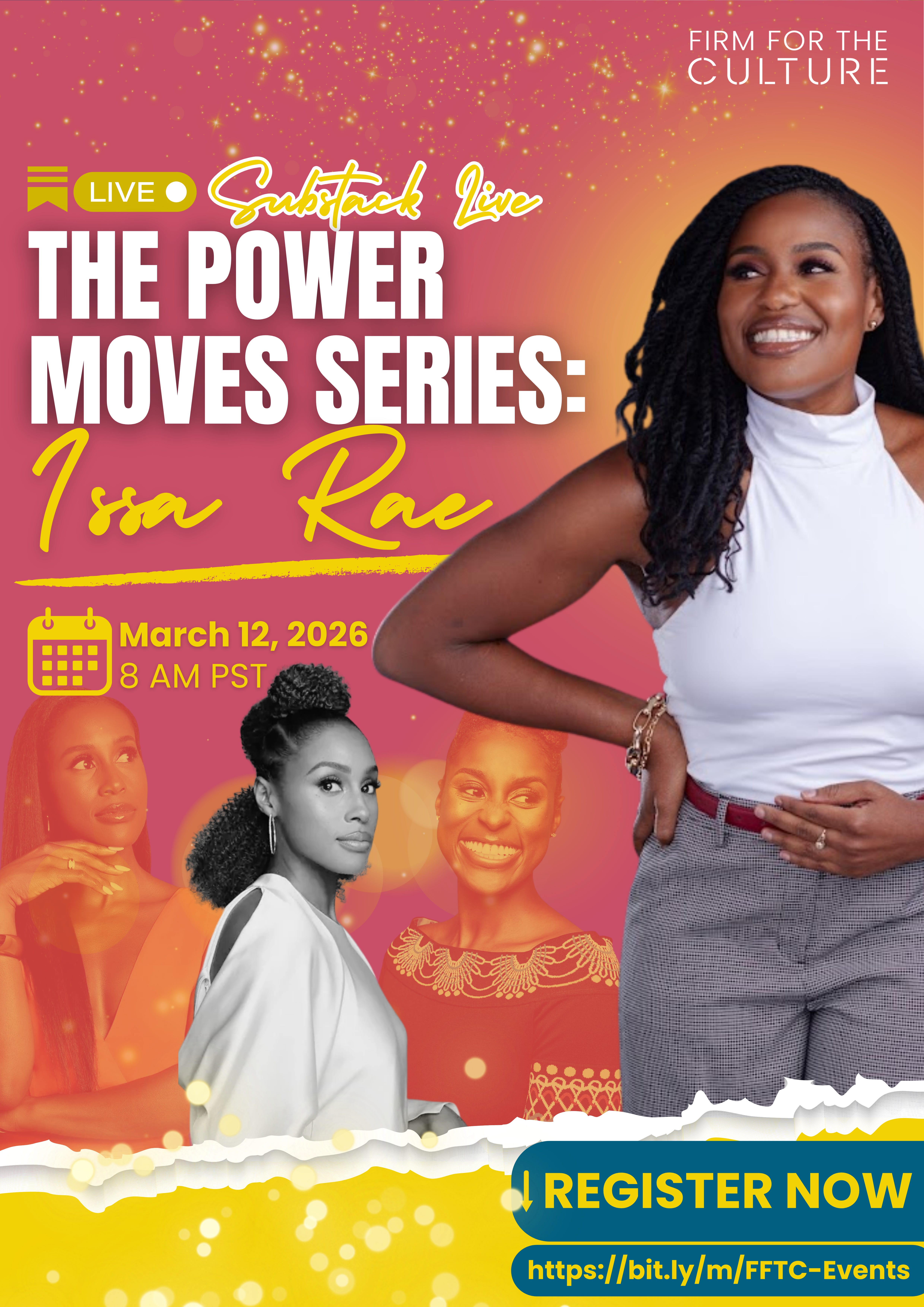
Issa Rae didn’t just create culture. She protected it.
Her career is a case study in building with intention, owning your voice, and using IP to support creative freedom instead of limiting it.
In this final session, we’re breaking down how trademarks, ownership, and smart legal strategy helped turn authenticity into longevity.
🔗 Sign up here: https://bit.ly/m/FFTC-Events
Now, back to our regularly scheduled program…. :)

“No cursing though.”
That wasn’t a suggestion. It was a condition.

When you own your IP, you are not required to grant blanket permission.
You can say yes selectively.
You can take back you “yes” if you please (under certain conditions, of course).
And you can decide how your work is expressed, not just whether it’s used.
Content restrictions allow licensors to:
Preserve tone, emotional integrity, and values
Prevent reinterpretations that distort meaning
Protect the brand identity of the original work
In this case, the restriction wasn’t about prudishness.
It was about alignment.
Luther Vandross’s catalog is synonymous with tenderness, vulnerability, love.
Profanity—especially casual or aggressive profanity—would have shifted the emotional register of the song and would’ve had Luther looking like:
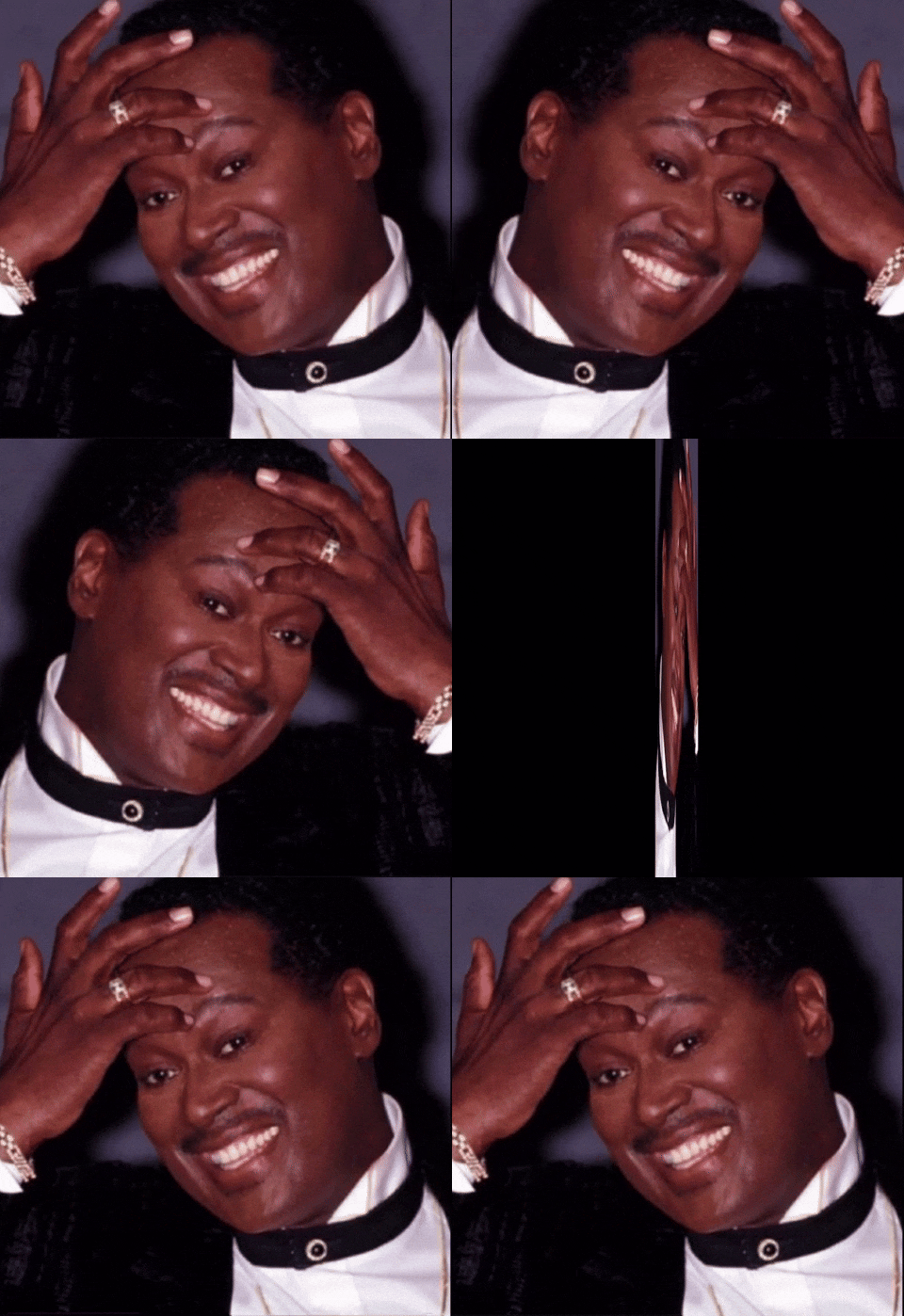
The estate understood that.
So they drew a line.
And Kendrick respected it.
Because, those are the rules of engagement.

That’s not censorship.
That’s stewardship.

Licensors don’t just control what happens to a work.
They control where and how it lives.

As an IP owner, you can limit the contexts, circumstances, and placements in which your content is disseminated.
Limiting context means deciding:
Whether a work can be used commercially or artistically
Whether it can appear in advertising, film, or live performance
Whether it can be associated with certain industries, platforms, or messages
What this means?
A song cleared for an album is not automatically cleared for a commercial.
A photo licensed for editorial use isn’t cleared for merch.
A voice cleared for homage isn’t cleared for commerical exploitation.

The estate didn’t just approve a remix.
They approved a specific use, in a specific context, under specific conditions.
That distinction is everything.
And it’s a distinction you can make in your contracts as well.

This is the beating heart of the issue.
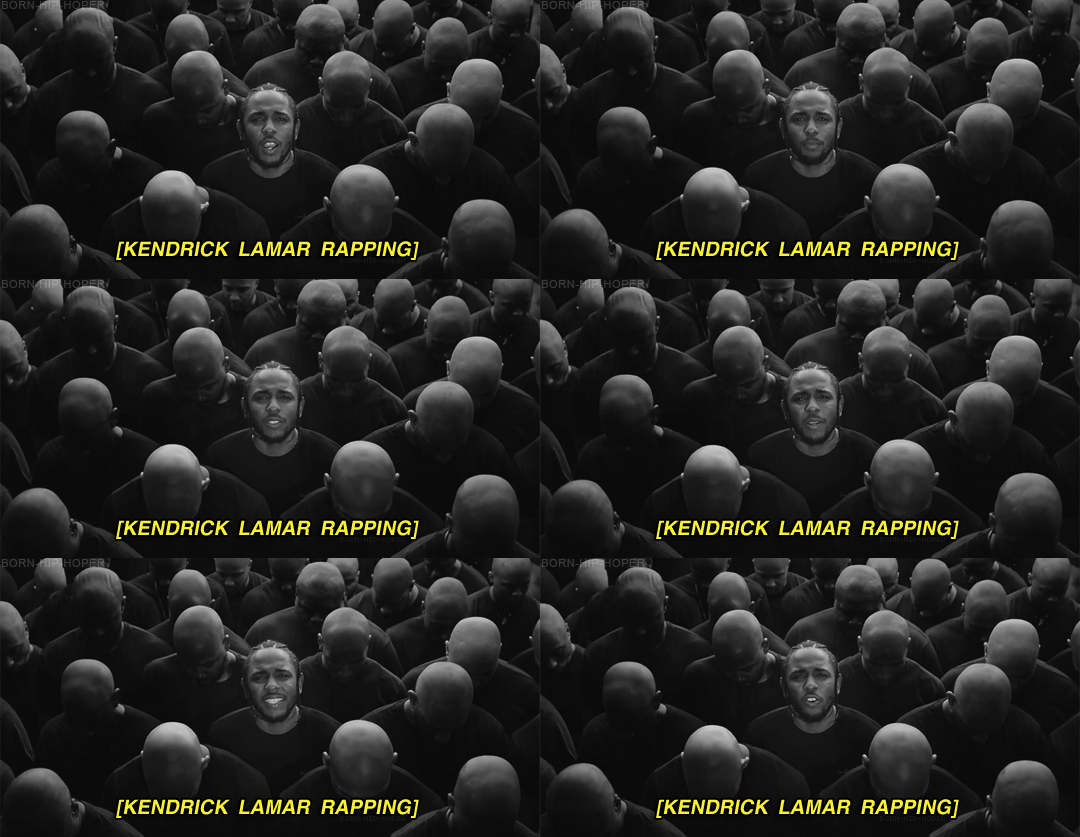
Kendrick didn’t simply play the original recording.
He created a derivative work—a new expression built on top of an existing copyrighted work.
And derivative works always require permission.
Always.
As a licensor, you can:
Approve or deny lyrical changes
Restrict remixes, interpolations, or genre shifts
Require fidelity to the original composition or message
Decide whether the new version honors or undermines the original
This is where legacy is either protected—or diluted.
The estate didn’t say, “Do whatever you want.”
They said, “You can do your version—but within these boundaries.”

And those boundaries made the work stronger, not weaker.
Because boundaries aren’t just for relationships—they belong in our contracts, too.

This is where licensors quietly hold the most leverage.
Pre-approval rights allow the licensor to review:
Final lyrics
Final recordings
Final mixes
Sometimes even visuals or performances tied to the work
This means nothing goes out into the world without a final check.

And importantly: this power doesn’t require the artist to still be alive.
The estate stood in for Luther.
They made judgment calls on his behalf.
They ensured the work aligned with the values and integrity he embodied during his lifetime.
That is legacy architecture.
And this is what it means to have intellectual property making impact.

People think licensing is about permission.
It’s not.
It’s about controlling the narrative.
Even beyond the grave.
It’s about understanding that your work—your voice, your image, your ideas—can travel further than you will.
And if you don’t set the rules, someone else will.

The Luther Vandross estate did more than protect a song.
They protected a feeling.
They protected a standard.
They protected a legacy.
And they did it with a single sentence:
“No cursing though.”
If you’re building something—music, courses, a brand, a body of work—this is your reminder:
Ownership isn’t about ego.
It’s about longevity.
And the quiet power to say yes…
on your terms.

What part of your work would you want future uses to respect most — tone, values, or context?
Let’s talk. Drop a comment or hit reply.

Want help figuring out whether your name—or brand—is ready for trademark protection?
We’ve got you.
Book a Strategy Session with Firm for the Culture and let’s make sure your name isn’t just recognized—it’s protected.
Need Help Protecting Your Creativity?
If you are unsure—or if you know you need to take action—reach out to us.
We have helped countless founders and creatives safeguard their intellectual property, and we would love to do the same for you.

If you need further guidance, reach out to me and my team at Firm for the Culture.
We’re here to help you navigate the copyright, trademark, and thought leadership journey.
Can’t wait to help you protect your dynamic impact.
And #ThatsAWrap
The Doors of the Church Firm Are Open
Thanks for reading
See you next time.
❤️
This is a really interesting article! It's great to know just how much control licensing offers, even many years after passing away.
Either way, I'm not sure exactly what to license from my standpoint just yet. I'll keep digging and honor what naturally comes up!