

Hey Fam,
2025 has been a … year.
A hard year for many of us — with the political climate, the economic climate, and the climate climate.
It’s been a season of uncertainty that’s tested our resilience, our peace of mind, and our sense of security in ways few of us have ever experienced.
And for Nicki Minaj?
Well, it’s likely been a year for her as well…
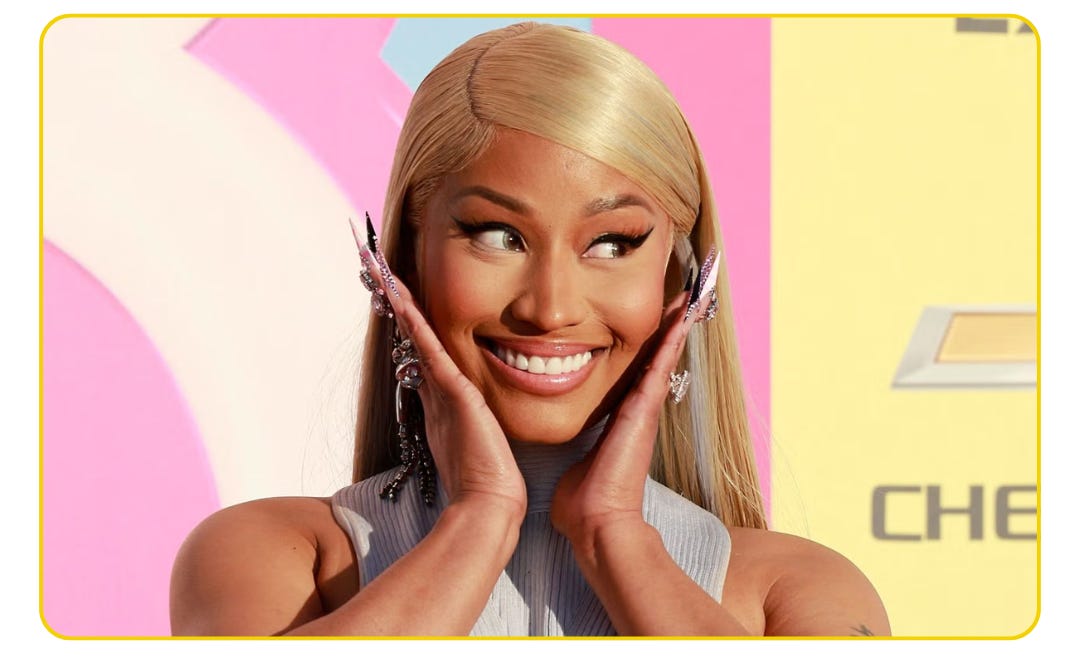
Once a symbol of unshakable confidence and global chart-topping success, Nicki has faced a wave of personal, legal, and reputational challenges in 2025 that have forced many of us to look again at what it really means to build — and protect — a name.
On top of ongoing legal troubles tied to her husband Kenneth Petty — including renewed lawsuits around his sex offender status and recent allegations of harassment and intimidation — Nicki is also grappling with what some outlets are calling a slow unraveling of her financial empire.
Multiple lawsuits, brand disputes, and alleged defamation claims have threatened to chip away at her fortune — not just in headlines, but in cold hard costs: legal fees, settlement talks, and the quiet financial bleed of reputational damage.

It’s a scenario that many celebrities and business owners face but few prepare for:
What happens when your liquid capital is drying up and your assets are tied to a brand name too closely connected to personal chaos?
That’s where intellectual property enters the chat.
Because when the stock portfolio is shaky…
When the tours slow down…
When the businesses that used to collaborate now start to distance themselves…
Your trademarks, copyrights, and licensing deals might be the most resilient part of your financial foundation.
In this Founder’s Letter, we’re exploring what happens when fame collides with finance — and how even celebrity status can’t shield your brand from debt or poor IP planning.
From these stories we’ll unpack three real cases that show why protecting (and properly managing) your intellectual property isn’t just smart law — it’s financial survival when you have little to no other assets left.
Ready?
Let’s get into it.
Loving This Post?
Show us some love by adding a “❤️” or commenting below; this will make our hearts sing.
But First, Church Announcements:
Introducing the “Leverage Your Brilliance” Series
Starting this October, I’m thrilled to announce a new four-part workshop series designed for creators, thought leaders, and culture-shapers who want to protect, monetize, and leverage their brilliance.
Whether you’re a speaker, musician, educator, or entrepreneur — your ideas are valuable.
And it’s time to treat them that way.
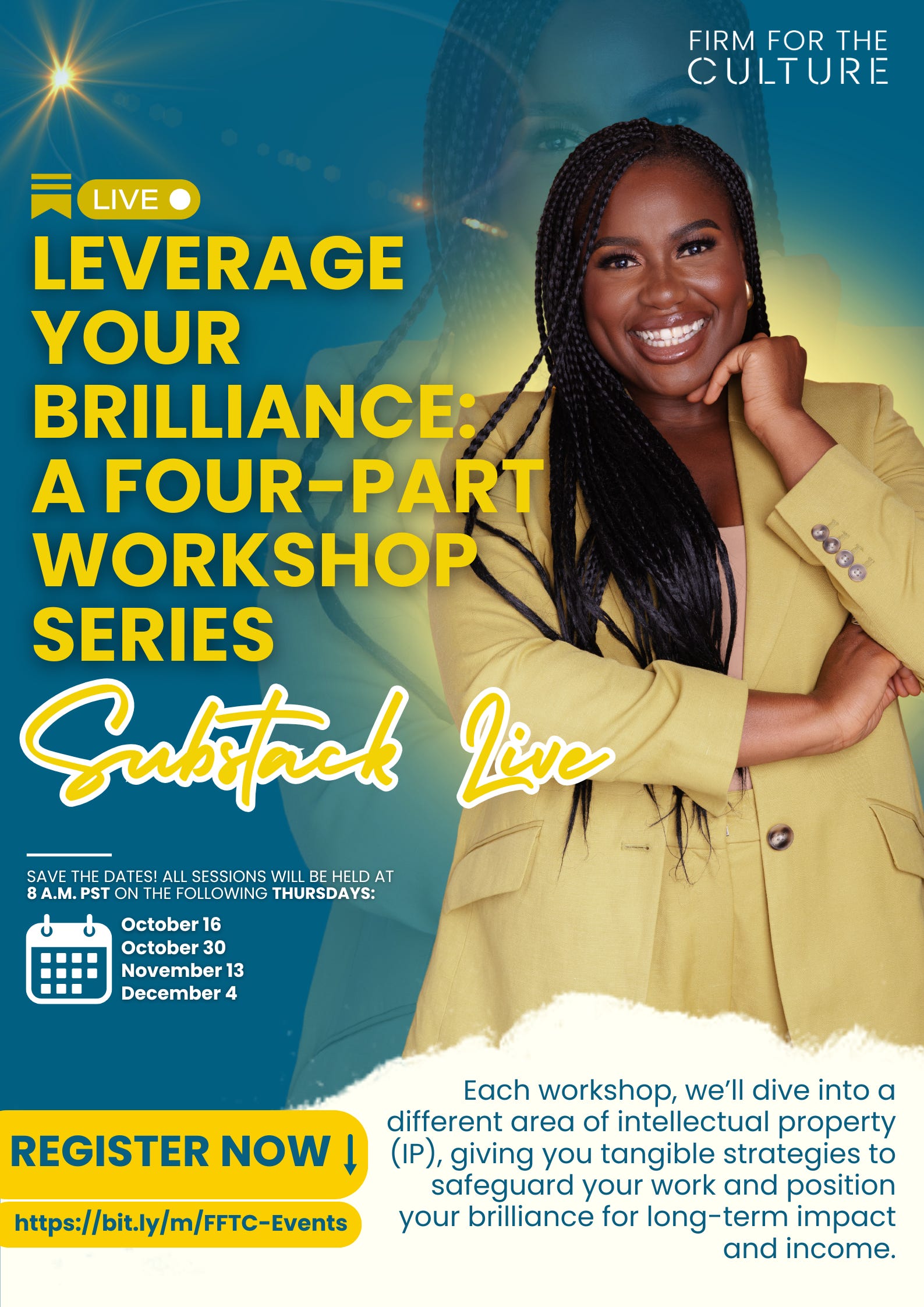
Each week, we’ll dive into a different area of intellectual property (IP), giving you tangible strategies to safeguard your work and position your brilliance for long-term impact and income.
All sessions will be held at 8 a.m. PST on the following Thursdays:
So Register Here to Save the Dates:
October 16October 30November 13
December 4
Workshop Lineup:
What to Do Before You Brand: October 16, 2025The pre-legal foundation that helps you build a brand worth protecting.
Copyrights for the Culture: October 30, 2025From music to course materials, learn how to protect the creative works you’ve poured your soul into.
Note: We had a time! Over 85 folks showed up to chat about copyrights and culture.
Here’s a clip below:
Introduction to IP Licensing: November 13, 2025
A breakdown of how licensing works, what to watch for, and how to get paid while keeping ownership.
Social Impact Licensing: Success Stories: December 4, 2025
Real-life case studies of brands who’ve turned impact into income without compromising their mission.
🔗 - Sign Up for Our THIRD Workshop Here:

Let’s close the year strong — with strategy, clarity, and protection for the intellectual property that’s been building your legacy all along.
Now, back to our regularly scheduled program…. :)

Damon Dash once stood at hip-hop’s summit — co-founding Roc-A-Fella Records, helping launch Jay-Z’s career, and building a media empire that extended into fashion, film, and culture.
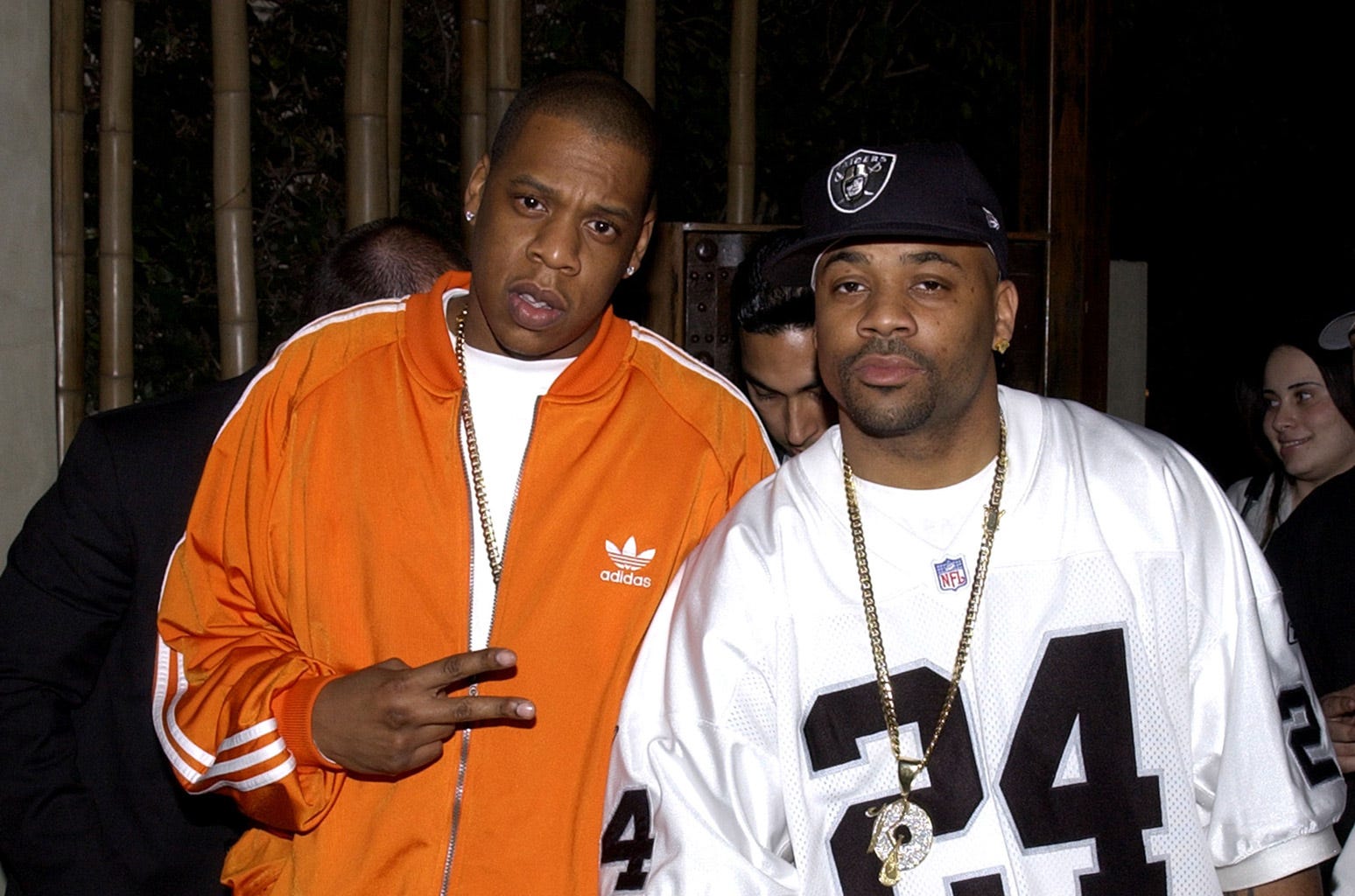
But today, the headlines read differently.
Asset seizures.
Bankruptcy filings.
And the liquidation of some of his most prized intellectual property.
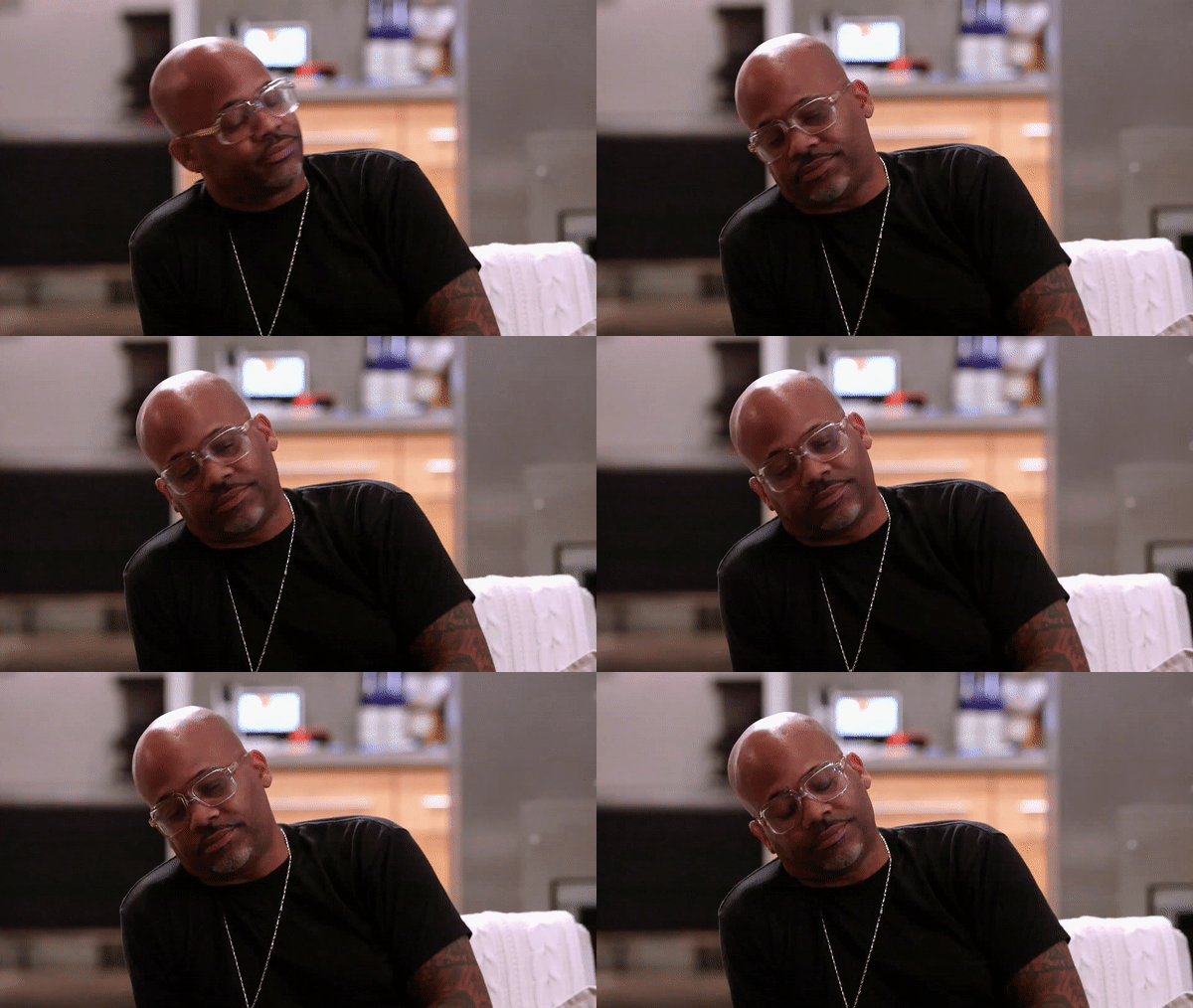
In November 2024, with little to no liquid assets available to satisfy an $8.7 million tax debt, New York State seized Dash’s one-third ownership in Roc-A-Fella Records, auctioning it off at a federal sale for just $1 million.
Shortly after, in 2025, Dash failed to pay over $823,000 in damages stemming from a federal court judgment.
The court didn’t just look to his bank account — it looked to his intellectual property: copyrights, business interests, and creative control that once symbolized his power in the culture.
And when he filed for Chapter 7 bankruptcy, Dash listed over $25 million in debt — while claiming just $4,350 in assets.
His IP didn’t just define his empire — it became one of the few lifelines he had left.
Lesson:
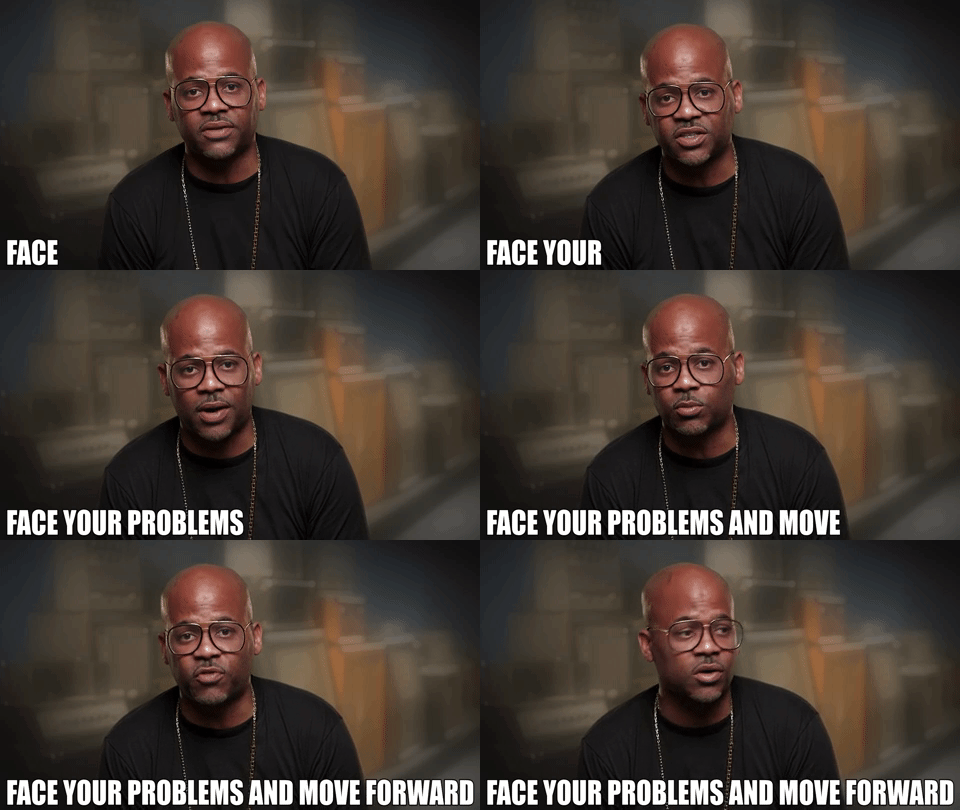
When you don’t have much else, your intellectual property becomes the thing they come for — not just by choice, but by force.
Whether you’re building a brand or have already built one, it’s critical to not only own your IP — but to understand its power, its value, and its vulnerability.

When Whitney Houston passed in 2012, the world mourned the loss of an icon — but the legal battles had only just begun.

Her estate quickly became entangled in a high-stakes valuation dispute with none other than the Internal Revenue Service (IRS).
And the issue at hand? The value of her name, image, likeness, and related intellectual property rights.
Let’s break it down.
The Houston estate valued her post-mortem publicity rights at just under $200,000.
The IRS? They argued her name, likeness, and IP were worth over $11 million.
That’s a difference of nearly $11 million — and the IRS wasn’t backing down.
Why?
Because under federal estate tax law, everything of value gets counted — not just cash and real estate, but publicity rights, royalty streams, and licensing potential, too.
Whitney’s voice may have gone silent, but the money her name could generate was still very much alive.
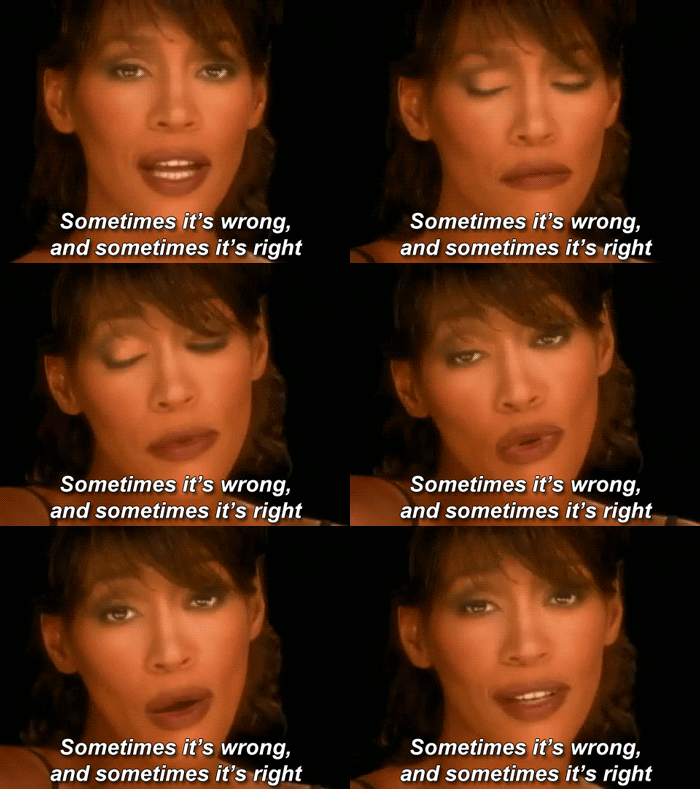
After years of back-and-forth, the parties ultimately settled for around $2 million.
But by then, the estate had already paid the price — in legal fees, delays, and public scrutiny.
What’s more sobering?
The IRS wasn’t chasing her jewelry, her cars, or even her real estate. They came for her name, her image, her likeness — because that was the most valuable asset left on the table.
When liquid capital runs dry and tangible assets aren’t enough, intellectual property becomes the lifeline — the very thing leveraged to cover debts that no other asset could.
Lesson:
Your name, image, and likeness are intellectual property — and when managed well, they can become one of the most powerful financial assets in your estate.
Failing to protect or properly value them — especially in death — doesn’t just create emotional burdens.
It can leave your estate scrambling, your heirs at risk, and your legacy sold short.
But when secured and leveraged correctly?
Your IP can be the very thing that saves it all.

Let’s revisit the story of Minaj, but now from the IP perspective.
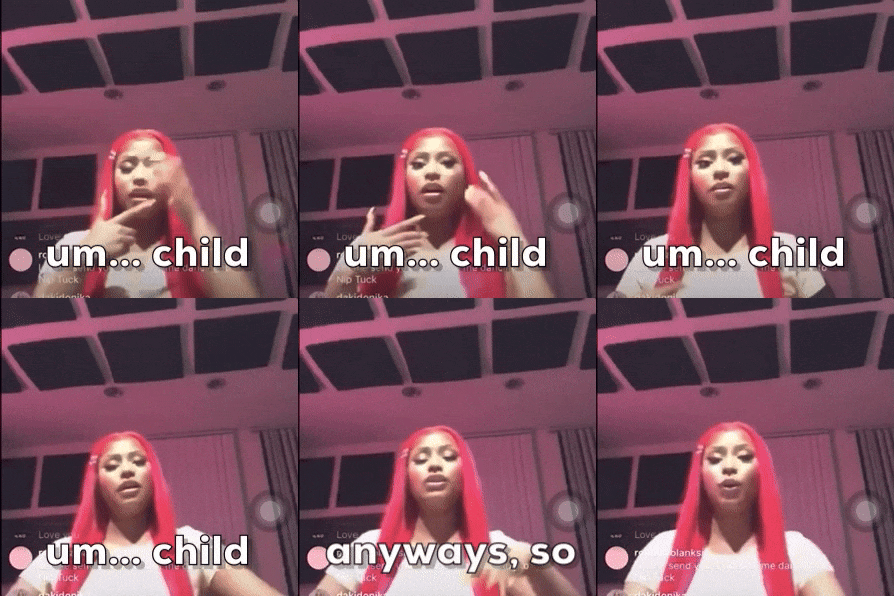
Her stage name Nicki Minaj isn’t just a persona — it’s a revenue-generating, brand-leveraging IP asset. It anchors an empire spanning music, television, fashion, endorsements, fragrance lines, and even merchandise.
But even with that star power, 2025 has been a turbulent year. Legal and financial rumors continue to swirl — including speculation about lawsuits, tax challenges, and liquidity concerns. The details vary by outlet, but the sentiment remains: even multimillion-dollar celebrities can feel the squeeze.
When cash becomes tight, most assets are illiquid.
Homes take time to sell.
Cars depreciate.
But IP? When properly structured, registered, and monetized — your intellectual property can become a lifeline.
That includes:
Trademark rights in her name (Nicki Minaj), associated logos, and merchandise slogans.
Copyrights in her music catalog, videos, and written works.
Publicity rights in her image, voice, likeness, and persona.
Licensing potential for commercial deals — from fragrance and beauty to brand collabs and streaming placements.
Lesson:
Your name isn’t just who you are — it’s what you own.
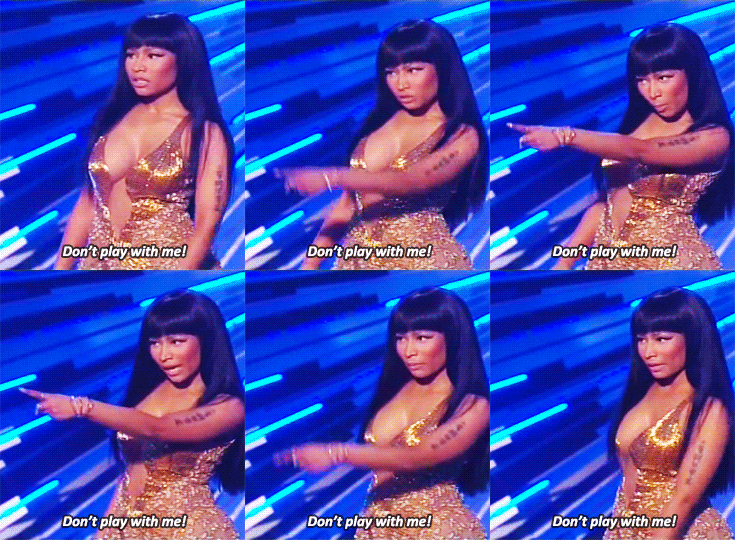
When you’re the brand, your intellectual property is often the last (and most powerful) asset left standing.
But that only holds if it’s protected, registered, and structured to withstand chaos.
Done right, your IP can do what other assets can’t: generate revenue in your sleep, pay down debts without selling your soul, and protect your legacy when the headlines go left.

Celebrity names are more than glitz and headlines.
They’re intellectual‑property assets.
When financial pressure, legal liability or personal crisis emerge, that IP can shift from advantage to vulnerability.
Control matters. Structure matters. Protection matters.
If you’re building a personal brand—or even a business built around your name—your story isn’t complete until your legal architecture is in place.

Share your thoughts in the comments!
Need Help Protecting Your Creativity?
If you are unsure—or if you know you need to take action—reach out to us.
We have helped countless founders and creatives safeguard their intellectual property, and we would love to do the same for you.
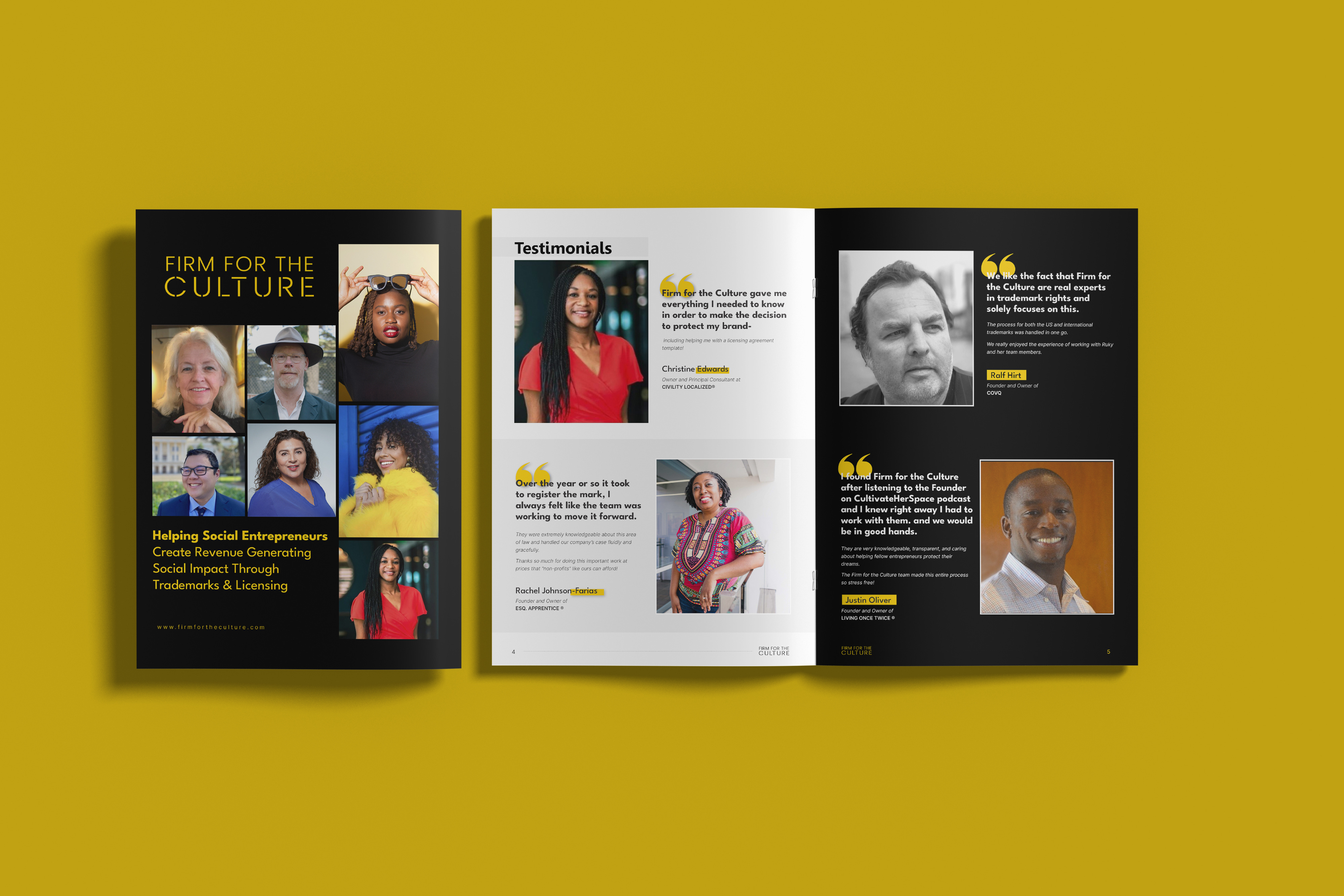
If you need further guidance, reach out to me and my team at Firm for the Culture.
We’re here to help you navigate the copyright, trademark, and thought leadership journey.
Can’t wait to help you protect your dynamic impact.
And #ThatsAWrap
The Doors of the Church Firm Are Open
Thanks for reading
See you next time.
Yes she needs prayers
Excellent piece