

Hey Fam,
Have you ever had a moment where you looked back at something you signed and thought, I probably should not have agreed to that?
Not because you didn’t understand the opportunity. Not because you weren’t excited. But because, at the time, you didn’t fully see what you were giving up.
That’s exactly what happened to Tyla Simone Crayton.
She owns a federally registered trademark for Sienna Wings. She built her business, grew her brand, and did what most founders are told to do—protect her name at the federal level. And yet, when it came time to expand into a physical location, she found herself in a position where she couldn’t actually use that name the way she intended.
Not because of another trademark owner.
Because of a contract she signed.
So let’s walk through what happened, because this isn’t really a trademark issue. It’s a control issue—one that sits quietly inside agreements that most people don’t think twice about until they’re being enforced.
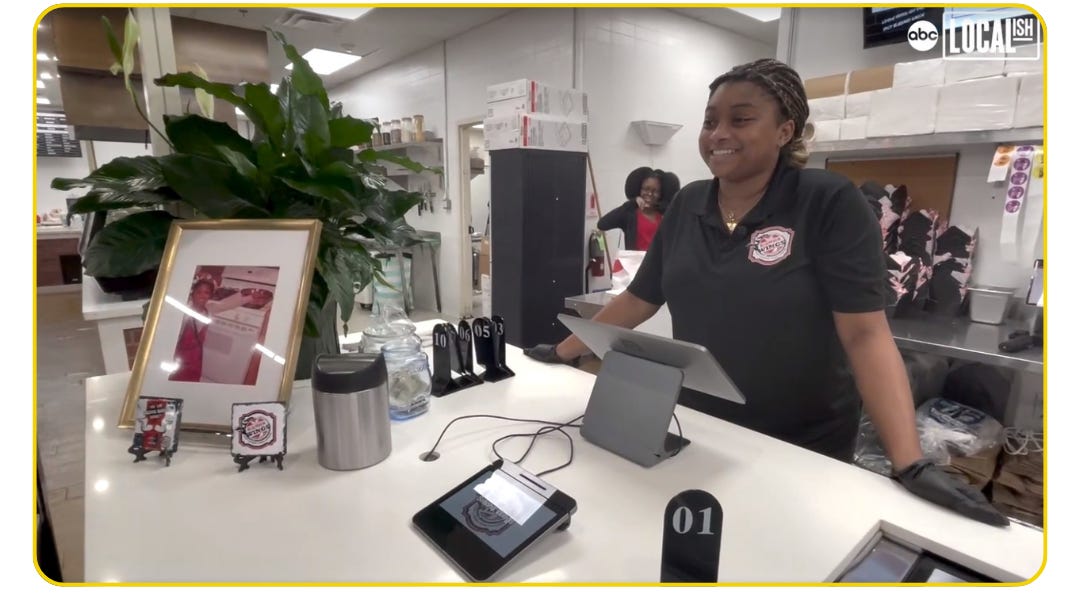
Tyla started her wings business young—just sixteen—building from her kitchen and growing it into something with real traction. Over time, that growth translated into bigger opportunities: national visibility, retail distribution, and eventually a brick-and-mortar location in a master-planned community called Sienna.
And that’s where things shifted.
Before she could even put up her signage, the property owners required her to sign an agreement.
On its face, that might sound routine.
But the terms weren’t limited to that location or that community. The agreement gave the developer approval rights over her ability to expand her business—into other cities, other states, and potentially beyond.
In other words, a contract tied to one physical location started reaching into the future of her entire brand.
Forever.
The Pivot
IP provisions in contracts are often subtle. Quiet. Inconspicuous. Esoteric, even.
But that doesn’t make them any less enforceable.
From employment agreements that broaden the scope of what counts as “within the scope of employment.”
To manufacturing contracts that turn your designs into someone else’s property.
To vendor agreements where the contractor—not you—owns the copyright to work you paid for.
To leases in branded communities that turn signage rights into IP control.
The pattern is the same:
You think you’re signing for space, services, or collaboration.
You’re actually signing away control of what you built.
Understanding that owning your IP is the starting line—not the finish line.
Really understanding how contracts impact that ownership? That’s the strategy.
In this founder's letter, we're going through four commonplace contracts where IP clauses are often lurking—and what to look for before you sign on the dotted line.
Ready?
Let’s get into it.

Loving This Post?
Show us some love by adding a “❤️” or commenting below; this will make our hearts sing.

The Firm for the Culture - THE SPEAKER PROTECTION Series
We’ve got a new series of workshops, all for you!
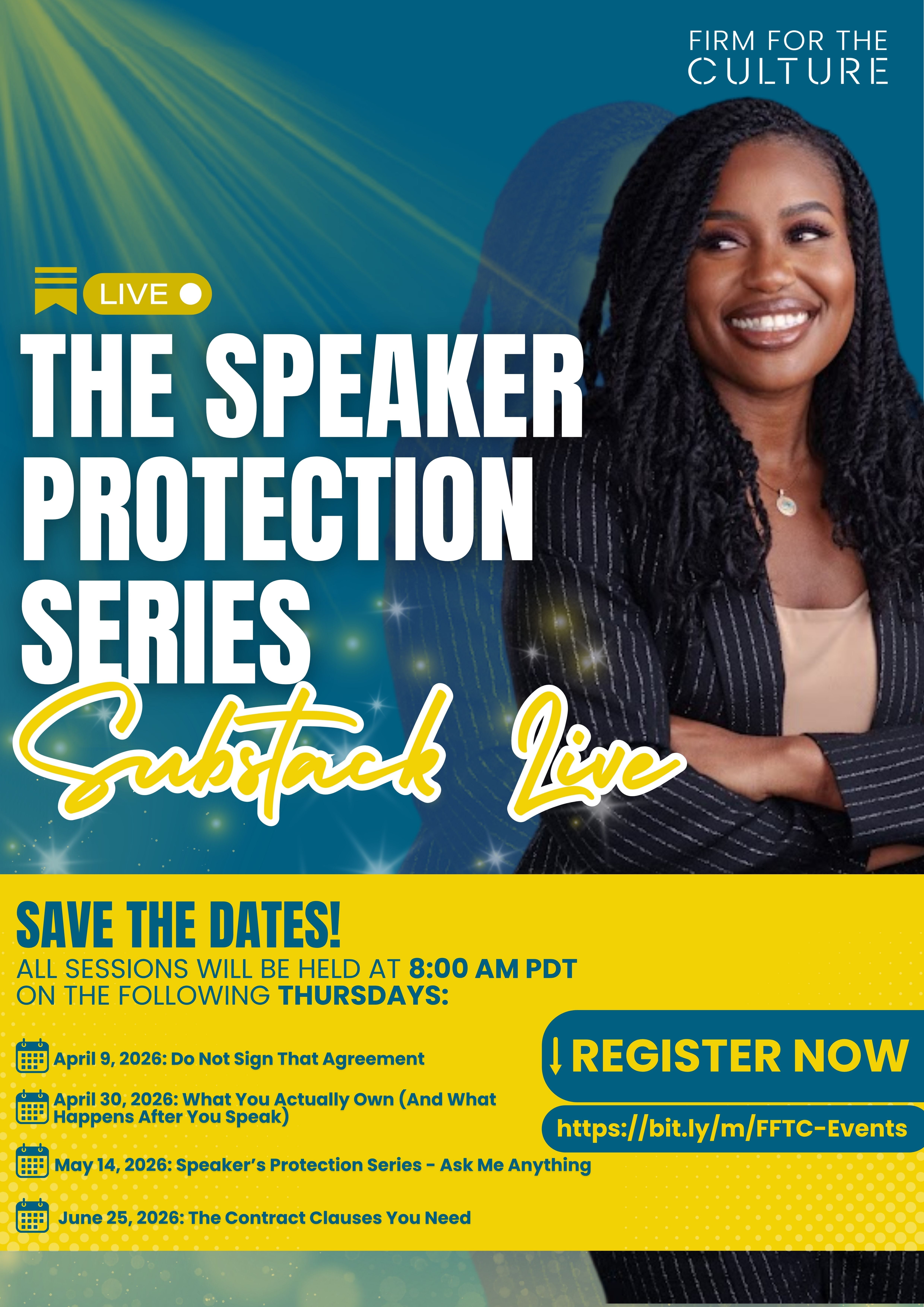
Speaking builds visibility. But it also creates intellectual property.
This series breaks down what actually happens to your ideas, your content, and your rights once you step on stage.
From contracts to ownership to licensing, we’ll explore how speaking opportunities can either build long-term value—or quietly take it away.
We’ll cover: how speaking engagements intersect with intellectual property, what speakers often overlook when accepting opportunities, and how to approach speaking as both a visibility and ownership strategy.
What you’ll walk away with: A clearer understanding of how to protect, position, and leverage your content as a speaker—before, during, and after every engagement.
Here’s are the links for the events; hope to see you there:
Workshop 1: The Speaker Protection Series: Do Not Sign That Agreement
📅 April 9, 2026 at 8:00 a.m. PDT
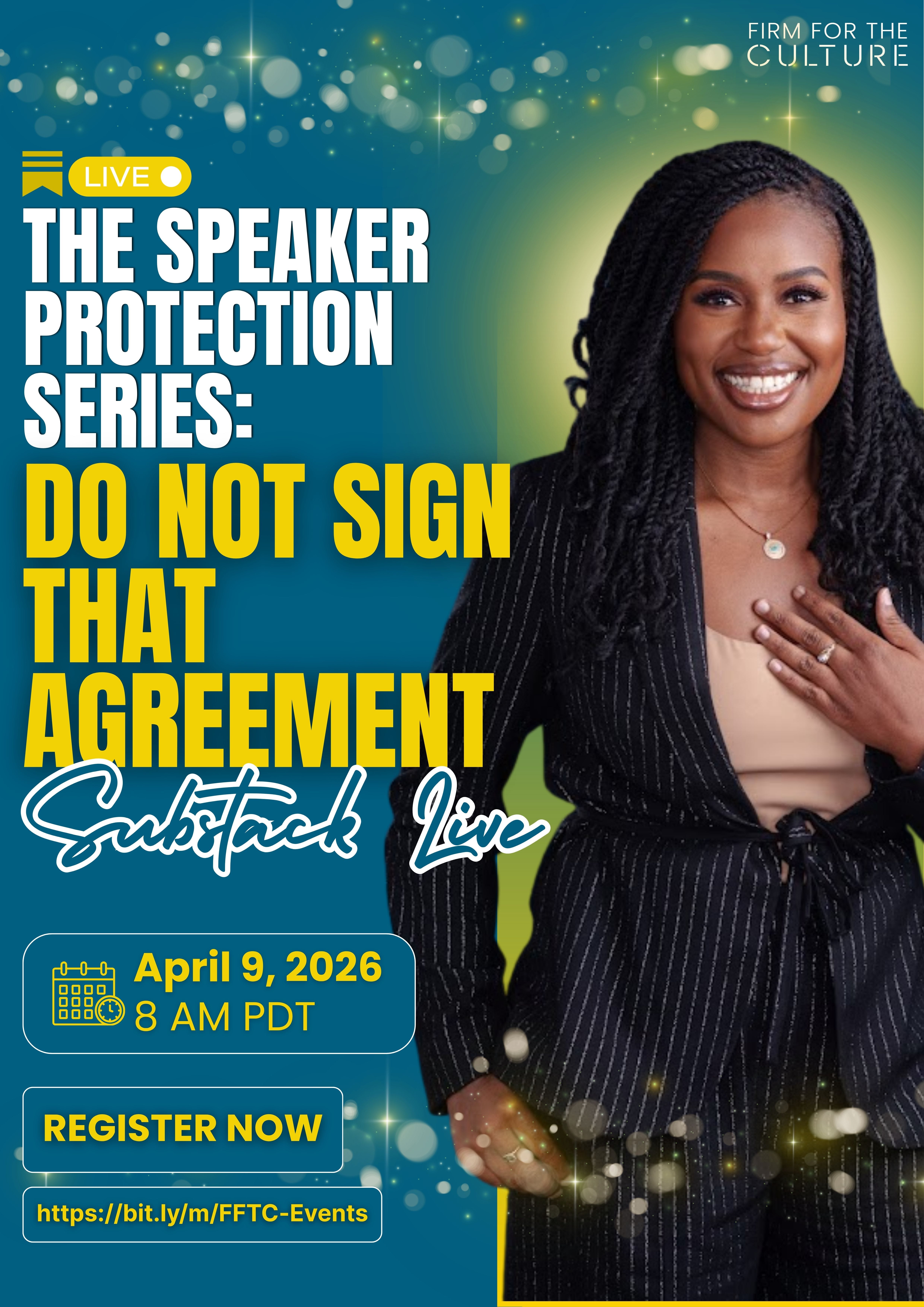
Signing fast can feel productive. Signing smart protects your future.
Too many creatives and founders agree to terms they don’t fully understand because they don’t want to miss the opportunity. This workshop breaks down the clauses that deserve a second look—and the ones you should never agree to without clarity.
We’ll cover: usage rights, recording permissions, ownership clauses, and the risks of vague or one-sided agreements—plus how to slow down and evaluate terms before signing.
What you’ll walk away with: A practical checklist for reviewing speaker agreements, knowing what to question, and protecting your leverage before you commit.
Register for The Speaker Protection Series: Do Not Sign That Agreement workshop
Workshop 2: The Speaker Protection Series: What You Actually Own (And What Happens After You Speak)
📅 April 30, 2026 at 8:00 a.m. PDT
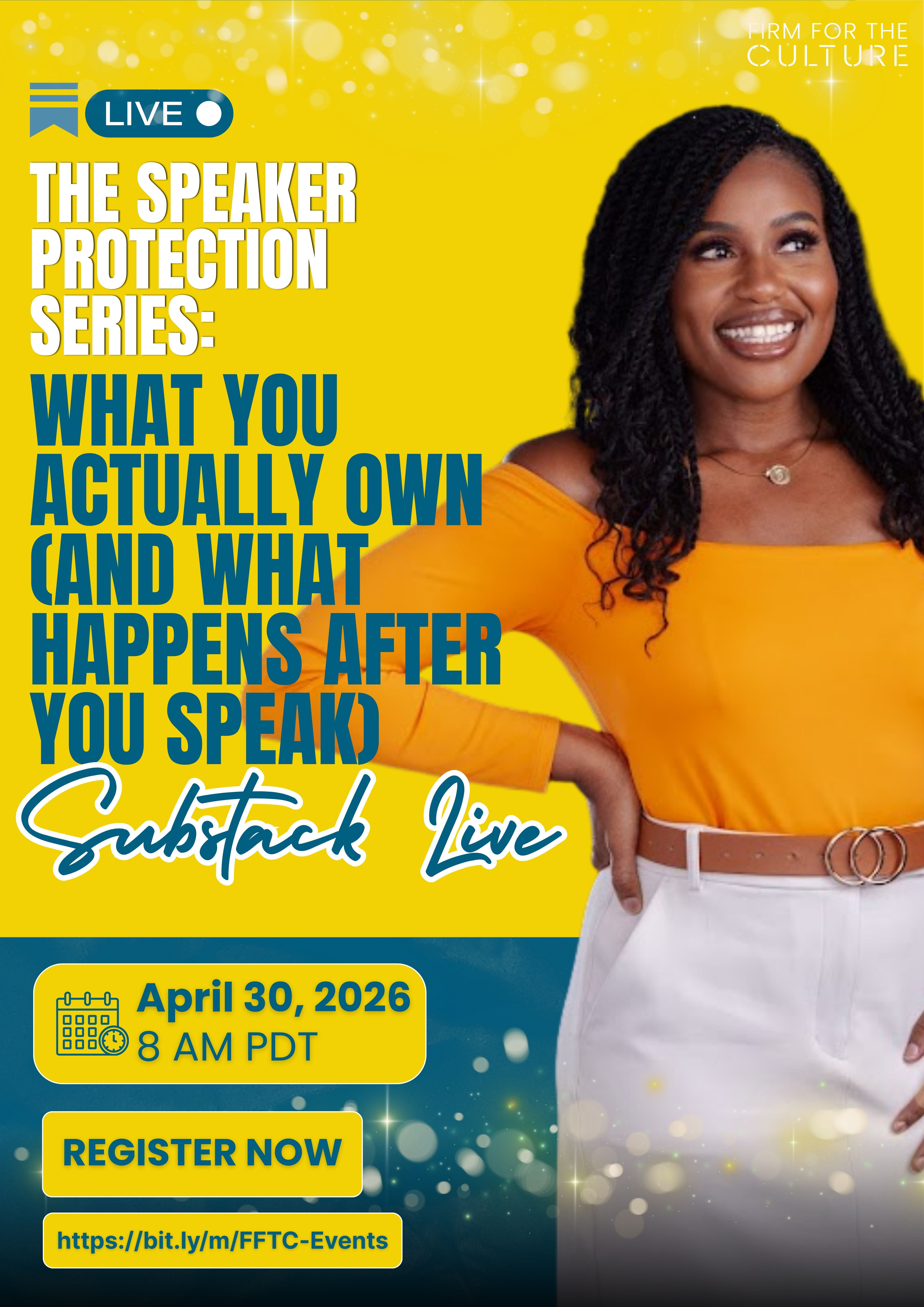
Just because you created it doesn’t mean you still own it.
This workshop unpacks what happens after your talk ends—who owns the recording, who can reuse your material, and what rights may shift once your content is shared or distributed.
We’ll cover: ownership vs. licensing, how event organizers structure rights, and what speakers often give away without realizing it.
What you’ll walk away with: A framework for understanding and protecting your ownership—so your ideas continue working for you long after the event ends.
Workshop 3: The Speaker Protection Series: Ask Me Anything + IP Basics
(Copyright, Trademark, Patent)
📅 May 14, 2026 at 8:00 a.m. PDT
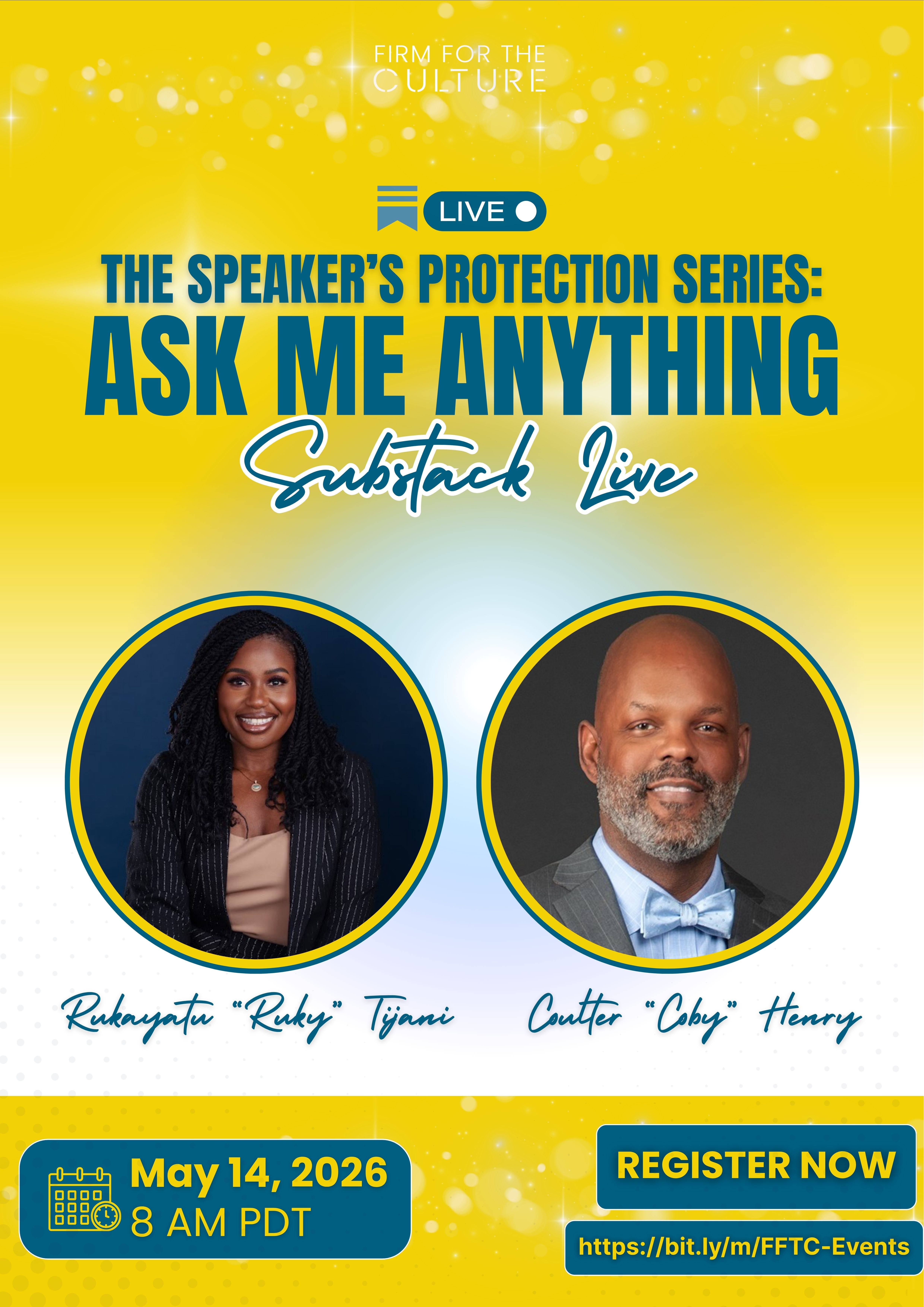
Before strategy, there has to be clarity.
This session brings everything back to the fundamentals—breaking down copyright, trademark, and patent in a way that’s clear, practical, and directly applicable to speakers and creators.
It’s also an open space to ask real questions based on real situations.
We’ll cover: what each type of protection actually covers, common misconceptions, and how these apply to your content, brand, and speaking engagements.
What you’ll walk away with: A solid foundation in IP and clearer answers to the questions you’ve been trying to figure out.
Workshop 4: The Speaker Protection Series: The Contract Clauses You Need
📅 June 25, 2026 at 8:00 a.m. PDT
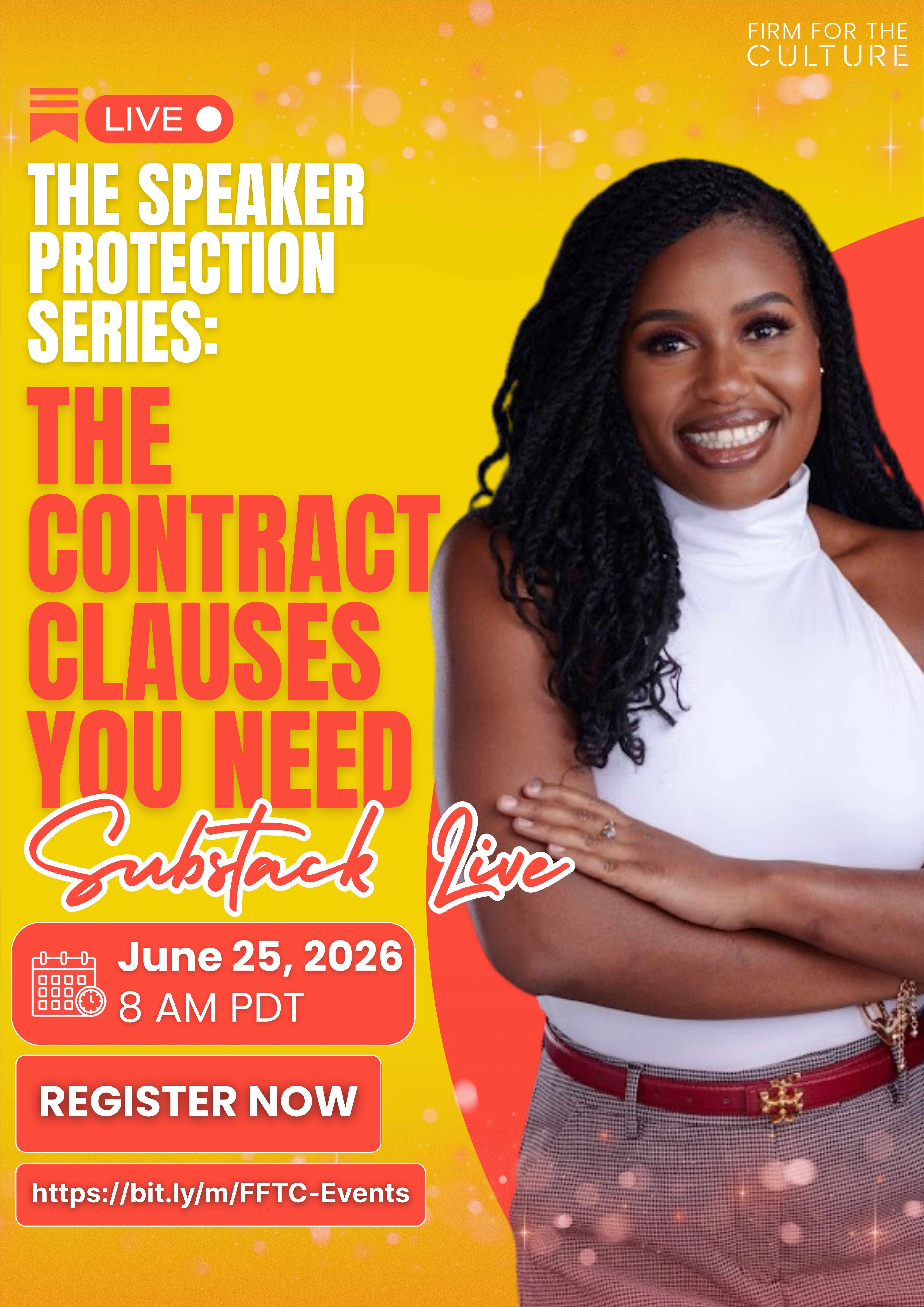
Growth usually comes with paperwork. Protection comes with awareness.
This workshop focuses on the specific contract clauses that directly impact your control, ownership, and long-term leverage as a speaker.
We’ll cover: key clauses around ownership, licensing, usage, distribution, and how to structure agreements that actually protect your work—not just your participation.
What you’ll walk away with: A clear understanding of the clauses you need in place and how to approach contracts with intention and strategy.
Register for The Speaker Protection Series:: The Contract Clauses You Need workshop
For founders who are building brands. Creators who are shaping culture. Entrepreneurs who refuse to be extracted from.
Registration is FREE; in case you’re unable to make it, sign up and you’ll get the free notes.
After event recordings are $20.00 each.
Hope to see you there!
🔗 Sign up here: https://bit.ly/m/FFTC-Events

Most founders don't realize that employment contracts aren't just about salary and benefits.
They're IP assignment agreements in disguise.
What to Watch For:
"Scope of Employment" clauses that define what you create "within the scope of employment"—often broader than your actual job description.
Invention assignment provisions that claim ownership of anything you create using company time, resources, OR knowledge.
Even on weekends.
Even at home.
Even on your side hustle.

"Prior Inventions" schedules that require you to list what you already own. Anything NOT listed? The company assumes they own it.
Work-for-hire language that transfers copyright automatically—no signature required.
The Risk:
If you're working on a side project while employed and your contract has broad assignment language, your employer may own it.
Even if you built it entirely off the clock.
And here's where it gets serious:
Filing for a trademark or copyright on something you created while employed—when your employment agreement gives your employer rights to it—can lead to fraudulent filing claims.
Because you can't file for IP you don't actually own.
The Question:
Before you file, ask: Does my employment agreement give my employer rights to this?

If the answer is yes—or if you're not sure—you need to resolve ownership before you file.
Not after.
Founder Gem:
Employment agreements are not just HR paperwork.
They're IP ownership documents.
Read them like the contracts they are, not formalities.
And if you're building something on the side, make sure you actually own it before you protect it.

You hire a manufacturer to produce your product.
You send them your designs. Your prototypes. Your molds. Your specifications.
Then six months later, they're selling a "similar" product under a different brand.

And when you object, they tell you they own the molds.
What to Watch For:
Who owns the molds, designs, and prototypes? If the contract doesn't say
YOU own them, the manufacturer might. Even if you paid for them.
Improvement clauses. If the manufacturer makes enhancements to your design during production, who owns those improvements? You? Them? Both?
Trade secret sharing without confidentiality protections. You're handing them proprietary formulations, processes, and specs. What's stopping them from using that with your competitors?
Exclusive use provisions. Can they manufacture the same design for other brands? Can they use your molds for similar products?
The Risk:
You paid for the tooling. You created the design. But if the contract says the manufacturer owns "production materials" or "tooling," they can use YOUR designs to produce for anyone.
Including your competitors.
Real-World Scenario:
A founder develops a proprietary product design. Sends specs and CAD (Computer Aided Design) files to a manufacturer.
Pays $50K for custom molds.
The contract says the manufacturer owns "tooling and production equipment."
Two years later, the manufacturer is producing the same design for a competitor at half the price.
The founder's lawyer reviews the contract.
The manufacturer owns the molds. Legally.
Founder Gem:
Ownership of molds, prototypes, designs, and tooling should be explicitly stated as YOURS. If you paid for it, you should own it. Put that in writing before production starts.

You hire a contractor to build your website. Design your logo. Write your course content. Develop your app.
The work is done. You paid the invoice.
But do you actually own what they created?
What to Watch For:
Work-for-hire language. Without this, the contractor owns the copyright—even though you paid them.
Copyright law is clear: the creator owns the work unless there's a written agreement saying otherwise.
Deliverable ownership clauses. Who owns the final work? Who owns the drafts, unused concepts, and source files?

Improvements to YOUR pre-existing IP. If the contractor enhances your framework, methodology, or content, who owns the enhanced version?
License vs. assignment. Are they giving you a license to use it, or are they transferring full ownership to you?
The Risk:
Without work-for-hire or assignment language, the contractor owns the copyright to everything they create. You just have an implied license to use it.
Which means they can: → Sell the same design to your competitor → Use your brand concepts in their portfolio without limitation → Refuse to give you source files because they own them
Real-World Scenario:
A founder hires a designer to create a brand identity. No contract. Just emails and Venmo.
The designer delivers. The founder loves it. Starts using the logo everywhere.
A year later, the founder tries to register the trademark.
The examining attorney asks: "Do you own the underlying copyright to this design?"
The founder realizes: the designer owns it. Not them.

To register the trademark, the founder needs a copyright assignment from the designer—who is now unresponsive and may want additional payment.
Founder Gem:
"I paid for it" doesn't mean you own it.
Copyright law says the creator owns the work unless there's a written agreement transferring ownership. Always include work-for-hire or IP assignment language in vendor and contractor agreements. Before the work starts.

Commercial leases are about square footage, rent, and build-out costs.
Except when they're not.
What to Watch For (especially in master-planned communities, shopping centers, branded developments):
Signage restrictions tied to trademark approval. The landlord may control whether you can display your own brand name on your own building.
Exclusive use clauses. The landlord reserves the right to approve your use of the space—including your business name, your branding, and even your business model.
Covenant controls that give property owners approval rights over business changes, expansions, or pivots.
Agreements that turn property access into IP leverage.
The Risk:
You lease the space. You pay rent. You build out the location.
But the landlord controls whether you can use your own trademark on your own signage.

And they use that control to demand approval over how you operate your business. Where you expand. What you sell. How you grow.
The Sienna Wings Case:
Again, Tyla Simone Crayton owns a federal trademark for Sienna Wings.
She leased space in a master-planned community called Sienna.
The property owners are blocking her signage until she signs an “agreement"—one that gives the developer approval rights over ANY business expansion. To other locations. Other cities. Other states.
Forever.
This isn't about trademark confusion.

This is about a property owner using signage control as leverage to secure IP control.
The Lesson:
Having a trademark doesn't guarantee signage rights on someone else's property.
Opening in a branded community without reviewing the covenants? That's how you end up boxed in.
Founder Gem:
Before you sign a lease in a branded community, shopping center, or trademarked development, ask: What approvals do I need to display my brand? What control am I giving up? What restrictions exist on how I can operate my business? Read the covenants like a contract. Because they are.

IP implications exist in contracts that don’t mention intellectual property.
They show up as: → Employment scope definitions → Manufacturing tooling provisions → Vendor deliverable language → Lease signage restrictions

And if you don’t catch them before you sign, you may not own what you think you own.
Before you sign any contract, ask:
Who owns what I create under this agreement?
Am I giving anyone a license to my existing IP?
What happens to improvements, enhancements, or derivatives?
Can I use my own IP freely after this agreement ends?
What control am I giving up that I don’t realize?
Because owning your IP is the starting line.
Understanding how contracts impact that ownership? That’s the strategy.
And that’s exactly what we’ll be breaking down in “Do Not Sign That Agreement”—our upcoming series on IP provisions hiding in everyday business agreements.

What contract surprised you most on this list? Have you ever discovered an IP clause in an agreement you didn't expect?
Drop a comment—I read every one.

Want help figuring out whether your name—or brand—is ready for trademark protection?
We’ve got you.
Book a Strategy Session with Firm for the Culture and let’s make sure your name isn’t just recognized—it’s protected.
Need Help Protecting Your Creativity?
If you are unsure—or if you know you need to take action—reach out to us.
We have helped countless founders and creatives safeguard their intellectual property, and we would love to do the same for you.

If you need further guidance, reach out to me and my team at Firm for the Culture.
We’re here to help you navigate the copyright, trademark, and thought leadership journey.
Can’t wait to help you protect your dynamic impact.
And #ThatsAWrap
The Doors of the Church Firm Are Open
Thanks for reading
See you next time.