

Hey Fam,
In 1996, a word entered the culture.
Not pulled from a dictionary. Not borrowed. Not repurposed.
Created.
ATLiens.
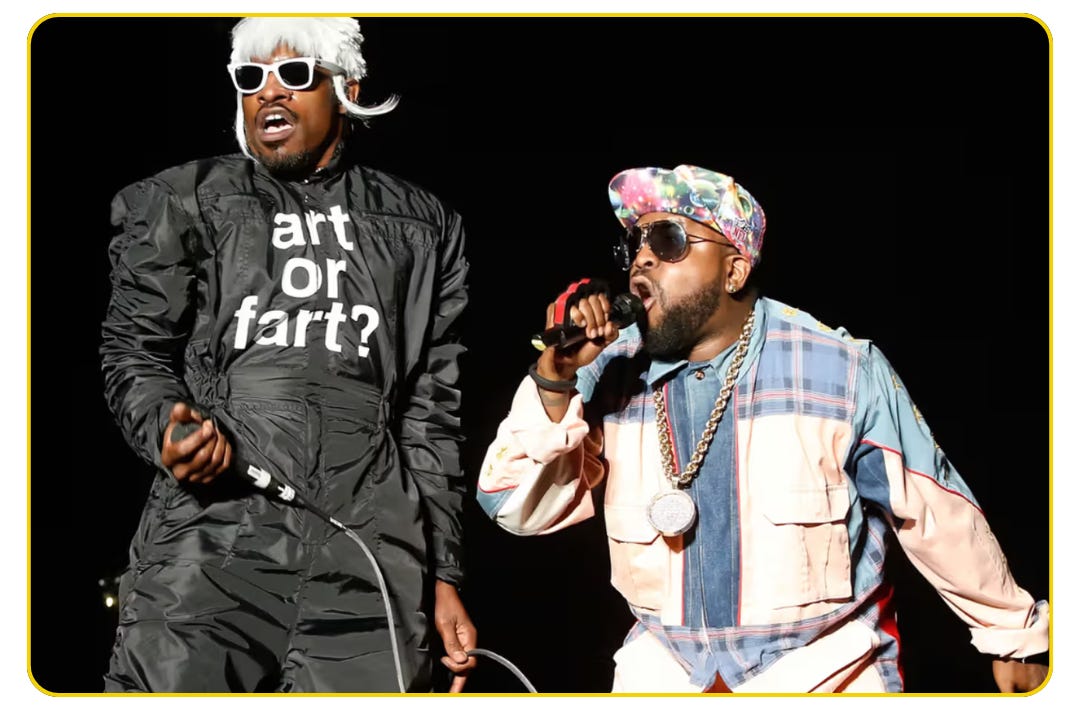
A name that carried geography, identity, and sound all at once.
Atlanta. OutKast.
A way of being that didn’t quite fit anywhere else.
It moved through music first. Then through people. Then through culture.
And for a long time, that was enough.
Until it wasn’t.
Nearly three decades later, that same name became the center of a trademark dispute between OutKast and an EDM duo using the name “ATLiens.”
What followed was more than a disagreement over similarity; that was the easy part.
It was a legal question about something the culture had already answered in its own way—but the law had not.
The Story
OutKast released ATLiens in 1996. Their second studio album. A portmanteau blending “Atlanta” and “Aliens.”
According to the lawsuit filed by OutKast’s holding company High Schoolers LLC, the term “was not used in the cultural lexicon and did not exist” before they introduced it.
The album spent 33 weeks on the Billboard 200.
The title track reached No. 35 on the Hot 100. It became a cornerstone of Southern hip-hop.

The name carried weight.
Cultural significance. Identity.
Fast forward to 2012.
An Atlanta-based EDM duo began performing under the name “ATLiens.”
They built a following. They played festivals. They wore masks. They used alien-themed imagery.
In 2020, they registered a federal trademark for the name.
In August 2024, OutKast sued.
The complaint argued consumer confusion. That the EDM duo’s use of the name—combined with their Atlanta roots and masked performances—led fans to believe the electronic act was somehow connected to Big Boi and André 3000.
OutKast’s legal team called it “a basic brand protection issue,” stating that OutKast “had to file suit in order to protect the valuable name and trademark ATLiens that it created and has continuously used for nearly 30 years.”

The EDM duo denied any wrongdoing. They rejected that OutKast had “any trademark rights whatsoever in the ATLIENS mark.”
The case paused for over a year while both sides negotiated.
In February 2026, they reached a settlement. A federal judge dismissed the case with prejudice on February 20.
The terms remain confidential.
In this founder’s letter, we’re walking through what happens when something culturally significant is built—but not legally structured. And why creation and ownership are not the same thing.
Let’s get into it.

Loving This Post?
Show us some love by adding a “❤️” or commenting below; this will make our hearts sing.

The Firm for the Culture - THE SPEAKER PROTECTION Series
We’ve got a new series of workshops, all for you!
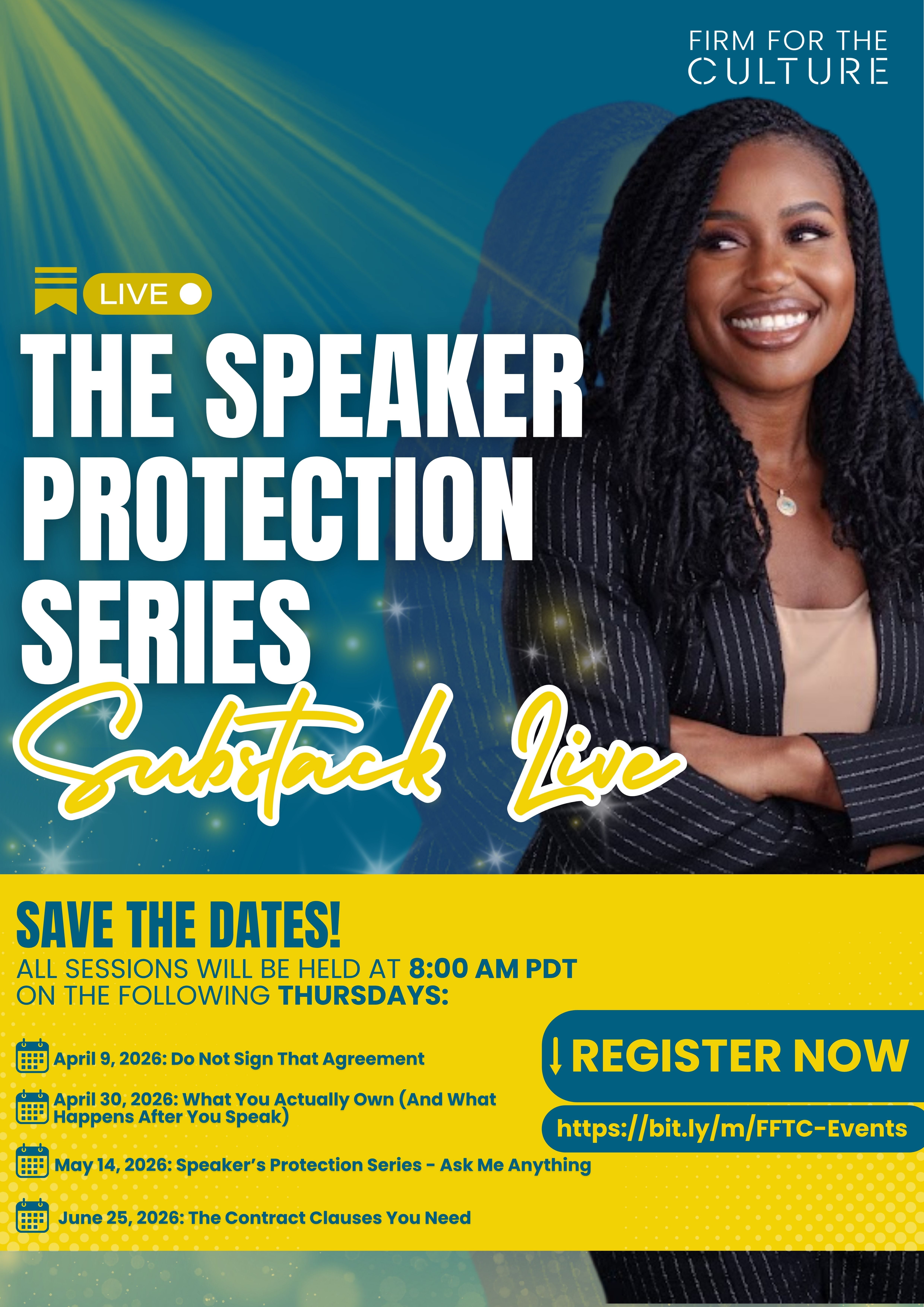
Speaking builds visibility. But it also creates intellectual property.
This series breaks down what actually happens to your ideas, your content, and your rights once you step on stage. From contracts to ownership to licensing, we’ll explore how speaking opportunities can either build long-term value—or quietly take it away.
We’ll cover: how speaking engagements intersect with intellectual property, what speakers often overlook when accepting opportunities, and how to approach speaking as both a visibility and ownership strategy.
What you’ll walk away with: A clearer understanding of how to protect, position, and leverage your content as a speaker—before, during, and after every engagement.
Here’s a preview for your viewing pleasure:
Workshop 3: The Speaker Protection Series: Ask Me Anything + IP Basics
(Copyright, Trademark, Patent)
📅 May 14, 2026 at 8:00 a.m. PDT
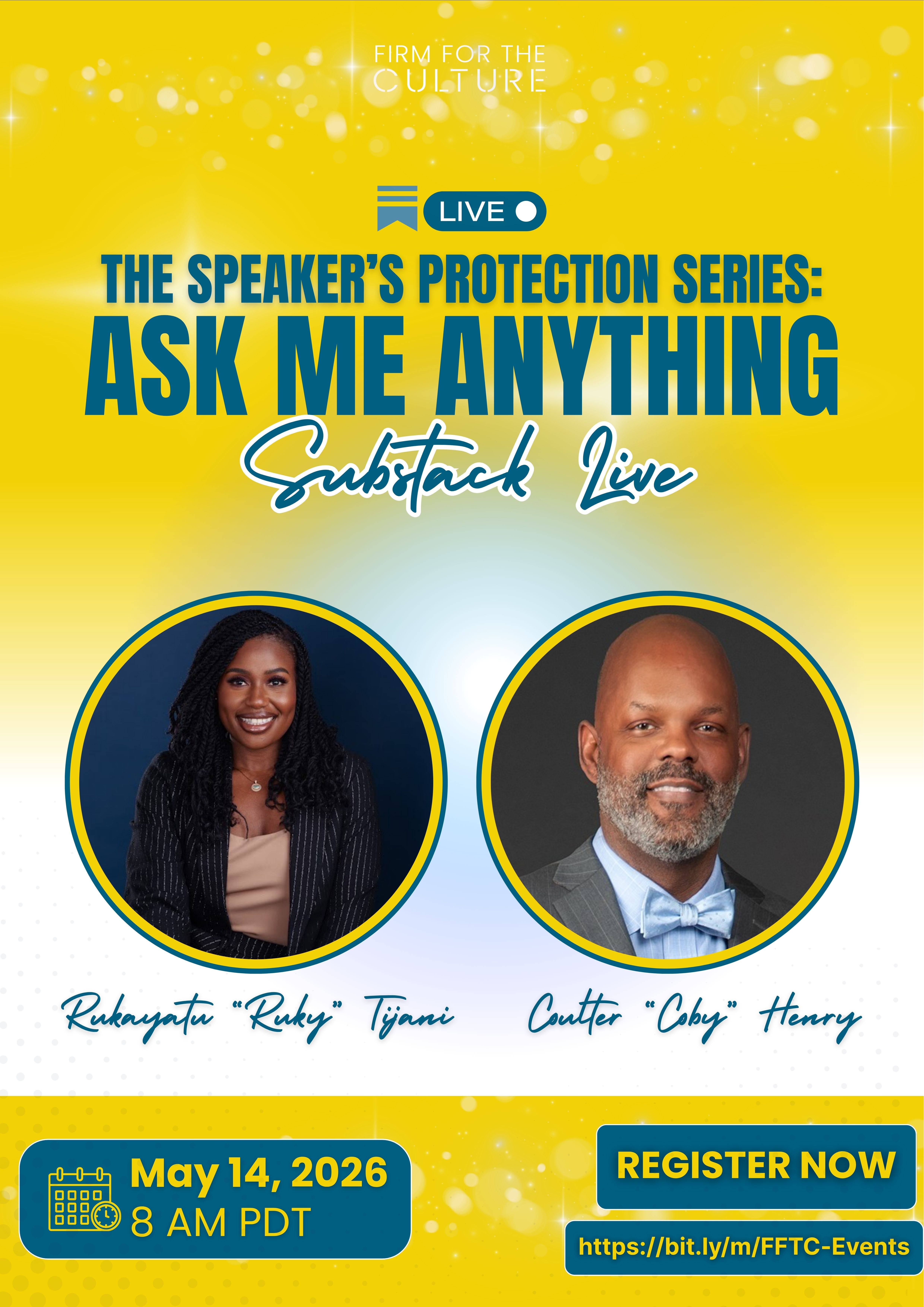
Before strategy, there has to be clarity.
This session brings everything back to the fundamentals—breaking down copyright, trademark, and patent in a way that’s clear, practical, and directly applicable to speakers and creators.
It’s also an open space to ask real questions based on real situations.
We’ll cover: what each type of protection actually covers, common misconceptions, and how these apply to your content, brand, and speaking engagements.
What you’ll walk away with: A solid foundation in IP and clearer answers to the questions you’ve been trying to figure out.
Workshop 4: The Speaker Protection Series: The Contract Clauses You Need
📅 June 25, 2026 at 8:00 a.m. PDT
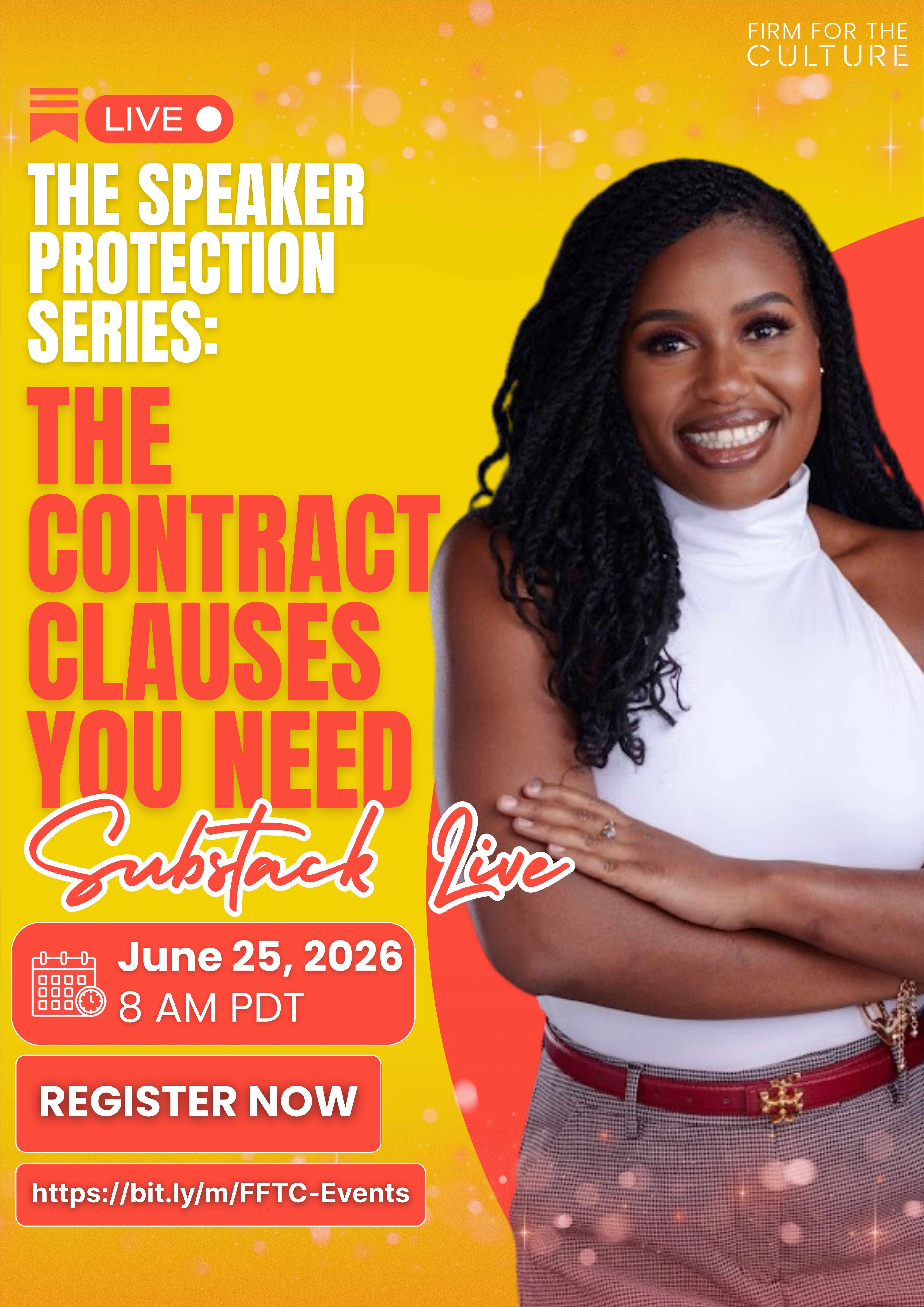
Growth usually comes with paperwork. Protection comes with awareness.
This workshop focuses on the specific contract clauses that directly impact your control, ownership, and long-term leverage as a speaker.
We’ll cover: key clauses around ownership, licensing, usage, distribution, and how to structure agreements that actually protect your work—not just your participation.
What you’ll walk away with: A clear understanding of the clauses you need in place and how to approach contracts with intention and strategy.
Register for The Speaker Protection Series:: The Contract Clauses You Need workshop
For founders who are building brands. Creators who are shaping culture. Entrepreneurs who refuse to be extracted from.
Registration is FREE; in case you’re unable to make it, sign up and you’ll get the free notes.
After event recordings are $20.00 each.
Hope to see you there!
🔗 Sign up here: https://bit.ly/m/FFTC-Events

OutKast didn’t just use “ATLiens.”
They introduced it. Defined it. Gave it weight.
And culturally, that matters. It always will.

But the law doesn’t assign rights based on cultural origin alone.
It assigns rights based on: → Use tied to specific goods and services → Formal filings → Enforceable positioning within the trademark system
Which means two things can be true at once:
The culture can recognize you as the origin.
And the law can still require you to prove ownership.
So yeah, without the right guidance, you may be setting up the next cultural phenomenon for someone else’s ownership.
What This Means:
Trademark law operates on a “use it or lose it” principle.
It doesn’t ask who created something first in the abstract.
It asks:
→ Who is using this mark in commerce? → In connection with what goods or services? → Can you demonstrate continuous use? → Did you file to formalize that use?

OutKast argued common law rights—rights that arise from continuous, unregistered use over time.
That’s a valid legal position and one I’ve used in arguments.
But it’s a hard sell to a court of federal jurisdiction, especially when the plaintiff should have the know how and resources to protect their coined term.
Why? Because “common law” rights need to be proven. You have to show that when someone sees the term, they think of you.
All. Over. The. Country.
Common law priority requires proof.
Documentation.
Evidence of use tied to specific commercial categories.
Meanwhile, the EDM duo had federal registration. That registration creates a legal presumption of ownership and gives nationwide priority for the categories listed.
Where This Shows Up:
You coin a term. A methodology. A framework name. It becomes part of how people talk about your work.
But if you don’t: → Register it as a trademark → Tie it to specific goods/services → Document your use consistently
Then you’re relying on common law rights—which are harder to enforce, geographically limited, and require you to prove priority and continuous use.
And someone else can file first.
Founder Gem:
Cultural recognition is powerful. But legal ownership requires structure. The law doesn’t preserve what you created—it recognizes what you secured. Creation gives you moral authority. Registration gives you enforceable rights.

This is the part that feels unfair.
How can someone else use something that clearly came from you? How can something so tied to your identity become available for someone else to build on?
But from a legal standpoint, the question isn’t:
Who feels connected to the name?
It’s:
Was it secured?
If a name is not: → Formally registered → Actively protected → Clearly tied to defined commercial categories
Then it exists in a different kind of space. Visible. Valuable. And, in some ways—accessible.
What This Means:
The EDM duo began using “ATLiens” in 2012. They built a brand around it.
They registered a federal trademark in 2020.
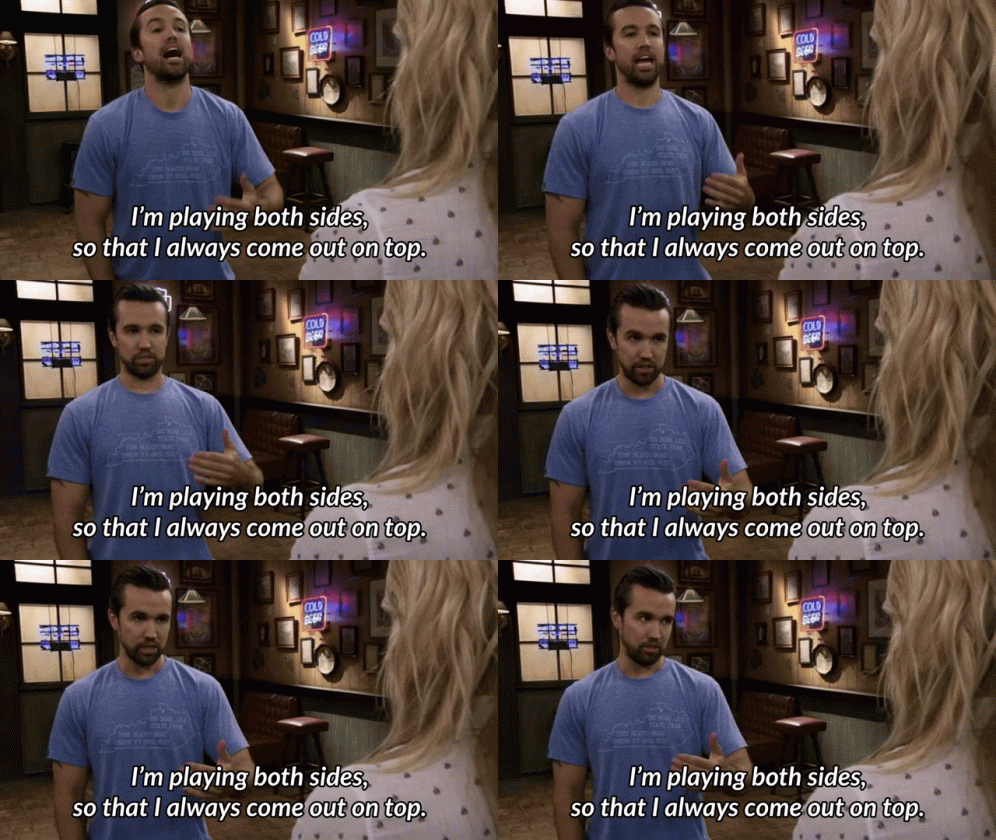
From their perspective, they may have believed: → The name was available → OutKast hadn’t filed for trademark protection in their category (EDM/electronic music) → The cultural association didn’t prevent legal use in a different market
From OutKast’s perspective: → They created the term → They’ve used it continuously for 30 years → The EDM duo is trading on their goodwill.
Both positions have legal merit. That’s why it became a dispute.
Where This Shows Up:
You develop a signature framework. You use it in your coaching practice. You teach it in workshops. Your clients know it by name.
But you haven’t filed for trademark protection. You haven’t registered it. You haven’t formally claimed ownership.

Then someone else—maybe in a related field, maybe not—starts using the same name. They file for a trademark. They build a brand around it.
Now you’re in a position where: → You created it first → But they formalized it first → And the law may recognize their registration
Founder Gem:
What you leave unstructured creates space for someone else to formalize. If you build something valuable but don’t protect it, you’re trusting that no one else will claim what you chose not to secure. That’s a risk, not a strategy.

When the EDM duo registered “ATLiens,” they didn’t just protect themselves.
They positioned themselves.
Inside the system. Inside the framework the law recognizes.
And that positioning matters.
What Registration Actually Does:
Once a mark is federally registered: → It creates a legal presumption of ownership → It establishes nationwide priority in the registered categories → It can block future filings that are confusingly similar → It changes the burden of proof—challengers must overcome that presumption
So the dynamic flips.

The original creator is no longer just asserting identity or cultural origin.
They’re responding. Challenging. Navigating a system that someone else has already stepped into and has been given more credence and credibility.
It’s an uphill climb, tbh.
What This Means:
OutKast had to file a lawsuit to protect a name they created. They had to prove continuous use. They had to demonstrate consumer confusion. They had to challenge a registered mark.
That’s more complex. More expensive. More procedural.
Not because the name wasn’t strong. But because it wasn’t secured in the way the law requires.
Where This Shows Up:
You’ve been using your business name for five years. It’s on your website. Your contracts. Your proposals.
Then you get a cease-and-desist from someone who registered a similar name two years ago. They have a federal trademark. You don’t.

Now you’re the one who has to: → Prove your use came first → Demonstrate it was continuous and in commerce → Show that their registration shouldn’t have been granted → Navigate cancellation proceedings or negotiate coexistence
You’re playing defense. Even though you were there first.
The Reversal:
If you had filed first—even with an intent-to-use application before you launched—you would have had: → Priority rights → Presumptive ownership → The ability to block their filing → A stronger negotiating position
Founder Gem:
Registration isn’t just about protection. It’s about positioning. It determines who controls the conversation, who has presumptive rights, and who bears the burden of proof. File early. Position strategically. Don’t wait until someone else forces you to defend what you built.

A name can live in culture for decades. It can be recognized. Respected. Associated with your work, your legacy, your contribution.
And still not be positioned.
Because the law does not preserve what you created.
It recognizes what you secured.

OutKast and the EDM duo reached a settlement. The terms are confidential. We don’t know if the electronic act will rebrand, operate under modified conditions, or continue as before.
But the case itself is the lesson.
Creation without structure creates vulnerability.
Cultural recognition without legal positioning leaves room for someone else to formalize what you chose not to protect.
And by the time you realize you need to defend it, you’re already responding—not controlling.

What have you built that the culture already knows is yours—but the law has never been asked to confirm?
What framework, methodology, program name, or brand identity are you relying on cultural recognition to protect?
And if someone filed for it tomorrow, would you be able to prove it’s yours?

Want help figuring out whether your name—or brand—is ready for trademark protection?
We’ve got you.
Book a Strategy Session with Firm for the Culture and let’s make sure your name isn’t just recognized—it’s protected.
Need Help Protecting Your Creativity
If you are unsure—or if you know you need to take action—reach out to us.
We have helped countless founders and creatives safeguard their intellectual property, and we would love to do the same for you.

If you need further guidance, reach out to me and my team at Firm for the Culture.
We’re here to help you navigate the copyright, trademark, and thought leadership journey.
Can’t wait to help you protect your dynamic impact.
And #ThatsAWrap
The Doors of the Church Firm Are Open
Thanks for reading
See you next time.