
Hey Fam,
With the NFL coming up, and with Bad Bunny gearing up to crush his Super Bowl Halftime Performance, it was only right I brought some IP nuance to this cultural event.
So let’s start with a bang: The NFL sent a Cease-and-Desist to a Church

Here’s the story:
A church hosted a Super Bowl watch party.
They charged $3 to help cover snacks and raise money for charity.
No ads.
No sponsorships.
No profit motive.
The NFL sent a cease-and-desist anyway.
Not because the church posed a real financial threat.
Not because anyone confused the church with the NFL.
But because the church used the words “Super Bowl.”
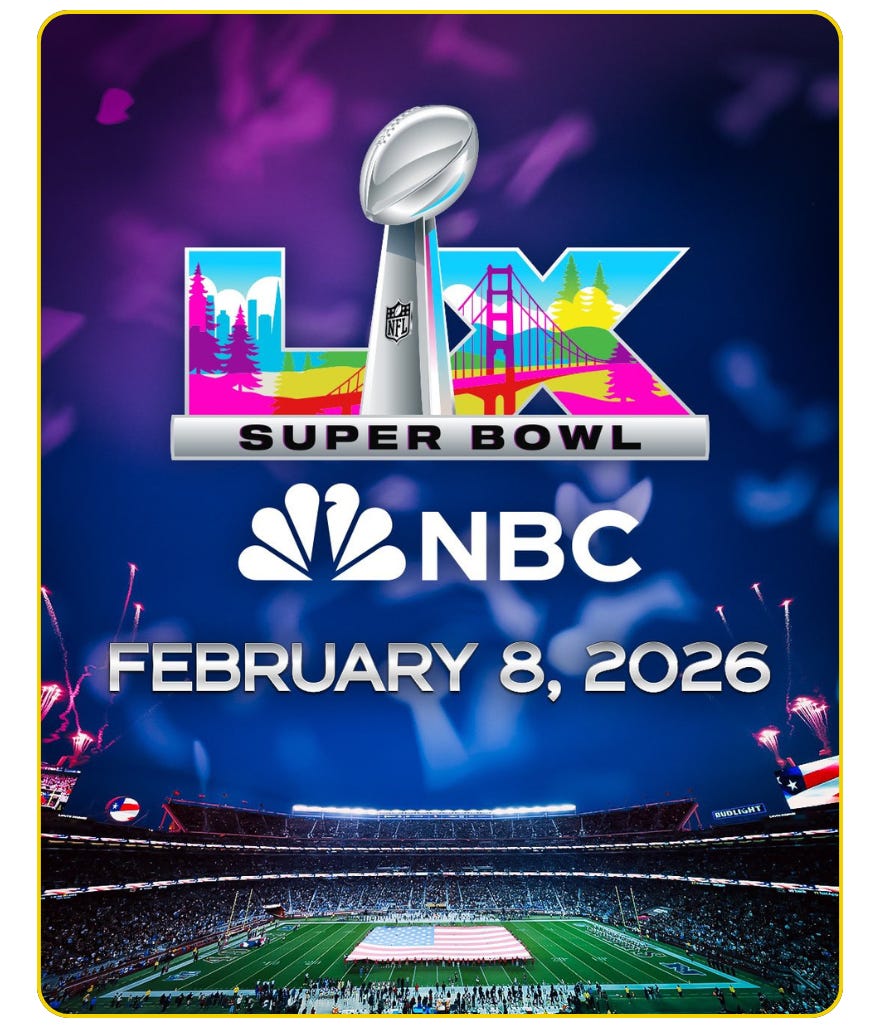
And that’s when trademark law stops being theoretical—and becomes very real.

Trademark law isn’t about fairness.
It doesn’t care if you’re a huge corporate conglomerate or Mother Teresa.
It’s about ownership, control, and consistency.
So what does this actually mean?
Intent doesn’t matter nearly as much as people think it does.
Goodwill doesn’t override statutory rights.
And charity doesn’t create an exception.
So let’s make sure your charitable efforts don’t land you in the crosshairs of legal complexities.
In this Founder’s Letter, we unpack three hard truths about trademark ownership — and why the NFL’s enforcement strategy is less about ruthlessness and more about responsibility.
Ready?
Let’s get into it.

Loving This Post?
Show us some love by adding a “❤️,” giving a share, or commenting below; this will make our hearts sing.

But first, some church announcements...
The Firm for the Culture - Power Moves Series
Over the next few weeks, we’ll be rolling out our Power Moves Series to help you start the year off right.
You’ll hear about some of the top moguls in our industry—including Kevin Hart, Ryan Coogler, and Issa Rae—as we unpack their stories, break down the contractual decisions that shaped their careers, and highlight the IP power moves that helped them build longevity and leverage.
More importantly, we’ll translate those lessons so you can apply them directly to your own business.
Registration is FREE; in case you’re unable to make it, sign up and you’ll get the free notes.
After event recordings are $20.00 each.
Hope to see you there!
THE POWER MOVES SERIES: RYAN COOGLER | February 12, 2026
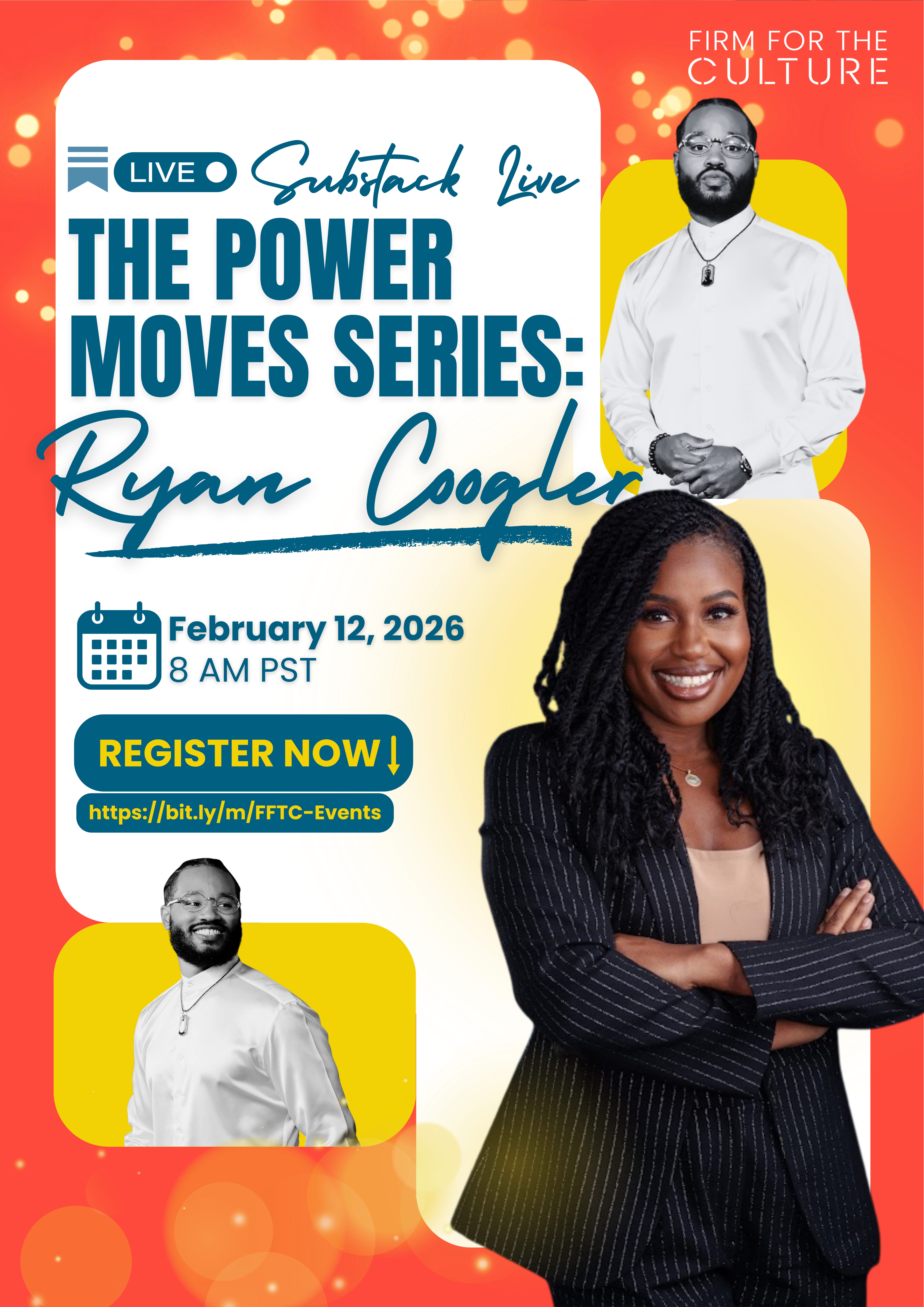
Scaling is exciting. It’s also where a lot of creatives lose control. Ryan Coogler offers a powerful example of what it looks like to protect your voice while operating inside big systems with real money at stake.
In this Power Moves Series session, we break down how ownership, contracts, and IP strategy show up when your work reaches a larger stage.
🔗 Sign up here: https://bit.ly/m/FFTC-Events
DO NOT SIGN THAT CONTRACT | February 26, 2026
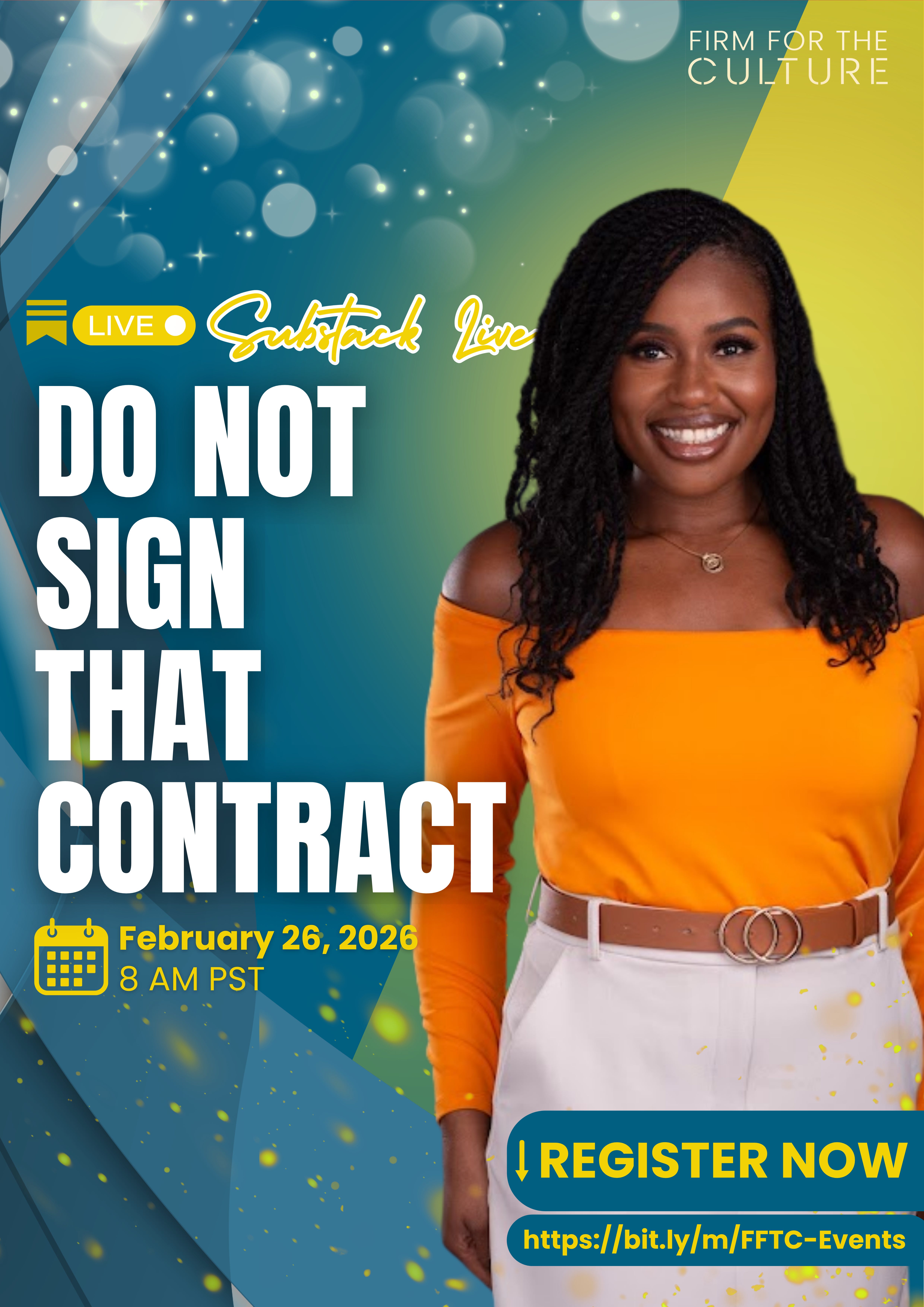
This session keeps getting requested — and for good reason. Too many creatives sign contracts they don’t fully understand because they don’t want to miss an opportunity. In this live session, we’ll walk through what to slow down for, what to question, and what not to sign without clarity.
No fear tactics. Just practical guidance.
If you’ve ever thought, “I hope this is okay,” before signing, this one is for you.
🔗 Sign up here: https://bit.ly/m/FFTC-Events
THE POWER MOVES SERIES: ISSA RAE | March 12, 2026
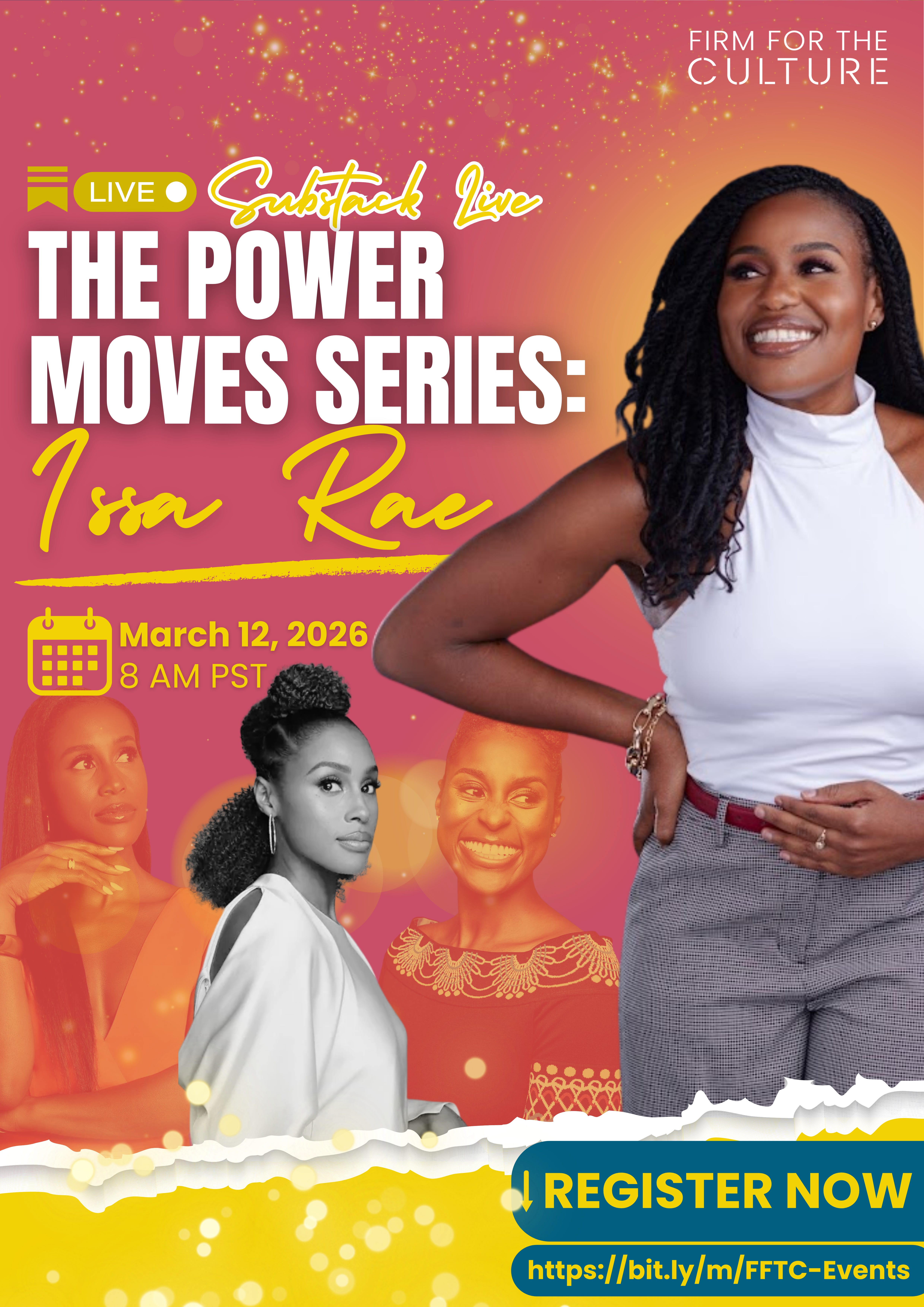
Issa Rae didn’t just create culture. She protected it.
Her career is a case study in building with intention, owning your voice, and using IP to support creative freedom instead of limiting it.
In this final session, we’re breaking down how trademarks, ownership, and smart legal strategy helped turn authenticity into longevity.
🔗 Sign up here: https://bit.ly/m/FFTC-Events
Now, back to our regularly scheduled program…. :)

The NFL trademarked Super Bowl in 1969.
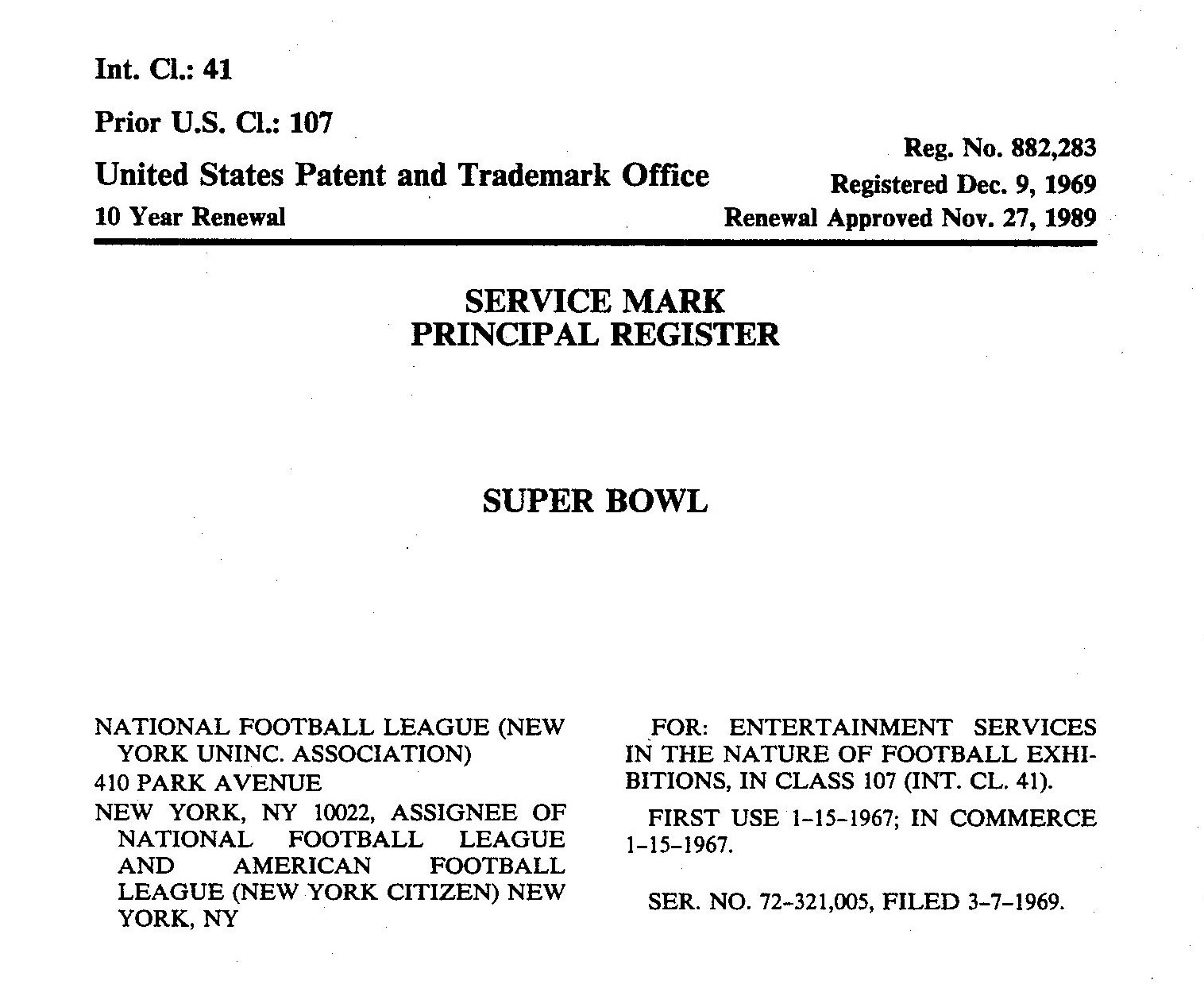
Since then, they’ve registered dozens upon dozens of related trademarks across entertainment, broadcasting, merchandising, licensing, and digital media.
This isn’t accidental—it’s portfolio strategy.

And here’s why the enforcement matters:
Under U.S. trademark law, a mark must be actively policed.
In plain terms, “actively policing” a trademark means watching how it’s used, stepping in when it’s misused, and making sure it doesn’t lose its meaning.
If a brand owner allows widespread, unauthorized use, the mark risks becoming generic.
That’s how we lost:
Aspirin
Escalator
Thermos
Once a mark becomes generic, it’s gone forever.
So, yes, to protect its asset, the NFL sends letters to:
Bars
Restaurants
Small businesses
Nonprofits
Churches
Not because they’re cruel—but because consistency preserves ownership.

This part surprises founders.
Registering a trademark isn’t the finish line.
It’s the starting gun.
Once you own a mark, you are expected to:
Monitor use
This means paying attention to how your mark shows up in the real world—online, on products, in marketing, and in commerce. Not just competitors, but adjacent industries, social media, and third-party platforms. If you don’t know how your mark is being used, you can’t protect it.
Object to confusing or unauthorized use
When someone uses your mark (or something close enough to cause confusion) without permission, you’re expected to respond. That response doesn’t always mean a lawsuit—but it does mean something: a cease-and-desist, an objection, or documented enforcement. Silence can be interpreted as consent.
Maintain distinctiveness
Your mark has to continue pointing to you as the source. If it starts being used as a generic term, a category name, or shorthand for the product itself, its legal strength erodes. Once a mark loses its distinct meaning, it becomes much harder—or impossible—to enforce.
If you don’t, a court can later say:
“You tolerated this before. Why should we protect you now?”

That’s how trademarks die—not with drama, but with silence.
This is why enforcement isn’t about being litigious.
It’s about preserving the legal integrity of what you’ve built.
You don’t have to sue everyone.
But you do have to show that you care.

You don’t need to behave like the NFL.
You don’t need to send cease-and-desist letters to churches, corner bars, or community fundraisers just to prove a point.
But you do need to think like a brand owner.
And thinking like a brand owner means understanding a few uncomfortable truths:
What you actually own (and what you don’t)
Where your rights begin—and where they end
How your brand may be used by others, intentionally or unintentionally
What silence can cost you over time
Trademark law isn’t just offensive.
It’s defensive.
Yes, it gives you the ability to stop others from using your name.
But more importantly, it preserves your ability to continue using it.
Five years from now.
Ten years from now.
Twenty years from now.
Because strategy doesn’t look like panic.
It looks like foresight.
It looks like monitoring your marketplace instead of reacting late.
It looks like choosing when not to enforce—and documenting why.
It looks like protecting the distinct meaning of your brand before it erodes.
Protection isn’t paranoia.
It’s preparation.
And the goal isn’t to be feared.
The goal is to make sure that the thing you’re building today still belongs to you tomorrow.

So… About That Super Bowl Watch Party
There are ways to talk about the Super Bowl without infringing.
And there are ways that will absolutely land you a cease-and-desist.
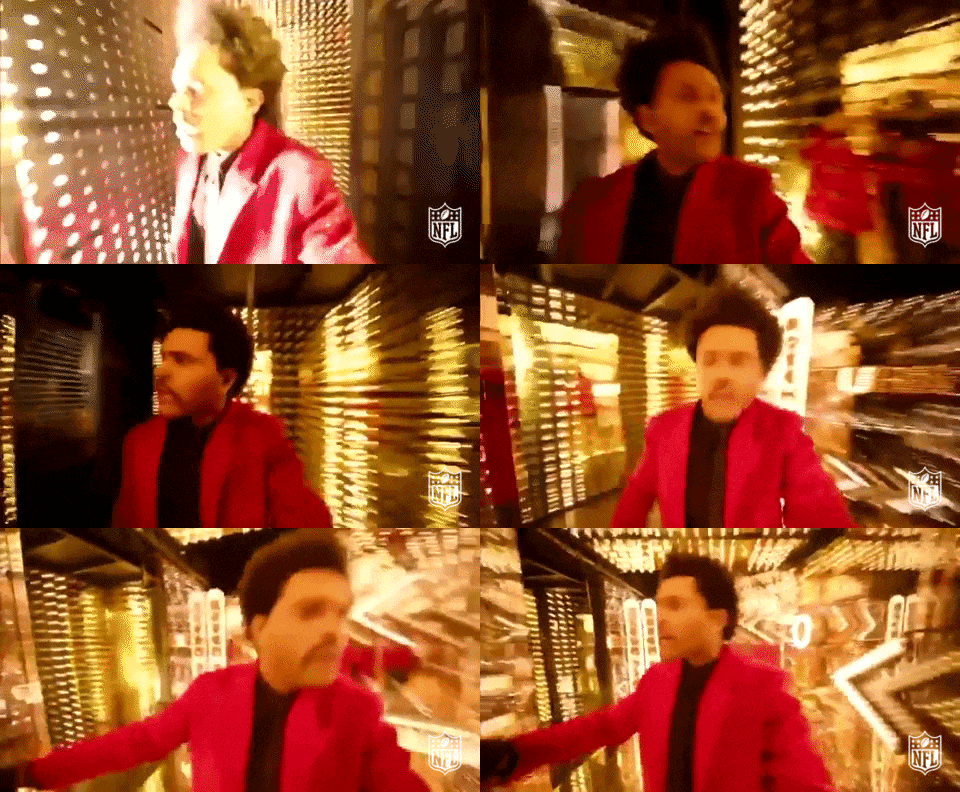
This article itself is an example of the difference.
Here, the term Super Bowl is used under a doctrine called nominative fair use.
In plain terms, that means readers reasonably understand I’m referencing the Super Bowl in a third-person, informational context.
I’m not claiming sponsorship.
I’m not suggesting affiliation.
And I’m not using the term as a brand for my own goods or services.
There’s also no substitute term that would communicate the same thing.
It’s the Super Bowl—or it’s nothing.
That’s the key.
Contrast that with what the church did: using the term Super Bowl to promote and monetize an event.
Different context.
Different presentation.
Different legal outcome.
And that’s why language matters.
Context matters.
Presentation matters.
If you’re building a brand—or stewarding one—you don’t just need creativity. You need strategy.
And you need to understand where lawful reference ends and infringement begins.
So if you need help on this, we’ve got you.

Have you trademarked your brand yet? If not, what’s actually holding you back?
Let’s talk. Drop a comment or hit reply.

Want help figuring out whether your name—or brand—is ready for trademark protection?
We’ve got you.
Book a Strategy Session with Firm for the Culture and let’s make sure your name isn’t just recognized—it’s protected.
Need Help Protecting Your Creativity?
If you are unsure—or if you know you need to take action—reach out to us.
We have helped countless founders and creatives safeguard their intellectual property, and we would love to do the same for you.

If you need further guidance, reach out to me and my team at Firm for the Culture.
We’re here to help you navigate the copyright, trademark, and thought leadership journey.
Can’t wait to help you protect your dynamic impact.
And #ThatsAWrap
The Doors of the Church Firm Are Open
Thanks for reading
See you next time.
I'm ready to start the conversation
💫Magnificent💫