
Hey Fam,
There is a question that can make a very successful founder suddenly get real quiet.
Who owns this?
Not:
Who created it?
Who paid for it?
Whose name is on the website?
Who has been using it for the last five years?
I mean:
Who actually owns it?
Because those questions do not always have the same answer.
And I see this all the time.
A founder has been building for years.
The brand is growing.
The framework works.
The course sells.
The methodology has a name.
People are asking to collaborate.
Then somebody comes along and says:
“We want to license this.”
Amazing.

Except now the conversation is no longer only about whether the work is good.
Everybody already knows the work is good.
Now somebody wants to know:
Can you actually give us the rights you are offering?
That is where things get interesting.
I wrote earlier this year that when founders reach a partnership or licensing conversation, the question often stops being:
“Are you talented?”
and becomes:
“What do you own?”
The talent was never in question.
The structure was.
Whew.
Because licensing is built on a very basic idea:
You own something.
And you give somebody else permission to use part of it.
I have described it as owning a house and renting out the rooms.
The renter gets access.
But they did not buy the house.
And that distinction only works if we are clear about who owns the house in the first place.

That is what I want to talk about today.
Before the royalties.
Before the licensing fee.
Before the fancy partnership announcement.
Before you start negotiating how somebody else can use your intellectual property...
do you actually know what belongs to you?
And if someone asked you to prove it today, could you?
Ready?
Let’s get into it.

Loving This Post?
Show us some love by adding a “❤️” or commenting below; this will make our hearts sing. Also, please share, we want this to get to as many folx as possible.
But first, Church Announcements!!
Speaking of this exact problem...
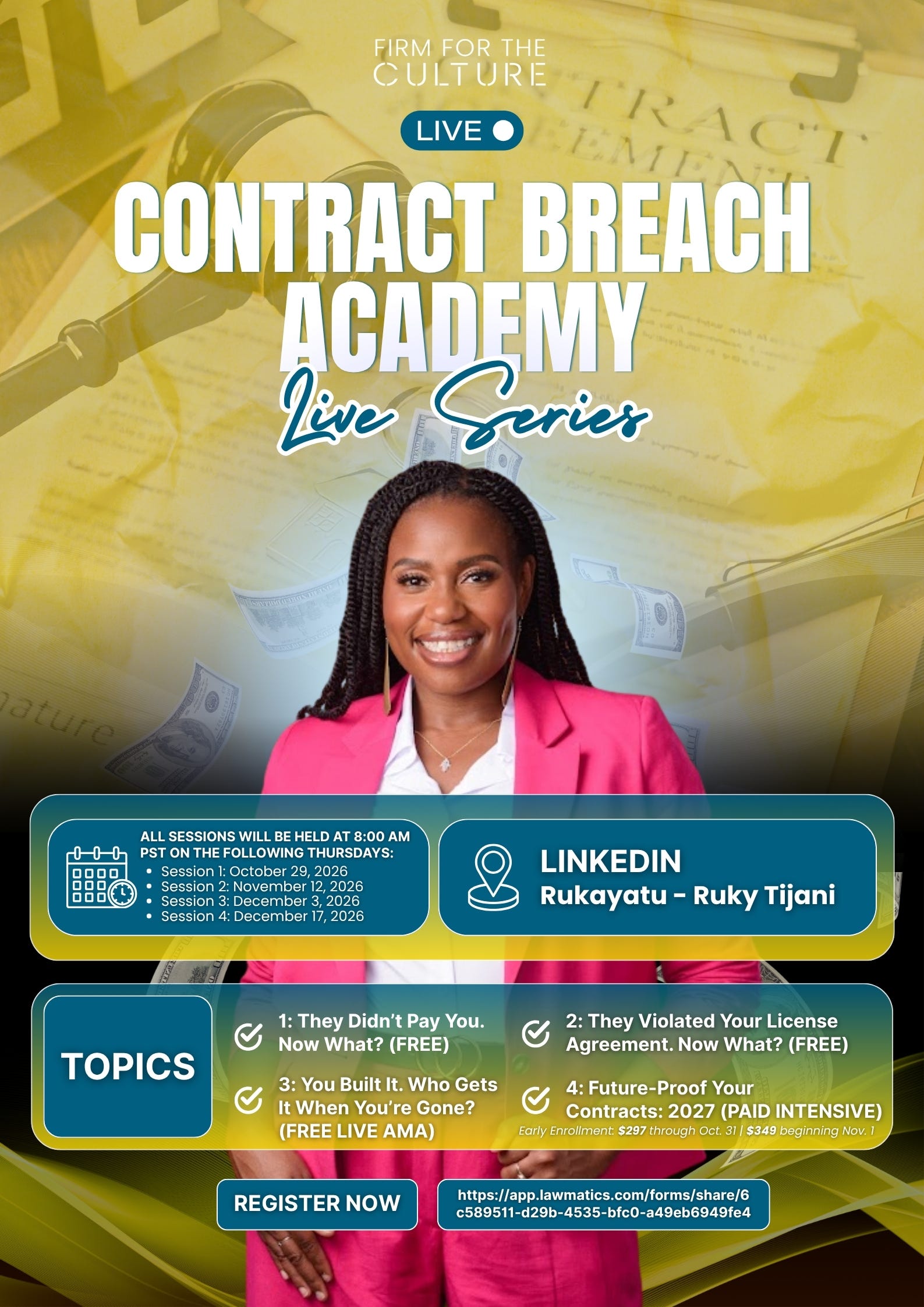
We’re heading into the final stretch of Contract Breach Academy.
Here’s what’s coming:
December 3 | 8:00–9:30 a.m. Pacific | FREE LIVE AMA
You Built It. Who Gets It When You’re Gone?
We’ll be having a guest conversation about IP, contracts, estate planning, ownership, royalties, licensing income, succession, and what it actually means to build something that can outlive you.
And then we’re closing out the year with:
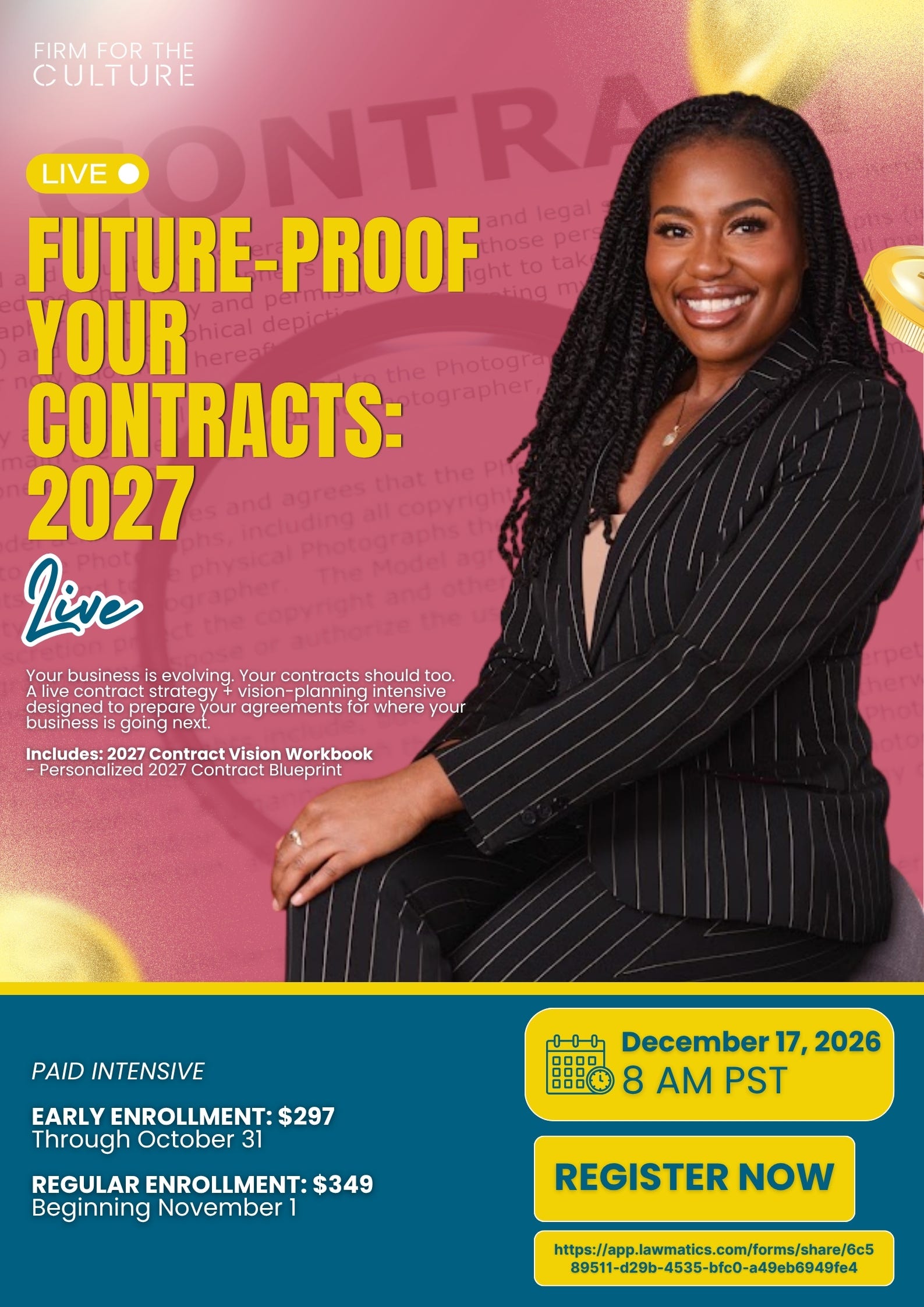
December 17 | 8:00–10:00 a.m. Pacific | PAID INTENSIVE
Future-Proof Your Contracts: 2027
This is our live contract strategy + vision-planning intensive.
You’ll work through a 2027 Contract Vision Workbook and leave with your own 2027 Contract Blueprint so your agreements can actually match the business you’re building next year.
1 CLICK — REGISTER FOR CONTRACT BREACH ACADEMY
Now, let’s get back to the program.

Creation And Ownership Are Not Always The Same Conversation.
There are certain sentences I hear from founders that immediately make me want to ask another question.
“But I created it.”
Okay.
Let’s talk about how you created it.

Because creation does not happen in a vacuum. You may have built it while working for somebody else. Another person may have helped develop it. A contractor may have created part of the design. There may even be an old agreement sitting somewhere that says something very specific about ownership.
So yes, “I made it” tells me something.
It just does not always tell me the whole ownership story.
And neither does:
“But I paid for it.”
That surprises people.
You hire someone.
You pay the invoice.
They send the files.
Everybody moves on.
Then two years later, somebody wants to license the asset and suddenly you are digging through old emails trying to figure out whether the ownership ever actually transferred.

That is not where we want to be.
The same thing can happen with a business name.
Registering a business entity and protecting a trademark are not the same thing.
Or with something built during employment.
Or with work that started with one founder and was developed later with somebody else.
The details matter.
And I am not telling you that because I want you to become suspicious of every person who has ever touched your business.
Please.
I am telling you because the licensing conversation is a terrible time to discover that everybody involved has a different memory of who owns what.
I have seen this show up in recent intake conversations too.
A course creator had a methodology being licensed through a partnership, but the agreement did not clearly address what happened to the intellectual property when that partnership ended.
That is the kind of ambiguity I want you catching before somebody is paying for the right to use the asset.
Because once money and outside partners enter the picture, assumptions get expensive.
Founder Gem: “I paid for it” doesn’t mean you own it. Before you license an asset, make sure the ownership story is actually clear. Not just to you. On paper.

Ownership Should Not Live Only In Your Memory.
Now let’s say we have established that you believe the intellectual property belongs to you.
Good.
Next question:
What can you show me?

Because there is a difference between having an ownership story and having an ownership record.
This is where an IP audit becomes useful.
You are taking inventory of what the business has actually built: the names, logos, original works, frameworks, methodologies, and other assets attached to the company.
Then you start looking at the legal structure underneath them.
Which assets are still being used? Which ones have protection where appropriate? Are those protections current? And do the contracts and assignments actually connect the work to the person or company claiming ownership?
I have called an IP audit:
“the tool you use to find out what you actually own — and what still needs to be built.”
I like that framing because a lot of founders do not have a broken business.
They have a business that simply grew faster than the legal infrastructure underneath it.
I understand how that happens. I am an entrepreneur too.
You are serving clients, launching offers, creating new work, hiring people, forming partnerships, and keeping the business moving. Legal cleanup becomes something you promise yourself you will circle back to.
And then the business becomes valuable enough that somebody else wants access to what you built.
That is when the gaps become visible.

In one of my earlier Founder’s Letters, I said a licensing conversation can stall because the other party cannot verify your chain of title.
And that makes sense.
If somebody is paying your business for permission to use intellectual property, they need confidence that the business giving that permission actually has the rights it says it has.
So do the audit.
Clean up the ownership.
Get the registration where it makes sense.
Document assignments where they are needed.
Review the old agreements.
This does not always mean starting over.
Sometimes you are simply adding the legal layer the business finally grew big enough to need.
Founder Gem: An IP audit is the tool you use to find out what you actually own — and what still needs to be built. If a licensing partner asks you to prove ownership, you should not have to start solving the mystery in real time.

Define Exactly What They Are Getting.
Once ownership is clear, then we can talk about the actual license.
And this is where I want you thinking differently about the deal.
Because licensing does not have to mean:
“Here. Use my intellectual property.”
No.
Because “Here. Use my intellectual property.” is not enough.
A good licensing conversation gets specific about which rights the other party receives, where and how they can use them, how long the permission lasts, and what happens when the relationship ends.
That specificity is the whole point.
This is why I use the house analogy.
Licensing is like owning a house and renting out the rooms.
You still own the house.
The agreement defines which room the other person gets to use and under what conditions.
They do not get to knock down every wall because they paid rent.

I have worked with a client whose work was licensed to a school for one class, on one platform.
That mattered.
The permission was not:
“Here is my work. Do whatever you want.”
It was limited enough that the client could still license the work elsewhere.
That is the beauty of a well-defined license.
You are not monetizing the asset by giving away every possible use of it.
You are deciding which rights make sense for this deal.
And I want you paying particular attention to vague language.
“In perpetuity.”

Everything created “in connection with” the engagement.
Broad usage rights that seem harmless until you realize nobody defined where they end.
Silence about improvements.
Silence about what happens when the agreement is over.
Because if the whole purpose of licensing is to keep ownership while allowing somebody else to use the asset...
the agreement needs to preserve that distinction.
One of the questions I have told founders to ask before signing is:
“Can I use my own IP freely after this agreement ends?”
That question will tell you a lot.
Because I do not want you negotiating a licensing deal that creates revenue today and handcuffs the asset tomorrow.
The money matters.
So does what you still control after the money clears.
Founder Gem: Licensing is like owning a house and renting out the rooms. Know which room you are giving them. Know how long they get it. And make sure you are not accidentally handing over the keys to the entire house.

The License Is Not The Asset.
That is really what I want you to remember.
The intellectual property is the asset.
The license is one way you decide to create value from it.
And that order matters.
When a good opportunity appears, it is easy to start with the money.
How much are they paying? What does the royalty look like? How long is the deal?
Those questions matter.

But they come after something more fundamental:
You need to understand exactly what asset is being licensed, whether you actually own it, and whether you can document that ownership.
And once this deal is over, what exactly still belongs to me?
That is ownership strategy.
Not paperwork for paperwork’s sake.
And no, if your legal infrastructure is behind the business, I do not want you throwing the whole thing away and starting again.
I have said this before:
You do not have to rebuild from scratch.
Sometimes you simply need to add a layer.
Because the brand may have grown.
The work may have become more valuable.
The opportunities may be bigger than they were when you started.
Your legal structure should be allowed to grow with it.

And this is where I come back to something I wrote earlier this year:
Ownership is the thing that turns a business into a legacy.
You cannot build a licensing strategy around things you only assume belong to you.
You build it around assets you understand, can document, and can intentionally put to work.
That is where the leverage is.

If a licensing partner emailed you today and said:
“We’re interested. Can you show us what you own?”
How quickly could you answer?
Not with screenshots.
Not with:
“Everybody knows this is mine.”
What could you actually put in front of them?
If that question made you uncomfortable...
good.
That is useful information.
Pick one valuable asset in your business this week and trace the ownership.
Who created it?
What agreements touch it?
Where does the ownership sit now?
And what needs to be cleaned up before somebody asks for permission to use it?
Tell me what you think in the comments.

Join Us for Contract Breach Academy
If this article has you thinking beyond the license agreement itself and asking what actually happens to the IP you are building long-term, join us on December 3 from 8:00–9:30 a.m. Pacific for our FREE LIVE AMA:
You Built It. Who Gets It When You’re Gone?
We’re talking ownership, contracts, royalties, licensing income, estate planning, succession, and how to build intellectual property that can continue creating value beyond you.
Need Help Protecting What You’ve Built?
At Firm for the Culture, we help founders protect, maintain, enforce, and strategically grow their intellectual property portfolios.
Because getting the registration is a major milestone.
Keeping the asset protected as your business grows is the long game.

Can’t wait to help you protect your dynamic impact.
And #ThatsAWrap.
The Doors of the Church Firm Are Open.
Come on in and share the love.
Thanks for reading.
See you next time.
#ForTheCulture
👩🏾⚖️⚖️